Free NewsletterPro Login

The Iran War Has Already Erased A Billion Barrels Of Oil

Published Jun 10, 2026
Share:
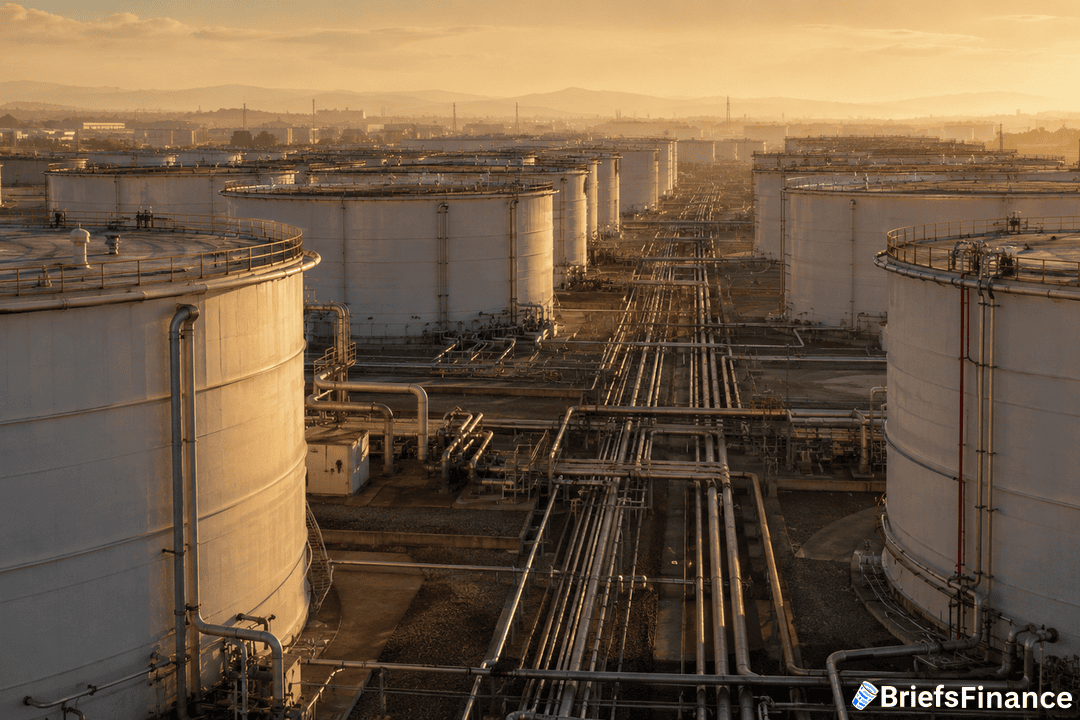
Rows of large cylindrical oil storage tanks connected by pipelines at an industrial facility, with a cityscape and mountains visible in the background during sunset.
Summary:
  • U.S. crude rose nearly 3% to about $90.76 a barrel after Trump threatened to keep striking Iran, while Brent topped $93.
  • Rystad Energy says 11.8 million barrels a day of output is offline across six Gulf producers, the worst oil supply disruption in modern history.
  • Cumulative production losses have hit about 1 billion barrels, with each extra month of war risking another 350 million.

Oil prices move on fear as much as fact. On Wednesday, they got both.

Crude jumped nearly 3% to about $90.76 a barrel after Trump vowed to keep hitting Iran hard.

Brent, the global benchmark, rose past $93 a barrel.

Behind those numbers sits a bigger one: the war has already wiped out about a billion barrels of supply.

That is more oil than the U.S. burns in about seven weeks.

A Supply Shock Unlike Any Before

Rystad Energy, an energy research firm, calls this the worst oil supply shock in modern history.

Six Gulf producers now have 11.8 million barrels a day shut off.

Saudi Arabia is the biggest loss at about 3.8 million barrels a day, with Iraq and Kuwait close behind.

No other shock in modern times has pulled this much oil off the market at once.

That's a huge slice of what the whole world burns in a single day.

And Rystad warns that each extra month of war could erase another 350 million barrels.

Most of that supply should come back once the fighting stops. Rystad expects about 85% of it back by October if the guns go quiet.

The catch is that nobody knows when that will be.

Oil, inflation, your money: it's all connected, and it's a lot to track. Market Briefs connects the dots every morning in five minutes, plus a free investing masterclass when you join.

Why Trump's Threats Move The Tape

The latest jump came after Trump said on TV, "We hit them hard yesterday, and we're going to hit them hard again today."

He had already posted that Iran will "pay the price" for dragging out talks.

Traders heard the same thing in both messages: the supply problem isn't getting fixed soon.

So they bid the price up.

Gas at the pump has been climbing through the war, and another spike would hit drivers first.

What Higher Oil Means For You

Pricier oil doesn't stop at the pump.

It seeps into airfares, shipping, and the price of almost anything that moves on a truck.

Businesses tend to pass those higher costs along to shoppers.

For investors, that's the link between a war half a world away and the inflation they feel at home.

Even China, the world's biggest oil buyer, has cut its imports to cope.

It's also why some people park money in safe havens like gold when oil spikes this fast.

And it's why they brace for more volatile markets while the war drags on.

What To Watch

The key is the Strait of Hormuz, the narrow lane that carries a big share of the world's oil.

A single scare in that lane can move prices around the world.

If it stays choked, $90 oil may start to look cheap.

Brent already cleared $93 on Wednesday, and U.S. crude wasn't far behind.

If you want the daily market read minus the jargon, sign up for Market Briefs. You'll also get a 45-minute investing course as a bonus.

Disclosure

Get Market Briefs delivered to your inbox every morning for free!

No fluff. No noise. No politics. Just finance news you can read in 5 minutes.

Blogs

May 30, 2026
Financial Literacy Books That Actually Build Wealth
  • The best financial literacy books don't just teach budgeting, they shift how you think about money.
  • Two classics stand out: The Intelligent Investor for valuing investments, and Rich Dad Poor Dad for the owner's mindset.
  • Reading is only step one. The real wealth comes from acting on what you learn.
Read More
May 30, 2026
What Is a Roth Conversion? A Simple Guide
  • A Roth conversion moves money from a traditional retirement account into a Roth account.
  • You pay taxes on the money now, in exchange for tax-free growth and withdrawals later.
  • It can pay off if you expect higher taxes or more income in the future, but the timing and tax hit matter a lot.
Read More
May 30, 2026
Trailing Stop Loss: How to Protect Your Gains
  • A trailing stop loss is an order that automatically sells a stock if it falls a set percentage from its recent high.
  • As the stock rises, the sell point rises with it, locking in gains while capping losses.
  • It's most useful for active strategies like momentum investing, not for long-term buy-and-hold.
Read More
May 30, 2026
5 Types of Wealth: Why Money Is Only One of Them
  • Real wealth is more than a bank balance. It spans your finances, health, mind, purpose, and freedom.
  • Money is powerful, but it amplifies the life you already have rather than fixing a broken one.
  • True financial wealth means your cash flow covers your expenses, so your money works while you live.
Read More
May 30, 2026
How to Invest in Private Equity: A Beginner's Guide
  • Private equity means investing in companies that aren't listed on the stock market.
  • Traditional private equity is built for experienced, high-net-worth investors with large amounts to invest.
  • New rules have opened more accessible paths, like startup crowdfunding and real estate deals, often starting around $100.
Read More
May 30, 2026
What Is a Call Option? A Simple Guide With Examples
  • A call option gives you the right to buy a stock at a set price by a set date.
  • Investors buy calls when they expect a stock to rise, using less money than buying the shares outright.
  • The most you can lose buying a call is the premium, but time works against you, so it's an advanced tool.
Read More
May 30, 2026
EBITDA Formula: How to Calculate It Step by Step
  • EBITDA stands for Earnings Before Interest, Taxes, Depreciation, and Amortization, a measure of a company's core profit.
  • The formula adds those four items back to net income to show what the underlying business earns.
  • Investors use EBITDA to compare companies and to judge how many times earnings a stock is selling for.
Read More
May 30, 2026
What Is a Stock Option? A Plain-English Guide
  • A stock option is a contract giving you the right, but not the obligation, to buy or sell a stock at a set price by a set date.
  • There are two types: calls (the right to buy) and puts (the right to sell).
  • Options are powerful but risky, so they suit investors who already have the basics down.
Read More
May 30, 2026
Put Option: What It Is and How It Works
  • A put option gives you the right to sell a stock at a set price by a set date.
  • Investors use puts to bet a stock will fall, or as insurance to protect shares they own.
  • The most you can lose buying a put is the premium you paid, which makes it a defined-risk tool.
Read More
May 30, 2026
Operating Margin: What It Is and How to Calculate It
  • Operating margin shows how much profit a company keeps from its core business after paying its running costs.
  • The formula is operating income divided by revenue, shown as a percent.
  • A strong, steady operating margin signals a well-run business that controls its costs.
Read More
1 2 3 22
Share via
Copy link










