Free NewsletterPro Login

India Just Warned The Iran War Is Hurting Its Economy

Published Apr 29, 2026
Share:
Summary:
  • India's central bank cut its Q1 real GDP growth forecast to 6.8% from 6.9%, with Q2 trimmed to 6.7% from 7.0%.
  • Economists now expect prices above 5% for the fiscal year, well above the RBI's 4.6% call.
  • Crude oil is above $100 per barrel as Strait of Hormuz problems continue.
  • India's central bank cut its Q1 real GDP growth forecast to 6.8% from 6.9%, with Q2 trimmed to 6.7% from 7.0%.
  • Economists now expect prices above 5% for the fiscal year, well above the RBI's 4.6% call.
  • Crude oil is above $100 per barrel as Strait of Hormuz problems continue.

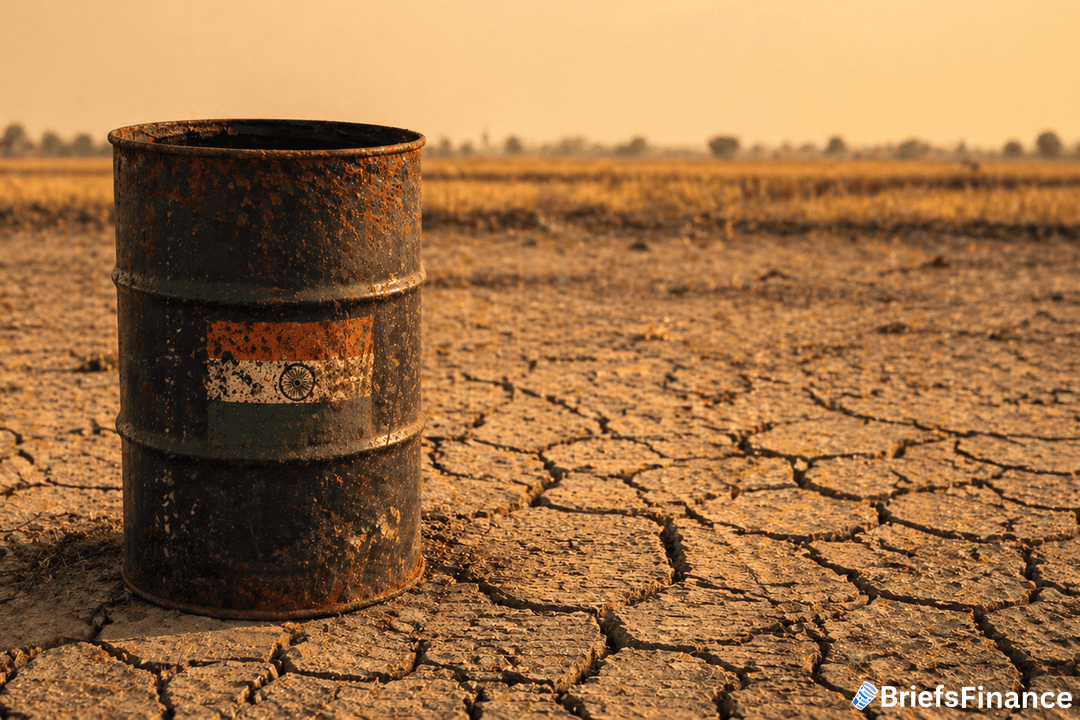
India is the world's fastest-growing big economy. But it buys most of its oil from other places, and that bill just shot up.

The Finance Ministry warned this week that the Iran war is pulling down demand. The Reserve Bank of India had already cut its growth call earlier this month. It also held its rate at 5.25%.

The Two-Front Squeeze

India is getting hit on two sides at once.

The war is keeping oil above $100 a barrel. About 20% of the world's oil flows through the Strait of Hormuz. Shipping there has slowed since the strikes began on February 28.

Northern India is also baking at 47°C. The government now sees a weak monsoon coming. Food makes up 37% of the price index, so a weak harvest would push the whole index up.

The catch: Bloomberg sees prices at 5.8% this year if the rains miss. That tops the RBI's 4.6% call by a lot.

What It Means For Indian Rates

The RBI was widely expected to keep cutting rates this year. That call now looks shaky.

Governor Sanjay Malhotra has said the bank will sit still while it watches both prices and growth risks. With oil this high and food prices set to rise, a rate cut is hard to defend.

A rate hike is even on the table if the rupee starts falling. That would be a rare move for a country with strong growth. But the bank has been clear that defending the rupee comes first.

Indian factories are also slowing. The HSBC flash PMI tracks factory activity. In March, it hit its lowest mark since October 2022, with firms blaming the war and choppy markets.

The Bigger Picture

India is still set to grow faster than any other major economy. Q4 GDP came in at 7.8%, ahead of plan.

But Chief Economic Advisor V. Anantha Nageswaran says the 7% to 7.4% call for the fiscal year ending March 2027 faces real downside risk. Higher prices and supply hits from the war would land on imports, freight, and growth at once.

A short ceasefire bought some breathing room earlier this month. Tehran said safe ship passage was "possible" for two weeks. But oil has stayed above $100 anyway. Traders are pricing in the risk that fighting comes back.

The rupee has held up better than the rate of inflation might suggest. The bigger threat is what happens if other big central banks tighten and India is forced to follow.

The CEA has flagged that energy and freight costs are the main drag. He sees those costs hitting both growth and inflation at the same time. That is a tough mix for any central bank to navigate.

What To Watch

The next big signal will come from the monsoon. India's economy lives and dies by the rains. More than 60% of the people there depend on farming for income.

A dry July and August would lock food prices in. That would keep the RBI frozen for the rest of the year. The Iran war already cracked India's growth path for 2026, and the weather will decide what happens next.

Disclosure

Get Market Briefs delivered to your inbox every morning for free!

No fluff. No noise. No politics. Just finance news you can read in 5 minutes.

Blogs

April 28, 2026
Core-Satellite Portfolio: The Best of Both Worlds
  • A core-satellite portfolio splits investments into stable core holdings and higher-risk satellite picks.
  • The core is usually 60% of the portfolio, with satellites at 40%.
  • It blends passive index investing with active opportunity bets.
Read More
April 28, 2026
Bond Ladder Strategy: The Income Plan With Built-In Flexibility
  • A bond ladder is a series of bonds with staggered maturity dates, often one to five years apart.
  • It gives you regular access to cash, predictable income, and protection from rate changes.
  • It works for Treasuries, corporate bonds, municipal bonds, and CDs.
Read More
April 28, 2026
Silver vs Gold Investing: Which One Belongs in Your Portfolio?
  • Gold is the stable store of value, used as crisis insurance during recessions and conflict.
  • Silver is both a precious metal and an industrial metal, with more volatile pricing.
  • Most investors hold a mix in their alternative investment allocation, often 5% to 12% of portfolio.
Read More
April 28, 2026
What Is a Dividend Reinvestment Plan? The Wealth Snowball Explained
  • A dividend reinvestment plan, or DRIP, automatically uses dividend payments to buy more shares.
  • DRIPs power compound growth - dividends buy shares that pay dividends that buy more shares.
  • Most brokerages offer DRIPs free, and many include fractional shares so every penny goes back in.
Read More
April 28, 2026
How Tariffs Affect the Stock Market
  • Tariffs are extra fees on goods imported into a country, and they hit company profit margins.
  • The S&P 500 dropped over 3% in one day after the 2025 tariff announcement.
  • Tariffs reshape trade flows, creating both losers and unexpected winners.
Read More
April 28, 2026
What Is a 13F Filing? The Smart Money Tracker
  • A 13F filing is a quarterly disclosure of stock holdings from large institutional investors.
  • It shows what hedge funds and asset managers bought, sold, and held last quarter.
  • You can find any 13F free on SEC EDGAR.
Read More
April 28, 2026
Debt-to-Equity Ratio: The Number That Tells You If a Company Is Drowning
  • The debt-to-equity ratio compares what a company owes to what shareholders own.
  • The formula is total liabilities divided by total shareholder equity.
  • Lower ratios mean less risk - one of the value markers Warren Buffett looks for.
Read More
April 28, 2026
Non-Financial Analysis of Stocks: The 4-Step Method
  • Non-financial analysis evaluates a company's business, not its financial ratios.
  • It covers four things: business model, CEO, innovation, and moat.
  • It's how investors find companies with long-term staying power.
Read More
April 28, 2026
SEC EDGAR Tutorial: The Free Tool the Pros Use
  • SEC EDGAR is the official free database of public company filings.
  • You can pull 10-Ks, 10-Qs, 8-Ks, and insider trades by ticker or company name.
  • It's the source journalists and analysts use to write their stock stories.
Read More
April 28, 2026
How to Read a 10-Q (Without Losing Your Mind)
  • A 10-Q is a public company's three-month financial update, filed with the SEC.
  • It shows revenue, profits, debt, and cash flow between yearly reports.
  • You can find any company's 10-Q for free on the SEC's EDGAR site.
Read More
1 2 3 18
Share via
Copy link










