Free NewsletterPro Login

Global Shipping Is Rerouting Around The Cape Of Good Hope

Published Apr 25, 2026
Share:
Summary:
  • Strait of Hormuz transit is down about 95% from baseline.
  • Major shipping and tankers are going around the Cape of Good Hope.
  • That adds 10 to 14 days to voyage times.

The world's key oil shipping lane is mostly shut. Ships are going the long way around.

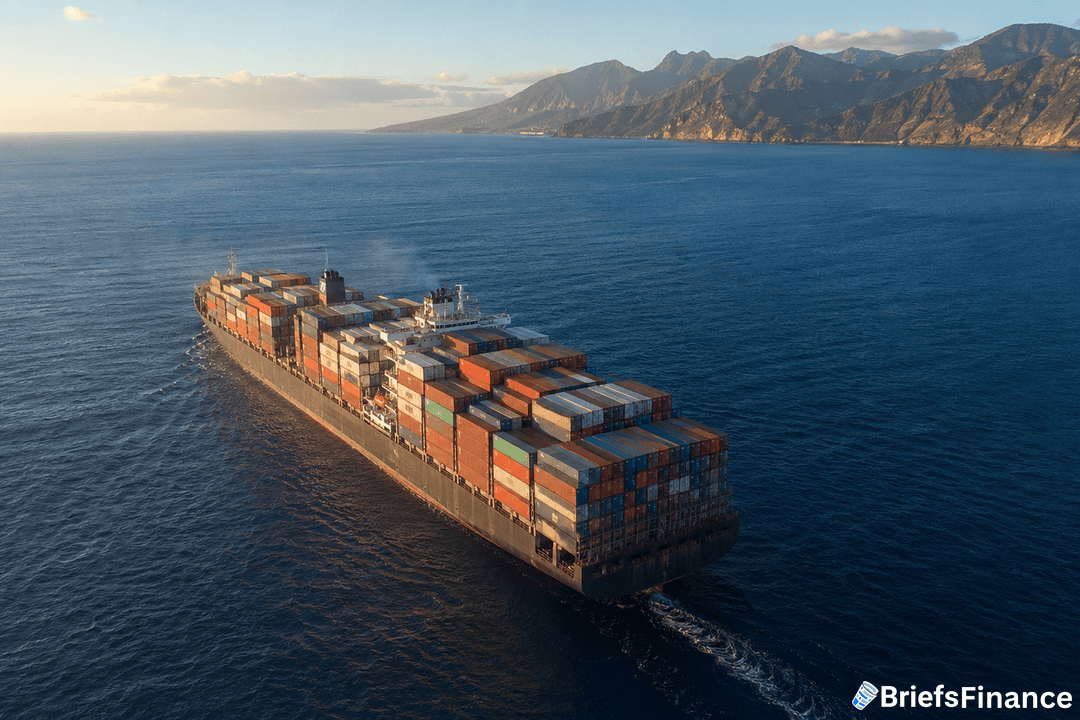
Strait of Hormuz traffic is down about 95% from the normal level. Tankers and cargo ships are rerouting around the Cape of Good Hope.

That adds 10 to 14 days to each voyage.

Why The Strait Matters

The Strait of Hormuz is the main outlet for Gulf oil. Roughly a third of all seaborne crude passes through it on a normal day.

When that path slows, the global oil and fuel map shifts with it. Europe, Asia, and the US all feel it in different ways.

This shift is the largest in years.

The Cape Of Good Hope Route

The Cape of Good Hope is the southern tip of Africa. Ships going from the Gulf to Europe can cut south around the Cape instead of going through the Strait.

The trade-off is time. A trip that used to take two weeks now takes three or more.

That extra time means extra fuel, extra crew cost, and fewer trips per year per ship.

What It Means For Shipping Rates

Rates are up sharply. When ships are stuck on longer routes, fewer ships are free to take the next job.

That supply-demand mismatch is what drives rates higher. The effect is biggest for tankers that carry oil.

Container rates for consumer goods are also up, though by less.

The Global Price Impact

Higher shipping costs get baked into the price of goods. Oil, metals, and some consumer goods all flow through these routes.

The effect is gradual. Some cost hits show up fast, like oil. Others take weeks, like finished goods.

For shoppers, the most visible piece is fuel prices. For firms, it is input cost pressure.

Who Wins And Who Loses

Shipping firms with long-haul tanker fleets are the main winners. Rate spikes flow right to their bottom line.

Firms that depend on cheap and fast global shipping are the main losers. That includes big retailers and parts of the manufacturing chain.

Each week the shift lasts, the gap between the two grows wider.

The Duration Question

The key question now is how long the rerouting holds. If the Strait reopens in weeks, the hit stays contained. If it stays closed for months, the effects compound.

Shippers are planning for a long stretch. Most firms have already shifted full routes, not just one-off trips.

That tells you the trade read is that this lasts a while.

The Insurance Piece

War-risk insurance for Gulf voyages has jumped sharply. That cost flows into the fare for shipping goods.

Some ship owners now refuse to send vessels through the Strait at any price. That pushes even more traffic around the Cape.

Insurance costs alone can add thousands per voyage. Most of that shows up in final prices for goods at the store.

The Broader Fuel Picture

Oil prices are up on the back of this shift. Brent crude has moved well above its average for the year.

Refined products have moved more. Jet fuel, diesel, and gasoline are all priced higher than crude alone would suggest.

Shoppers are already seeing this at the pump. Firms are seeing it in shipping bills.

Worth Noting

Global shipping runs on thin margins. Any big shift to routes matters.

A 95% drop in Strait of Hormuz transit is not a small shift.

The map has been redrawn.
Disclosure

Get Market Briefs delivered to your inbox every morning for free!

No fluff. No noise. No politics. Just finance news you can read in 5 minutes.

Blogs

June 15, 2026
What Are Stock Options? A Plain-English Guide
  • Stock options are contracts that give you the right, but not the obligation, to buy or sell a stock at a set price by a set date.
  • There are two kinds: calls (the right to buy) and puts (the right to sell).
  • Options can multiply gains or wipe out your money fast, so they suit investors who already know the basics.
Read More
June 15, 2026
EBITDA Margin: What It Is and How to Calculate It
  • EBITDA margin measures how much core profit a company keeps from each dollar of sales, before interest, taxes, and accounting deductions.
  • The formula is EBITDA divided by revenue, shown as a percent.
  • A higher, steadier EBITDA margin usually signals a more efficient, more durable business.
Read More
June 15, 2026
What Is Taxable Income? A Simple Guide for Investors
  • Taxable income is the portion of your money the government can tax after deductions are applied.
  • Not all income is taxed the same: job income, investment income, and passive income face different rates.
  • Investors and business owners get more tools to legally lower their taxable income, which is a big edge over time.
Read More
June 15, 2026
What Is a Covered Call? How the Strategy Works
  • A covered call is an options strategy where you own a stock and sell someone the right to buy it from you at a higher price.
  • You collect cash, called the premium, up front, and keep it no matter what happens.
  • The trade-off: if the stock soars, your shares get sold at the set price and you miss the extra upside.
Read More
June 15, 2026
What Is Gross Margin? A Simple Guide for Investors
  • Gross margin is the share of each sales dollar a company keeps after paying the direct cost of whatever it sold.
  • The formula is simple: revenue minus cost of goods sold, divided by revenue, shown as a percent.
  • A steady or rising gross margin points to pricing power, and it is one of the first things smart investors check.
Read More
June 15, 2026
What Is a Dividend? A Plain-English Guide for Investors
  • A dividend is a cash payment a company sends you just for owning its stock, usually every three months.
  • Dividends are one of two ways stocks pay you, the other being the share price going up.
  • Dividends are never guaranteed, so the strength of the business behind the payment matters more than the size of the payment.
Read More
May 30, 2026
Financial Literacy Books That Actually Build Wealth
  • The best financial literacy books don't just teach budgeting, they shift how you think about money.
  • Two classics stand out: The Intelligent Investor for valuing investments, and Rich Dad Poor Dad for the owner's mindset.
  • Reading is only step one. The real wealth comes from acting on what you learn.
Read More
May 30, 2026
What Is a Roth Conversion? A Simple Guide
  • A Roth conversion moves money from a traditional retirement account into a Roth account.
  • You pay taxes on the money now, in exchange for tax-free growth and withdrawals later.
  • It can pay off if you expect higher taxes or more income in the future, but the timing and tax hit matter a lot.
Read More
May 30, 2026
Trailing Stop Loss: How to Protect Your Gains
  • A trailing stop loss is an order that automatically sells a stock if it falls a set percentage from its recent high.
  • As the stock rises, the sell point rises with it, locking in gains while capping losses.
  • It's most useful for active strategies like momentum investing, not for long-term buy-and-hold.
Read More
May 30, 2026
5 Types of Wealth: Why Money Is Only One of Them
  • Real wealth is more than a bank balance. It spans your finances, health, mind, purpose, and freedom.
  • Money is powerful, but it amplifies the life you already have rather than fixing a broken one.
  • True financial wealth means your cash flow covers your expenses, so your money works while you live.
Read More
1 2 3 22
Share via
Copy link