Free NewsletterPro Login

Gas Falls Below $4 But Stays A Third Above Pre-War Prices

Published Jun 18, 2026
Share:
Summary:
  • Gas fell to $3.99 a gallon Thursday after the US-Iran deal ended the conflict that had pushed crude prices sharply higher.
  • Brent crude dropped under $78 a barrel, down from nearly $120 in late March when fears over the Strait of Hormuz choked global supply.
  • The national average is still about a third above the pre-war price of $2.98, with the full crude drop not expected to reach pumps for several more weeks.

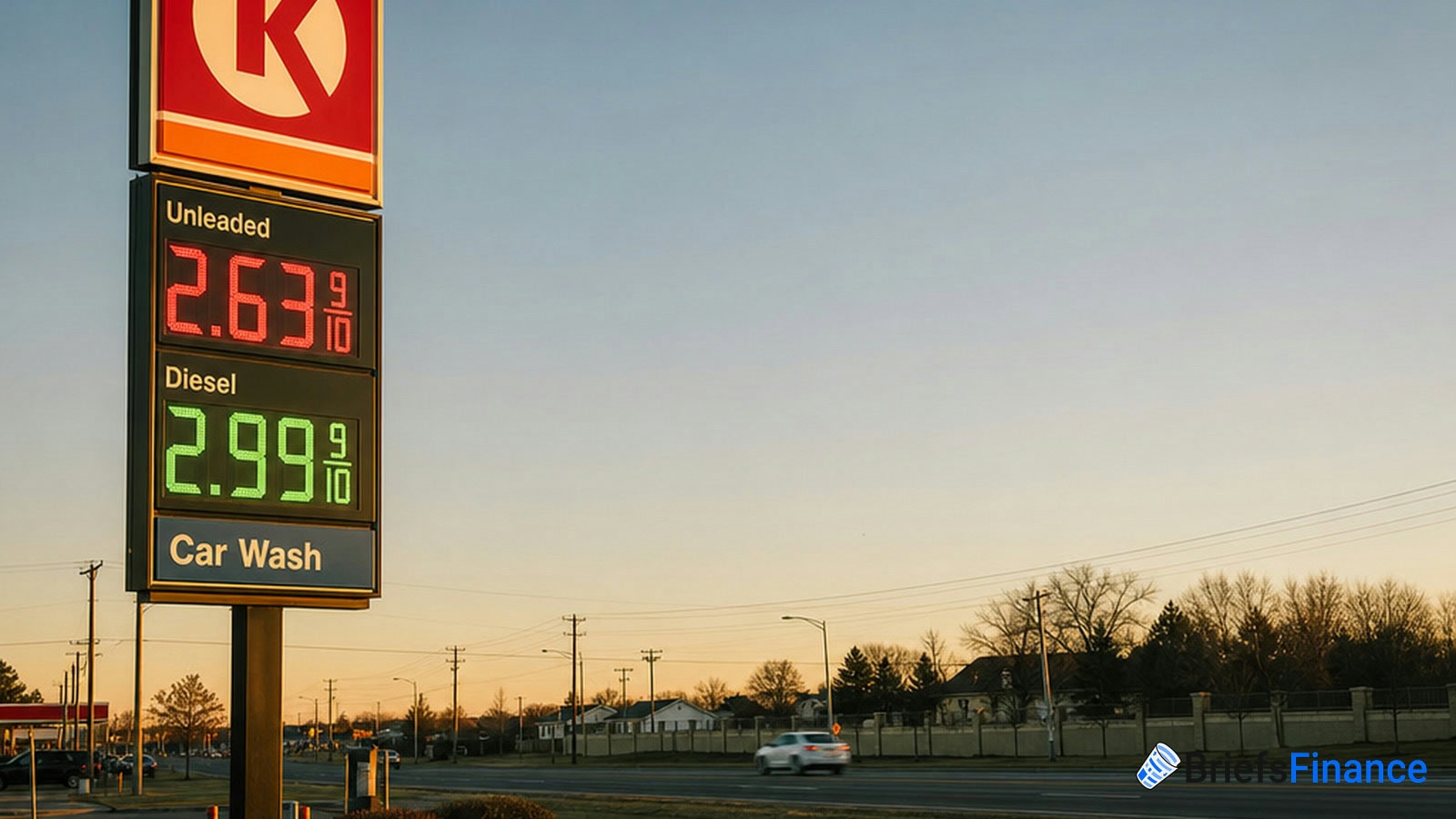
Gas slipped under $4 a gallon Thursday for the first time since March, with the drop coming days after the US and Iran signed a deal ending the war. Drivers are still paying about a third more than they were in February, before the conflict pushed crude prices sharply higher.

The War Premium Is Coming Off Fast

Brent crude - the global oil benchmark - dropped under $78 a barrel Thursday after the US-Iran agreement was signed. That's down sharply from late March, when it nearly touched $120 as fears of a wider regional war sent traders running for cover.

The trigger all along was the Strait of Hormuz, the narrow Iran-controlled waterway off the Persian Gulf. About 20% of the world's oil and liquefied natural gas moves through it, so shutting it down earlier this year choked global supply almost overnight.

Pakistan's Prime Minister Shehbaz Sharif, who helped broker the deal, said Iran will reopen the Strait and the US will lift its naval blockade. Tanker traffic is expected to resume normal flows within days, easing the supply squeeze that drove the spring price spike.

Traders priced in the news fast. Crude futures have shed more than $40 a barrel since the late-March peak, one of the sharpest moves in years outside of a recession.

Every morning, Market Briefs breaks down what stories like this actually mean for your money - in five minutes, plus a free investing masterclass when you join.

Drivers Aren't Back To Pre-War Prices

The national average sits at $3.99 a gallon, according to AAA, down from a late-May peak above $4.50. In late February, before the war started, it was $2.98 - meaning drivers are still paying about a third more than they were four months ago.

The dollar-a-gallon gap may not sound huge, but for households filling up two cars a week, it adds up to hundreds of extra dollars a year compared to pre-war prices.

The state-by-state spread is wide. California drivers are still handing over $5.64 a gallon, while Indiana - the cheapest state in the country - sits at $3.39.

The gap between crude and pump prices comes down to lag. Refiners buy oil weeks before it shows up as gasoline at the station, so the recent crude drop won't fully reach drivers for another few weeks.

Demand is the other half. Summer driving season is in full swing, and with peak travel weeks ahead, refiners have little reason to cut prices faster than they have to.

What To Watch

Oil has tracked the headlines move for move since this conflict started, with every escalation sending crude up and every step toward peace pulling it back down. The US-Iran deal is the biggest move yet, but markets are watching to see whether it actually holds.

Gas prices also feed straight into inflation data, which means a sustained drop at the pump could give the Fed a little more room to cut rates later this year.

If the deal holds, gas keeps falling through the summer. If it breaks, drivers will feel it at the pump within days.

Crude has already moved on. The pump hasn't yet.

Join 350,000+ investors reading Market Briefs for the daily read on what's actually moving markets - you also get a 45-minute investing course as a bonus.

Disclosure

Get Market Briefs delivered to your inbox every morning for free!

No fluff. No noise. No politics. Just finance news you can read in 5 minutes.

Blogs

June 17, 2026
What Are Penny Stocks? Risks and Rewards Explained
  • Penny stocks are very low-priced shares of very small companies, often trading for just a few dollars or less.
  • They promise huge gains but carry huge risks: low liquidity, high failure rates, and wild price swings.
  • Most investors are better served by quality companies and funds than by chasing cheap shares.
Read More
June 17, 2026
Best Stocks for Beginners With Little Money
  • The best stocks for beginners with little money usually aren't individual stocks at all - they're low-cost index funds.
  • You can start with $100 or less and use small, regular investments to build wealth over time.
  • Focus on diversification and consistency, not on picking the next big winner.
Read More
June 16, 2026
Tech Stocks: A Simple Guide for New Investors
  • Tech stocks are companies in the information technology and related sectors, from software to chips to the internet giants.
  • They've driven much of the market's growth, but they can be volatile and richly valued.
  • The smart approach is to understand what you own and not let one sector run your whole portfolio.
Read More
June 16, 2026
What Is a Joint Stock Company? A Simple Guide
  • A joint stock company is a business owned by many people, each holding shares of stock that represent a slice of ownership.
  • It's the basic idea behind every public company you can buy on the stock market today.
  • Owning a share makes you a part-owner, entitled to a piece of the profits and growth.
Read More
June 16, 2026
Capital Gains Tax in California: A Simple Guide
  • Capital gains tax is what you owe when you sell an investment for more than you paid for it.
  • How long you held it matters: long-term gains are taxed more gently than short-term gains at the federal level.
  • Smart investors lower the bill with tools like tax-loss harvesting and holding for the long run.
Read More
June 15, 2026
Top Covered Call ETFs: How to Compare Them
  • Top covered call ETFs are income funds that own stocks and sell call options against them to generate steady cash.
  • The best one for you is the fund whose income, holdings, and fees fit your goals, not simply the one with the flashiest yield.
  • They all share one trade-off: more income today, less upside in a big rally.
Read More
June 15, 2026
What Are Stock Options? A Plain-English Guide
  • Stock options are contracts that give you the right, but not the obligation, to buy or sell a stock at a set price by a set date.
  • There are two kinds: calls (the right to buy) and puts (the right to sell).
  • Options can multiply gains or wipe out your money fast, so they suit investors who already know the basics.
Read More
June 15, 2026
EBITDA Margin: What It Is and How to Calculate It
  • EBITDA margin measures how much core profit a company keeps from each dollar of sales, before interest, taxes, and accounting deductions.
  • The formula is EBITDA divided by revenue, shown as a percent.
  • A higher, steadier EBITDA margin usually signals a more efficient, more durable business.
Read More
June 15, 2026
What Is Taxable Income? A Simple Guide for Investors
  • Taxable income is the portion of your money the government can tax after deductions are applied.
  • Not all income is taxed the same: job income, investment income, and passive income face different rates.
  • Investors and business owners get more tools to legally lower their taxable income, which is a big edge over time.
Read More
June 15, 2026
What Is a Covered Call? How the Strategy Works
  • A covered call is an options strategy where you own a stock and sell someone the right to buy it from you at a higher price.
  • You collect cash, called the premium, up front, and keep it no matter what happens.
  • The trade-off: if the stock soars, your shares get sold at the set price and you miss the extra upside.
Read More
1 2 3 23
Share via
Copy link










