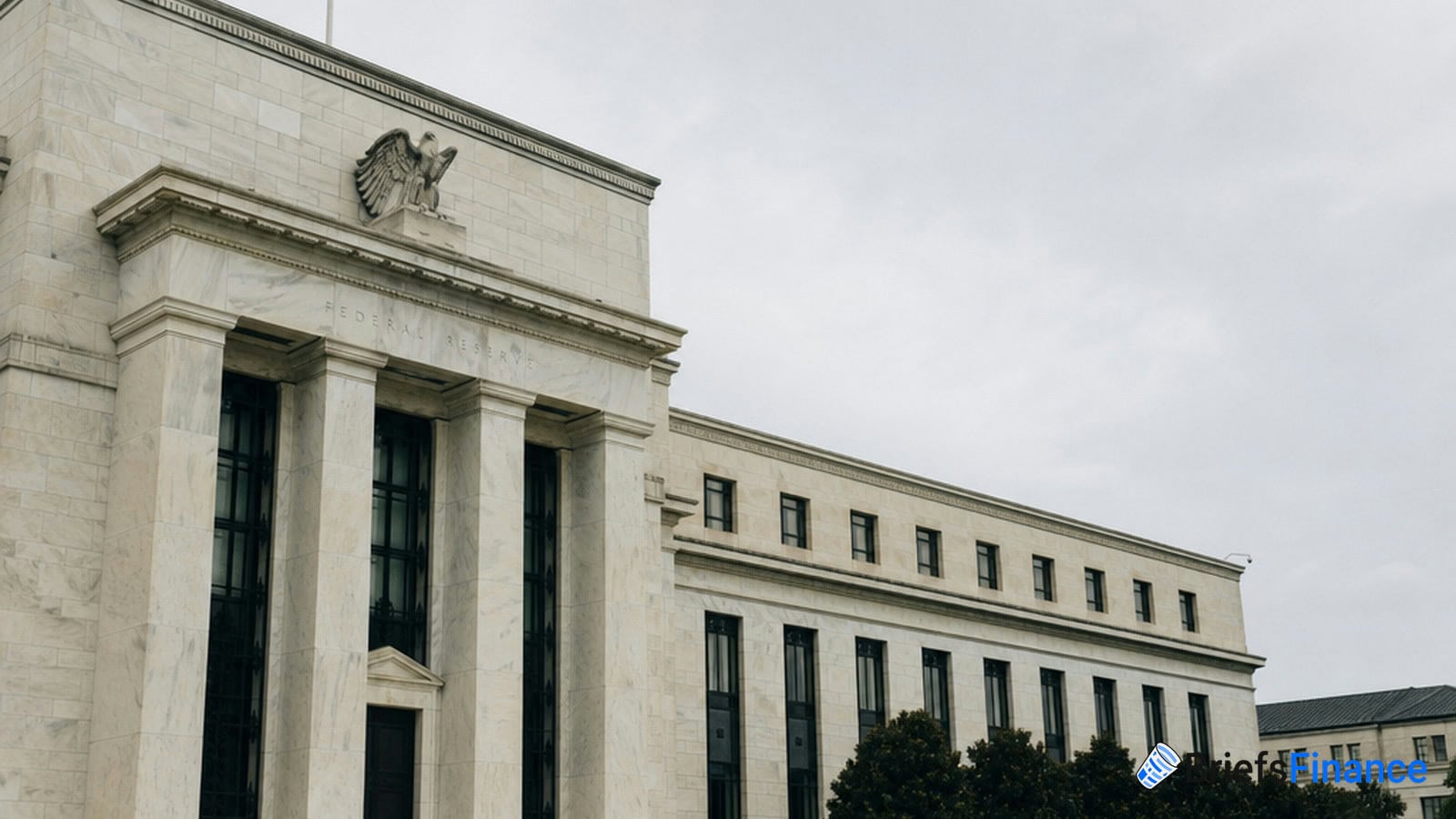
At the start of the year, investors thought the Fed would keep cutting rates. That changed Wednesday when half the Fed said the next move could be a hike.
The other half still sees a hold or a cut. The Fed is now about as split as it's ever been.
Officials Split Down the Middle
Wednesday was the first meeting under new Chair Kevin Warsh - and the vote to hold rates was unanimous. The forecast for what comes next was not.
The Fed has held rates at 3.5%-3.75% since December. That's four meetings without a move.
Nine officials see at least one rate hike this year, and six see two or more. These projections are known as the dot plot - the Fed shows them four times a year.
Another nine see no move or a cut, while one official didn't submit a forecast at all.
That spread - from two-plus hikes to outright cuts - is one of the widest in years. It shows how differently officials read the same economic data.
The missing forecast looks to be Warsh, a long critic of the Fed telling investors what it plans to do months ahead. His silence may be his first message as Chair.
Every morning, Market Briefs breaks down what Fed moves like this actually mean for your money - in five minutes a day, plus a free investing masterclass when you sign up.
What Changed Since March
Six months ago, the story was a weak job market and inflation falling back to the Fed's 2% goal. Both have flipped since.
Hiring picked up in May, and unemployment held at 4.3%. The Fed's preferred inflation gauge - headline PCE - hit 3.8% in April, the biggest jump since 2023.
That puts inflation almost double the Fed's 2% goal.
Two things are pushing prices higher: the Iran war drove energy costs up, and the wave of spending on AI data centers and chips is showing up in factory prices.
The Fed's own forecast caught up to that shift Wednesday. Officials now see inflation at 3.6% this year - nearly a full point higher than they thought in March.
Growth forecasts also got cut, with the Fed seeing slower momentum in the back half of the year.
Hotter prices often mean the Fed waits longer to cut rates. Stocks tend to price in those cuts months ahead, which is why this shift caught markets off guard.
What To Watch
Warsh holds his first press conference as Chair Wednesday afternoon. Investors want to hear how he plans to handle rising prices.
President Trump has said he wants someone who cuts rates. That's hard to square with inflation running at 3.8%.
One thing that could change the math fast is oil. A deal between the US and Iran has already sent crude prices falling, which would take pressure off the inflation forecast.
Markets are now pricing in a quarter-point hike by the end of this year. That's a sharp reversal from the start of 2026, when traders were pricing in cuts.
Warsh just inherited that whiplash.
Join 350,000+ investors reading Market Briefs every weekday morning - you also get a 45-minute investing course thrown in as a bonus.