Free NewsletterPro Login

Elon Musk Just Told A Jury That Most Crypto Coins Are Scams

Published May 1, 2026
Share:
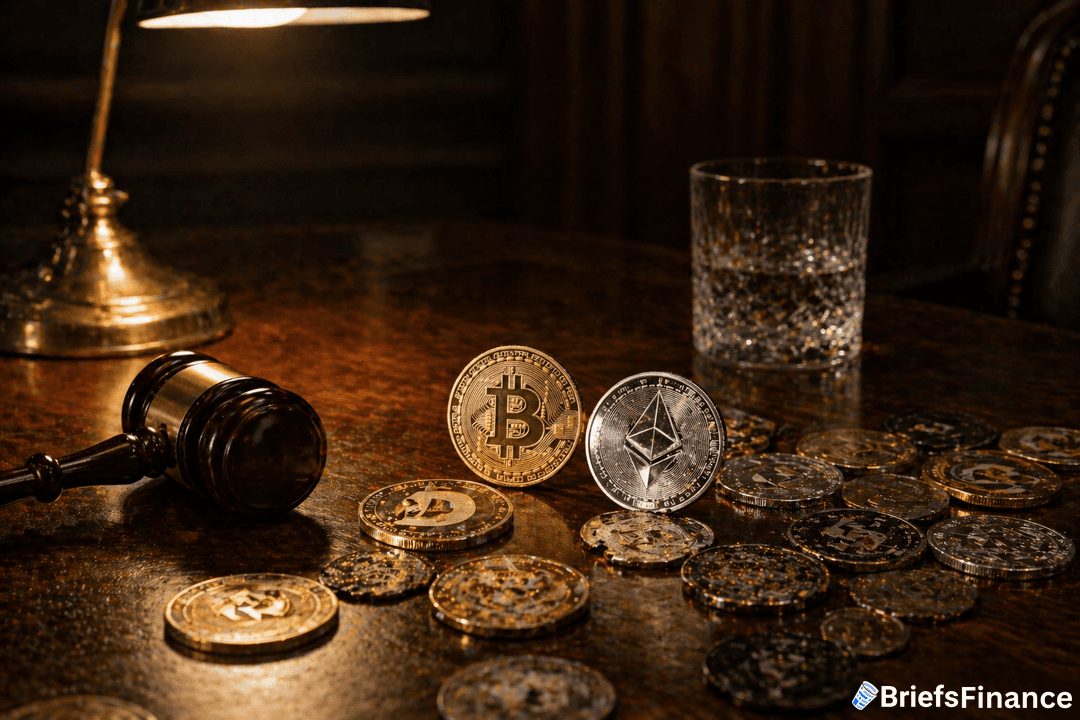
Assorted cryptocurrency coins, including Bitcoin and Ethereum, are scattered on a wooden table near a gavel, a glass of water, and a lamp in a dimly lit room.
Summary:
  • Elon Musk testified that most cryptocurrencies are scams during the OpenAI trial.
  • The case revealed that OpenAI once thought about raising money through a crypto ICO.
  • Tesla still holds 11,509 Bitcoin. Musk personally owns Bitcoin, Ethereum, and Dogecoin.

Elon Musk took the stand in the OpenAI trial. He explained crypto to the jury.

His take: "Some of them have merit, but most of them are scams."

That is a striking line. Musk owns Bitcoin, Ethereum, and Dogecoin himself. His firm Tesla still holds more than 11,000 Bitcoin on its books.

The OpenAI Side Of The Story

The crypto line came up in talk about OpenAI's early days. Court files showed the firm once thought about its own ICO to raise money.

ICOs, or initial coin offerings, were a hot tool at the time. They have since fallen out of favor.

OpenAI never went through with the plan. Instead, it shifted to a for-profit model tied to Microsoft. That shift is the heart of Musk's lawsuit.

Musk says CEO Sam Altman and OpenAI broke their founding non-profit deal. OpenAI says Musk agreed to the change at the time.

The trial in California is set to run about three weeks. Musk wants leadership changes at OpenAI. He also wants damages above $134 billion. The firm is preparing for a possible IPO.

Jury selection turned up generally negative views of Musk. The jurors said they could be fair.

Why It Matters For Crypto

Musk's words tend to move crypto markets. A single Dogecoin tweet has done it before.

Telling a jury most coins are scams is a bigger swing than a tweet. It does not change his actual holdings, but the message lands hard.

Tesla has not changed its Bitcoin position since early 2025. It sold 75% of its stash back in 2022.

The current stash is worth about $1 billion at recent prices. It dipped closer to $786 million when Bitcoin slid 22% in the first quarter.

Musk's crypto take on the stand also lined up with new heat on Sam Altman's own crypto project. That project is Worldcoin. It has drawn fresh claims of unfair token rules in recent days.

That backdrop matters. The trial sits inside a much bigger fight over the future of OpenAI itself. The firm has been prepping for a stock listing. The last private round priced it at $852 billion.

What To Watch

The OpenAI verdict will shape one of the most valuable private firms in the world. A future IPO and the firm's non-profit roots are both on the line.

If the jury sides with Musk, OpenAI may have to unwind parts of its for-profit setup. That would change how Microsoft and other backers get paid. If it sides with OpenAI, the IPO path likely speeds up.

For crypto, the more interesting moment was a one-line aside about scams. It landed inside a separate lawsuit. When the loudest tech founder draws a line between Bitcoin and "everything else," investors tend to listen.

Coin prices held steady on the day of the testimony. But trial moments like this often show up later in flow data and altcoin pricing. That is true for projects with thin volume and heavy retail interest.

For now, the headline news is the trial. The crypto angle is the side story.

But the side story may matter more for retail buyers. The man who runs Tesla just told a U.S. jury most coins are scams. That is the kind of line that sticks.

Disclosure

Get Market Briefs delivered to your inbox every morning for free!

No fluff. No noise. No politics. Just finance news you can read in 5 minutes.

Blogs

June 15, 2026
Top Covered Call ETFs: How to Compare Them
  • Top covered call ETFs are income funds that own stocks and sell call options against them to generate steady cash.
  • The best one for you is the fund whose income, holdings, and fees fit your goals, not simply the one with the flashiest yield.
  • They all share one trade-off: more income today, less upside in a big rally.
Read More
June 15, 2026
What Are Stock Options? A Plain-English Guide
  • Stock options are contracts that give you the right, but not the obligation, to buy or sell a stock at a set price by a set date.
  • There are two kinds: calls (the right to buy) and puts (the right to sell).
  • Options can multiply gains or wipe out your money fast, so they suit investors who already know the basics.
Read More
June 15, 2026
EBITDA Margin: What It Is and How to Calculate It
  • EBITDA margin measures how much core profit a company keeps from each dollar of sales, before interest, taxes, and accounting deductions.
  • The formula is EBITDA divided by revenue, shown as a percent.
  • A higher, steadier EBITDA margin usually signals a more efficient, more durable business.
Read More
June 15, 2026
What Is Taxable Income? A Simple Guide for Investors
  • Taxable income is the portion of your money the government can tax after deductions are applied.
  • Not all income is taxed the same: job income, investment income, and passive income face different rates.
  • Investors and business owners get more tools to legally lower their taxable income, which is a big edge over time.
Read More
June 15, 2026
What Is a Covered Call? How the Strategy Works
  • A covered call is an options strategy where you own a stock and sell someone the right to buy it from you at a higher price.
  • You collect cash, called the premium, up front, and keep it no matter what happens.
  • The trade-off: if the stock soars, your shares get sold at the set price and you miss the extra upside.
Read More
June 15, 2026
What Is Gross Margin? A Simple Guide for Investors
  • Gross margin is the share of each sales dollar a company keeps after paying the direct cost of whatever it sold.
  • The formula is simple: revenue minus cost of goods sold, divided by revenue, shown as a percent.
  • A steady or rising gross margin points to pricing power, and it is one of the first things smart investors check.
Read More
June 15, 2026
What Is a Dividend? A Plain-English Guide for Investors
  • A dividend is a cash payment a company sends you just for owning its stock, usually every three months.
  • Dividends are one of two ways stocks pay you, the other being the share price going up.
  • Dividends are never guaranteed, so the strength of the business behind the payment matters more than the size of the payment.
Read More
May 30, 2026
Financial Literacy Books That Actually Build Wealth
  • The best financial literacy books don't just teach budgeting, they shift how you think about money.
  • Two classics stand out: The Intelligent Investor for valuing investments, and Rich Dad Poor Dad for the owner's mindset.
  • Reading is only step one. The real wealth comes from acting on what you learn.
Read More
May 30, 2026
What Is a Roth Conversion? A Simple Guide
  • A Roth conversion moves money from a traditional retirement account into a Roth account.
  • You pay taxes on the money now, in exchange for tax-free growth and withdrawals later.
  • It can pay off if you expect higher taxes or more income in the future, but the timing and tax hit matter a lot.
Read More
May 30, 2026
Trailing Stop Loss: How to Protect Your Gains
  • A trailing stop loss is an order that automatically sells a stock if it falls a set percentage from its recent high.
  • As the stock rises, the sell point rises with it, locking in gains while capping losses.
  • It's most useful for active strategies like momentum investing, not for long-term buy-and-hold.
Read More
1 2 3 22
Share via
Copy link










