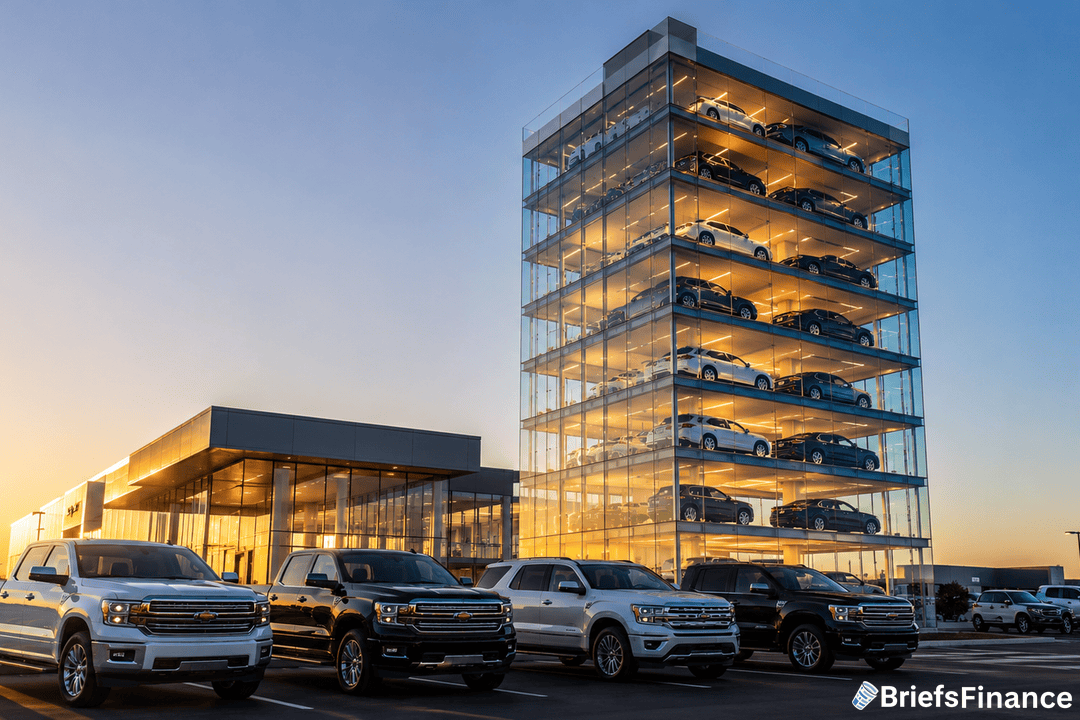
A car dealership in Casa Grande, Arizona used to sell 30 to 50 cars a month. Then Carvana bought it. Last month it sold more than 700.
From Used Cars To New Ones
Carvana built its name selling used cars online, vending machines and all. Now it's moving into new cars, too.
Since 2025, it has bought seven Stellantis stores. That's the company behind Chrysler, Dodge, Jeep, and Ram.
The Arizona shop quickly became Stellantis' top seller in the whole country. It moved those 700 new vehicles in a single month.
That's a huge jump from the 30 to 50 it sold before. The takeover changed the store almost overnight.
We cover the firms trying to flip whole industries in Market Briefs, delivered every weekday morning, plus a free investing masterclass when you join.
Why New Cars Are Worth The Trouble
New cars do more than add a sales line. They open the door to repair work, dealer-only auctions, and easy trade-ins.
Those trade-ins matter most. They feed fresh used cars right back into Carvana's main business.
Think of it like Amazon adding a new aisle. The real win is everything else customers buy once they're in the store.
Carvana now runs more than 100 sites and moves cars across the country like a shipping firm. That scale is the whole point.
The more stores it adds, the more cars flow through its system. And each car can earn money more than once.
Carvana also runs its own repair centers and delivery network. That setup lets it fix and move cars at scale.
A Threat To Old-School Dealers
Analysts call this one of the biggest shake-ups in car sales in years. A digital seller is now inside the dealer system.
Traditional dealers may have to sharpen their own online tools to keep up. The pressure is already building.
For Stellantis, the deal is a test too. It gains a high-volume seller, but it also hands one partner a lot of power.
Carvana grew fast after a near-collapse a few years ago. New cars are its next big swing.
If it works, the payoff is huge. If it doesn't, the costs pile up fast.
The Catch
New-car sales come with rules that used-car sales don't. Those rules change from state to state.
Carmakers also set standards for buildings and service. Carvana has to meet them to keep selling new cars.
The hard part is the long game. How Carvana handles parts, repairs, and support - the stuff that earns most dealers their money - is still an open question.
What To Watch
Dealers are paying close attention. A model that grows this fast could rewire how new cars get sold.
The next year will show if it holds up. One store going from 40 cars a month to 700 is the number every dealer is now staring at.
Carvana's stock has been a wild ride, and big bets like this add to the swings. Investors will watch service and profit closely.
Sign up for Market Briefs for the market in five minutes a day, and get a free 45-minute investing class as a bonus.