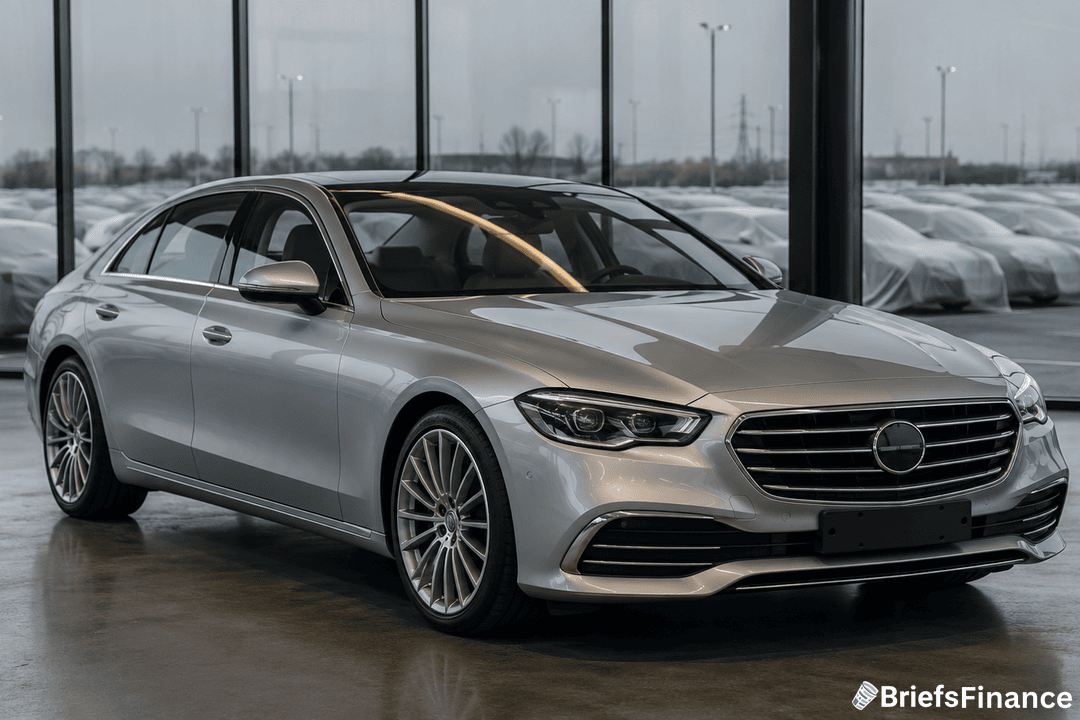
A new bill is meant to keep Chinese carmakers out of America. It might ban a German one instead.
Mercedes-Benz builds cars in Alabama. It hires more than 11,000 people here, yet it could still get shut out. The reason is who owns its stock.
The Bill Behind The Threat
The bill is called the Motor Vehicle Modernization Act of 2026. It targets foreign control of U.S. carmakers.
It would ban any carmaker partly owned by a foreign enemy government. The ban covers building, importing, and selling cars here.
China, Russia, and North Korea all count as enemies. That ownership rule is what puts Mercedes at risk.
There is a way out for some firms. A company that has built cars here for five years can ask for an exemption.
But the exemption has a catch. It does not help any firm with an ownership tie to those governments, even an indirect one.
Trade policy can move the stock market fast, and this is one to watch. We track the policy moves that quietly reshape whole industries in Market Briefs - five minutes each morning, plus a free investing masterclass when you sign up.
Why Mercedes Gets Caught
Mercedes-Benz's biggest single owner is BAIC. BAIC is a carmaker run by the Chinese government.
It holds 9.98% of the company. That stake alone is a problem under the bill.
Then there is Li Shufu, a Chinese billionaire. He owns another 9.69% through his investment firm.
Together, the two sides own 19.67% of the Mercedes parent company. That number matters here.
The bill also flags any firm where foreign owners hold 15% or more. Mercedes is well past that line.
Mercedes has deep roots here. Its biggest U.S. plant sits in Tuscaloosa, Alabama.
That plant has built more than 4.5 million vehicles since 1997. The company runs two big assembly plants in all.
Lawmakers fear Chinese brands could become market disruptors in the U.S. This bill is one way they hope to slow that down.
Who Else Could Get Caught
Mercedes is not the only one at risk. A second bill uses a similar 15% rule.
It is called the Connected Vehicle Security Act of 2026. Both bills aim at the same fear.
Other brands could get swept in too. Volvo, Faraday Future, Lotus, and Karma all have Chinese backers.
Volvo is a good example. It is mostly owned by China's Geely.
This week, Volvo said it won special U.S. approval to skip the connected-car bans. Whether the new bills hit Volvo is still unclear.
Older rules are in play as well. Cars with Chinese software face a ban starting with the 2027 model year, and Chinese parts get banned from 2030.
What To Watch
For now, this is a House bill with no match in the Senate. So it is far from law.
People who have read the congressional bill say the language is vague. It could be read more than one way.
A bill built to block China could end up benching one of Alabama's biggest employers.
Want the stories moving markets before they hit your portfolio? Join 350,000+ investors reading Market Briefs and get a 45-minute investing course thrown in at no cost.