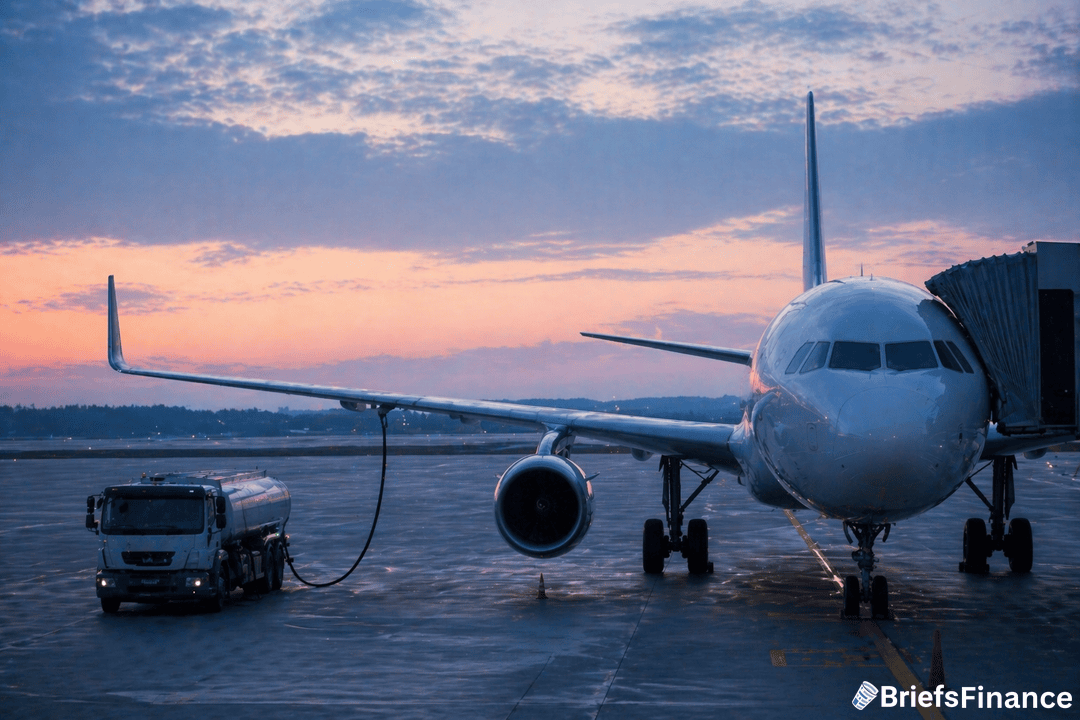
Alaska Airlines is the first major US carrier to say the quiet part out loud. Iran changed the math for 2026.
The airline pulled its full-year earnings forecast Tuesday. It had previously guided to $3.50 to $6.50 per share. It's not offering a new range. The reason is simple: nobody at the company can model what jet fuel costs next quarter.
Q1 revenue came in at $3.3 billion, up 5% from a year ago. The quarter still posted a $193 million loss. April fuel is averaging $4.75 per gallon. Q2's average is tracking toward $4.50.
The $600 Million Problem
Alaska expects fuel costs to run $600 million higher this quarter than a year ago. That works out to roughly $3.60 per share in earnings pressure from one line item.
The driver is the war. US strikes have disrupted oil flows through the Strait of Hormuz. Crude prices surged 30% last quarter. When crude moves, jet fuel moves with it, usually by more.
Fuel is the second-biggest bill an airline pays, right behind worker pay. When the cost of fuel jumps by a third, the earnings model breaks until you can reprice tickets.
Why This Probably Isn't Just Alaska
Alaska runs lean. It merged with Hawaiian Airlines last year. It has less international exposure than Delta or United. It also has less premium seat mix, which is where airlines have been soaking up fuel costs during the last two oil shocks.
If Alaska is pulling its forecast, the bigger carriers have the same math on their desks. United and Delta report in the next two weeks. Watch for commentary on Q2 fuel assumptions, hedging, and the summer travel demand curve.
What This Means For Every Other Airline
Delta, United, and American all report earnings inside the next two weeks, which means their fuel math is already on the CFO's desk. Alaska's withdrawal gives each of them cover to do the same thing if Q2 fuel keeps tracking toward $4.50 a gallon.
Alaska also sits on a Hawaiian Airlines merger that closed last year, which means the combined carrier has more Pacific exposure than most peers. That mix usually smooths out fuel shocks, and even that wasn't enough to hold the guide together.
The read for the rest of the sector is simple. Alaska is a leading indicator because it's leaner and less hedged than Delta or United. When the lean carrier pulls first, the bigger carriers usually follow inside a month.
Watch the hedging commentary in the bigger carriers' Q1 calls. If Delta and United walk in with heavier hedges in place, they can hold the annual guide and just trim. If they walk in underhedged, the Alaska playbook becomes the sector playbook.
Worth Noting
Ticket prices haven't caught up yet. Consumers are still flying. But the gap between what airlines pay to fly a plane and what passengers pay to sit on one just widened by $600 million at one carrier alone.
The first airline just blinked. Others have to answer before month end.