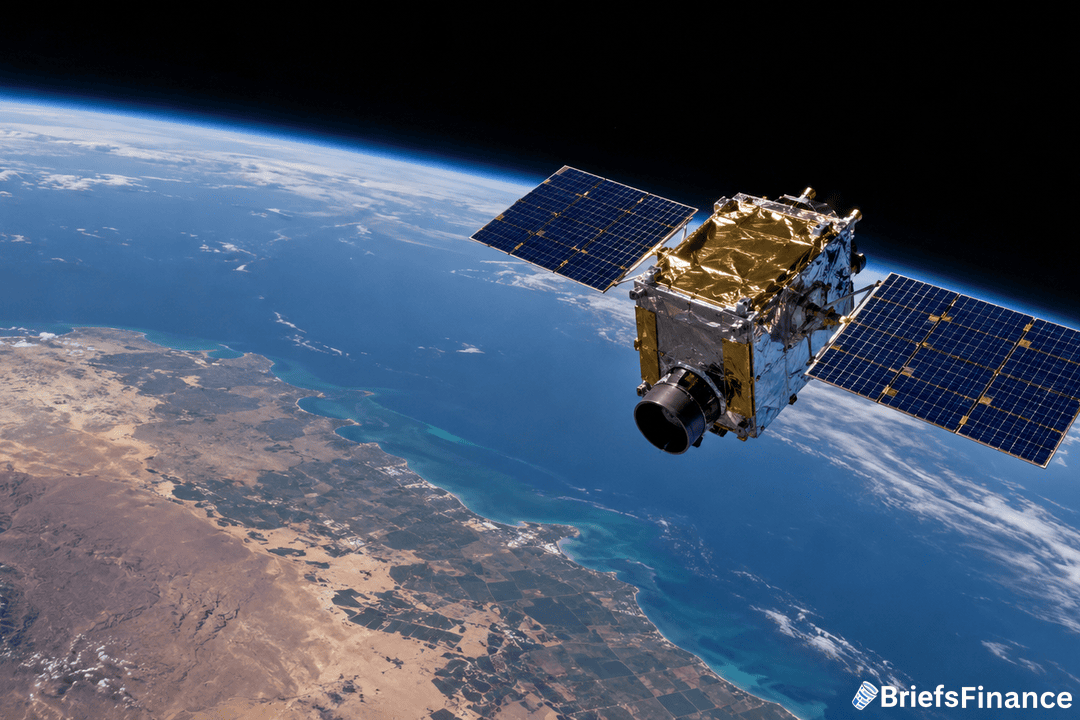
For years, a satellite was just a pricey camera. It took photos and beamed them down. People on the ground read them. In April, one of them skipped that step. It found what it wanted on its own.
A Satellite That Answers Questions
Loft Orbital's Yam-9 craft did something new. It spotted its target with no analyst in the loop. No one on the ground had to sort the images first.
The brain was Gemma 3, a model from Google. It runs on small, low-power chips. It does not need a far-off data center. It is a vision-language model. That means it can look at a photo and answer plain questions about it.
So researchers asked, and the craft answered. They could say "show me where a city meets open land." It would point to the spot. They could also ask it to find rail hubs. It did that too.
NASA's Jet Propulsion Laboratory wrote the code. The team shrank the model to fit the craft's small memory. Yam-9 went up in late 2025 as a test bed for these orbital AI projects. The idea even began with astronauts, since one NASA researcher wanted a Moon helper you could just talk to.
We break down the companies turning AI into actual revenue every morning in Market Briefs - plus a free investing masterclass when you sign up.
Why Investors Should Care
Picture a security camera versus a guard who watches the feed. One just records and hopes someone looks later. The other warns you the second something seems off.
AI on board flips a satellite to that second kind. That changes what these machines are worth. A craft that sorts its own data wins. It beats one that buries analysts in raw images.
The near-term win is simple. The craft can triage data up in orbit. That cuts the flood sent down to the ground.
Loft's head of AI, Paul Lasserre, put it plainly. It opens the door to "always-on, patrol layers in space." You could ask one to watch a border. It would flag anything strange.
The chip inside makes that work. Yam-9 runs on an Nvidia edge processor. It is the same kind showing up across the field. Planet Labs flies craft with the same chips. It is now testing this AI trick too. Kepler Communications runs the largest bank of these chips in space, and it hints more uses are on the way.
What To Watch
This was a test, not a finished tool. Loft runs just 12 satellites today. It also rents them to other firms, like a landlord. It just agreed to build and run six for a company called EarthDaily.
Full real-time cover of the planet is the goal. That would take 50 to 100 craft like Yam-9. The bigger prize comes after that, since the next step is running real computing power in space. One craft did the analyst's job from orbit, and the rest of the field is taking notes.
Want this kind of read on where tech and markets meet? Join the investors reading Market Briefs - you also get a 45-minute investing course thrown in.