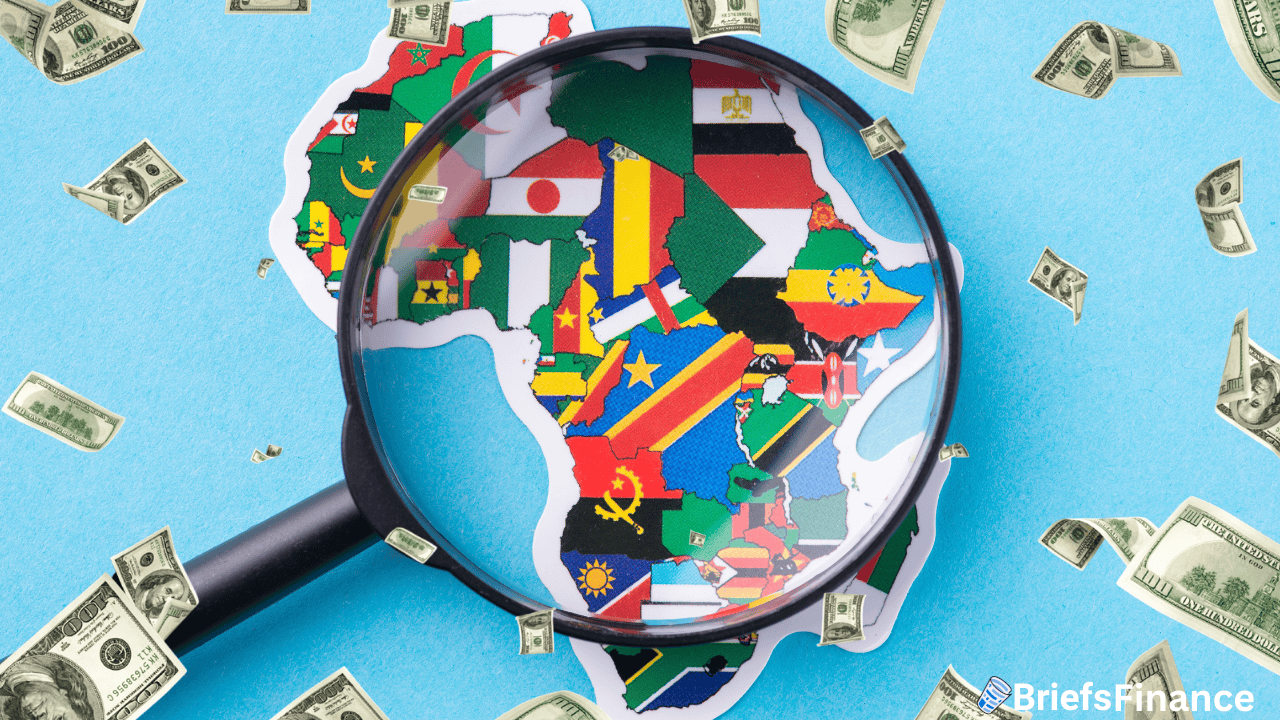
In 2024, Africa attracted $97 billion in foreign direct investment - a 75% increase from 2023.
That's more money flowing into the continent from investors than ever before in history.
The largest single investment came from Abu Dhabi, which invested $24 billion in Egypt for a mega project.
But even if you remove that outlier, foreign investment into Africa still grew by 12%.
What's driving this surge? Developed nations like China and the U.S. see Africa as an untapped resource hub. More investors are entering the market as its potential becomes clear.
Our analysts have identified a major market shift going on in Africa right now. One that is creating opportunities for investors to potentially profit.
If you want to learn how to take advantage of this opportunity now, you'll want to check out Briefs Pro here.
Below, we'll explain what's fueling this investment wave, which opportunities U.S. investors can access, and how to evaluate African market exposure without the typical emerging market headaches.
Africa by the Numbers: 2025 Investment Landscape*
| Metric | Figure | Context |
| Population | 1.5 billion | ~20% of world population |
| Projected Population (2100) | 3 billion | Expected to double in 75 years |
| FDI in 2024 | $97 billion | 75% increase from 2023 |
| Gulf Nations Investment (2012-2025) | $179 billion | Focused on data centers, renewable energy |
| South Africa GDP (2024) | $400 billion | Up from $323 billion in 2016 |
| Egypt GDP (2024) | $389 billion | Up from $248 billion in 2017 |
*Data above via the African Development Bank Group, and World Bank.
Can Americans Invest in African Stocks?
Yes, Americans can invest in African stocks, as long as the equities are listed on U.S. exchanges.
The most straightforward approach is through U.S.-listed companies with significant African operations.
Companies like Ormat Technologies (ORA), Kosmos Energy (KOS), and Barrick Mining Corporation (B) trade on American exchanges while generating substantial revenue from African markets.
For broader exposure, Americans can invest in Africa-focused ETFs that trade like regular stocks on U.S. exchanges.
The VanEck Africa Index ETF (AFK) and iShares MSCI South Africa ETF (EZA) both offer diversified exposure without the complexity of opening international brokerage accounts.
Some U.S. brokers also offer access to American Depositary Receipts (ADRs) of African companies, though these options remain limited compared to other emerging markets.
The barrier to entry has dropped significantly as African markets modernize and U.S. investors gain more access points through standard brokerage accounts.
The key advantage: You can gain African market exposure using the same brokerage account you use for U.S. stocks, without dealing with currency conversion headaches or unfamiliar foreign exchanges.
What's Driving the African Investment Boom?
Three major factors are converging to make Africa attractive to global capital right now:
Untapped Natural Resources at Scale
Africa contains massive reserves of oil, natural gas, gold, copper, and rare earth minerals that remain underutilized.
The continent has what investors want: valuable commodities sitting beneath the ground, waiting for infrastructure to extract them efficiently.
But these resources have existed for decades. So what changed?
The African Continental Free Trade Area (AfCFTA)
In 2021, the AfCFTA agreement launched, connecting all 54 African countries into one of the largest free trade zones in the world.
This single policy shift reduced trade barriers across the continent. Companies can now move goods, services, and capital more easily between African nations.
Our market analysts got a chance to speak with Florie Liser, President and CEO of Corporate Council on Africa in an exclusive interview, and she explained this impact in-depth:
"The AfCFTA will reshape logistics and supply chains for resource exports by reducing trade barriers, increasing quality of traded goods, improving infrastructure, boosting intra-African trade, which will lower trade costs and speed transit time, and shifting towards regional value chains."
This agreement makes it easier for companies to do business across Africa. That's attracting serious money.
Demographics and Growing Markets
Nearly 1.5 billion people live in Africa - almost 20% of the world's population. Over the next 75 years, that population is expected to double.
Young populations mean growing workforces. Growing workforces mean expanding consumer markets. Expanding consumer markets mean companies need infrastructure to serve them.
The economic data backs this up. South Africa's GDP hit $400 billion in 2024, up from $323 billion in 2016.
Morocco saw its GDP reach record highs in 2024. Egypt's GDP reached $389 billion in 2024, up from $248 billion in 2017.
Investors are now betting that Africa represents the next frontier of investment potential. As populations and economies grow, the continent will need more infrastructure. Companies already positioned there may benefit as billions flow in.
What Are the Emerging Markets in Africa?
Emerging markets in Africa vary significantly by sector and geography, but several key areas are attracting the most foreign capital.
Energy Infrastructure
Many African countries have oil, natural gas, and perfect conditions for renewable energy that haven't been fully utilized yet.
Kenya, Ghana, and Senegal have become prime targets for energy projects, particularly geothermal and solar installations.
Countries with reliable energy sources are becoming attractive locations for data centers. Tech companies need consistent power and affordable land to build the massive facilities that power AI, cloud computing, and the internet.
Natural Resources and Mining
Africa is one of the largest producers of gold, copper, and other valuable minerals.
The continent's mining sector continues expanding as infrastructure improves, making extraction and transport more efficient.
Mali and the Democratic Republic of Congo host some of the world's largest gold mining operations. These regions attract significant foreign investment despite political complexities.
Manufacturing and Production
A growing young population provides workers for factories and production facilities. As trade barriers fall through the AfCFTA agreement, manufacturing operations can serve multiple countries from single locations.
The bottom line: Investors are focusing on sectors where Africa has clear advantages - abundant natural resources, cheap energy, available land, and growing populations that need goods and services.
Is There an ETF That Invests in Africa?
Yes, several ETFs provide exposure to African markets, each with different strategies and geographic focuses.
The two most accessible options for US investors are:
VanEck Africa Index ETF (AFK)
This fund tracks companies generating at least 50% of revenue from African operations. It offers the broadest exposure to the continent's growth story.
As of November 10, 2025, AFK is up 57% year-to-date. The fund holds positions across multiple African countries and sectors, spreading risk while capturing upside from the investment boom.
iShares MSCI South Africa ETF (EZA)
This ETF focuses specifically on South Africa, one of the continent's largest and most developed economies. South Africa's GDP reached $400 billion in 2024, making it a major economy by African standards.
As of November 10, 2025, EZA is up 58% year-to-date. This fund provides concentrated exposure to a single country rather than continent-wide diversification.
Both ETFs trade on U.S. exchanges like regular stocks. You don't need special accounts or international brokerage access to invest in them.
Comparing African ETFs: Which Is Best for U.S. Investors?
| Feature | VanEck Africa Index ETF (AFK) | iShares MSCI South Africa ETF (EZA) |
| Geographic Focus | Pan-African (multiple countries) | South Africa only |
| Revenue Requirement | 50%+ from Africa | South African companies |
| Diversification | Broader across continent | Concentrated single-country |
| YTD Performance (Nov 2025) | +57% | +58% |
| Risk Profile | Diversified country risk | Concentrated country risk |
| Best For | Investors wanting broad Africa exposure | Investors bullish on South Africa specifically |
The "best" Africa ETF depends on your investment goals.
If you believe the entire continent will benefit from infrastructure investment and growing trade, AFK offers broader exposure.
You're betting on Africa as a whole rather than one country's success.
If you believe South Africa's more developed economy and infrastructure will attract disproportionate investment, EZA provides concentrated exposure.
You're making a more specific bet on Africa's largest economy.
Both funds have delivered similar returns in 2025, but their future performance will diverge based on which parts of Africa see the most growth in coming years.
For most US investors seeking African exposure, AFK makes sense as a starting point due to its diversification across multiple countries and sectors.
African Emerging Markets vs Other Emerging Markets
African emerging markets differ from other developing regions in several important ways.
Advantages Over Other Emerging Markets
Africa's population is younger and growing faster than most Asian or Latin American emerging markets. This demographic advantage means a larger workforce and consumer base decades into the future.
The continent also has less developed infrastructure, which sounds negative but creates opportunity.
Every road, power plant, and data center that gets built represents potential investment returns. More established emerging markets like Brazil or India have already built much of their basic infrastructure.
Natural resource concentration gives Africa unique appeal. While other emerging markets have resources, few match Africa's combination of oil, gas, gold, copper, and rare earth minerals in one region.
Challenges Compared to Other Emerging Markets
Political stability varies more widely across African nations compared to more established emerging markets. Regulatory frameworks remain less predictable in many African countries.
Infrastructure deficits that create opportunity also create operational challenges.
Companies face higher costs and longer timelines to operate effectively compared to markets with existing roads, power grids, and ports.
Market liquidity remains lower in most African stock markets compared to exchanges in Brazil, India, or Southeast Asia. This makes direct stock investment more difficult for institutional and retail investors.
The Investment Case
The African investment opportunity sits earlier in the development curve than most emerging markets. This means higher potential returns but also higher risks and longer time horizons.
Florie Liser captured this dynamic:
"Africa is about to enter a period like the U.S. gold rush with minerals, oil and gas as well as infrastructure development as boosters of investment growth in the next decade."
Investors comfortable with the risk profile of emerging markets generally may find Africa offers a more ground-floor opportunity than regions that have already seen significant development.
Investment Opportunities: Where the Money Is Going
Foreign investors are targeting specific sectors where Africa has clear competitive advantages.
Geothermal Energy for Tech Infrastructure
Data centers need constant, reliable power. Unlike solar or wind, geothermal energy doesn't depend on weather conditions. It provides 24/7 electricity from heat beneath the Earth's surface.
Kenya has become a major geothermal power producer in Africa. Companies operating there are positioning themselves as essential infrastructure for the tech boom.
One example: Ormat Technologies, a US-based geothermal energy producer, operates numerous power plants in Kenya's Olkaria and Menengai regions.
As of November 10, 2025, Ormat shares are up around 69% year-to-date. Kenya represents about 12% of Ormat's total revenue as of Q3 2025, and the company's African operations are growing substantially faster than its U.S. business.
Gold Mining Operations
Gold prices hit $4,200 per ounce in October 2025 as investors worried about global economic conditions and overvalued tech stocks. Higher gold prices mean more revenue for mining companies.
Africa hosts some of the world's largest gold mining operations.
Companies with established African presence are positioned to benefit from both higher gold prices and improved infrastructure that reduces operating costs.
Barrick Mining Corporation is the largest gold miner in Africa. About half of Barrick's total mineral production comes from African operations, with mines in Mali and the Democratic Republic of Congo among the largest globally.
Shares of Barrick are up 125% year-to-date as of November 10, 2025.
The company faces a tax dispute in Mali that has complicated one major operation, but its diversified portfolio across multiple African countries has protected overall performance.
Traditional Oil and Gas
While renewable energy gains momentum, oil and gas still power most of Africa.
Until renewables catch up, the continent will need more traditional energy as manufacturing expands and logistics networks improve.
Companies with existing oil and gas infrastructure across West Africa are positioned to meet growing demand without requiring heavy new capital expenditures.
However, this sector faces more volatility than renewable energy plays, with performance tied closely to global oil prices.
Risks: What Could Go Wrong
African investment opportunities come with risks that U.S. investors must understand.
Commodity Price Volatility
Most investment opportunities in Africa tie directly to commodity prices - oil, gold, copper, and natural resources.
If commodity prices drop significantly, company revenues suffer even if operations run perfectly.
Brent Crude oil prices fell from $82 to around $65 per barrel between early and late 2025, hurting companies dependent on oil extraction.
Geopolitical and Regulatory Risk
Governments can change regulations, impose new taxes, or seize control of operations. This happens more frequently in developing markets than in the U.S. or Europe.
Barrick's conflict with Mali's government forced the company to remove that mine from its 2025 production forecast.
This type of scenario is not uncommon among companies operating in Africa.
Infrastructure Deficits
The same infrastructure gaps that create opportunity also create operational challenges. Poor roads increase transportation costs.
Unreliable power grids complicate manufacturing. Limited port capacity slows exports.
These challenges improve over time as infrastructure investment flows in, but they create near-term headwinds for companies operating in less developed regions.
Liquidity and Market Access
African stock markets generally have lower trading volumes than U.S. or European exchanges. This can make it difficult to buy or sell positions quickly, especially for institutional investors moving large amounts of capital.
For U.S. retail investors using ETFs or U.S.-listed stocks with African exposure, this risk is less direct but still affects the underlying holdings.
Want to Find Opportunities Before the Rest of the Market?
Africa represents an emerging opportunity, but it's just one of many market shifts creating potential for investors right now.
Every week, our analysts break down market shifts that are creating ground-breaking opportunities with our Market Briefs Pro reports.
Market Briefs Pro provides weekly deep-dive reports identifying market shifts before they become main stream.
We combine exclusive expert interviews, financial analysis, and show you where the money is moving so you can focus on where it's headed next.
Subscribe to Market Briefs Pro to get our weekly investment reports and start learning about potential market-beating opportunities.
FAQ: African Investment Questions
What are the main risks of investing in African stocks?
The main risks include commodity price volatility, geopolitical instability, and regulatory uncertainty. African governments may change tax policies or regulations affecting foreign companies. Infrastructure deficits can increase operating costs.
However, diversified approaches through ETFs or companies operating across multiple African countries help mitigate these risks.
How do African ETFs compare to direct stock investment?
African ETFs like AFK and EZA provide diversification across multiple companies and reduce single-stock risk.
Direct investment in companies with African operations (like Ormat or Barrick) offers more concentrated exposure to specific sectors but requires more research and monitoring.
Most U.S. investors benefit from starting with ETFs before moving to individual stocks.
Is Africa a good investment for 2026?
Africa offers long-term potential based on demographics, natural resources, and infrastructure development.
Foreign direct investment hit record levels in 2024, and the AfCFTA agreement is reducing trade barriers.
However, short-term volatility remains high, and investors should maintain multi-year time horizons. It's not suitable for investors seeking quick returns or low risk.
Which African countries attract the most investment?
Egypt, South Africa, and Kenya lead in foreign direct investment. Egypt received $24 billion from Abu Dhabi in 2024 alone.
South Africa has the continent's most developed economy and stock market. Kenya is becoming a hub for renewable energy and tech infrastructure.
Other growing markets include Ghana, Senegal, Morocco, and Nigeria.
Can I invest in African stocks through my regular brokerage account?
Yes, most US brokerage accounts provide access to Africa-focused ETFs (AFK, EZA) and U.S.-listed companies with African operations.
You don't need special international accounts. Some brokers offer ADRs of African companies, though options remain limited. ETFs provide the easiest access point for most retail investors.
The Next Frontier of African Investment Opportunities
A historic amount of foreign direct investment is going into Africa in 2025.
Global investors are pouring money into African energy, mining, and infrastructure as economies and populations grow.
This creates potential opportunities for companies already operating there who will see increased spending over time.
Florie Liser summarized the opportunity:
"U.S. investors should position themselves to partner with African companies to add value to these minerals and increase infrastructure connectivity to take full advantage of this opportunity."
The investment case is straightforward: Africa has resources, young populations, and falling trade barriers. Infrastructure development over the next decade will require hundreds of billions in capital.
Companies positioned to benefit from this spending may see substantial growth.
But timing matters. This remains an early-stage opportunity with significant risks.
Investors comfortable with emerging market volatility and willing to maintain multi-year time horizons may find African exposure adds valuable diversification.
The question isn't whether Africa will develop. It's whether you can identify which companies will capture that growth before everyone else does.