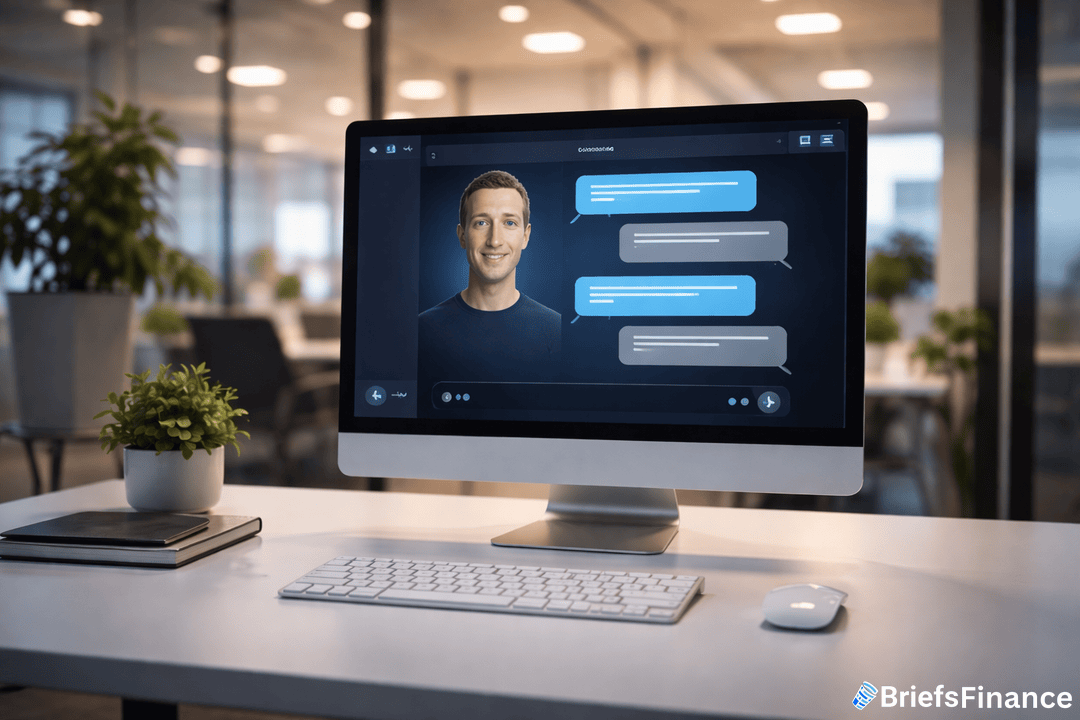
Mark Zuckerberg can't talk to all 70,000 Meta workers. So the company built a robot version of him that can. Meta has made a chatbot that sounds like its CEO. Workers can ask it questions about where the company is headed. The bot gives answers that are meant to sound like they came from Zuckerberg himself. It's live. It's being used. And not everyone at Meta is happy about it.
How It Works
The AI version of Zuckerberg is trained on his public talks, his writing style, and his recent views on company plans. Meta calls it a "proxy" that is always on and always ready to answer.
Zuckerberg himself helped train and test the bot. He made sure it sounds right and stays on message. The goal is to help workers feel like they have a line to the founder - even when the real one is busy. In plain terms: It's a chatbot that talks like Zuckerberg. Think of it as a smart FAQ page that sounds like your boss. You ask it a question about where the company is going. It gives you an answer in Zuckerberg's voice and style.
Why Meta Did This
Meta is one of the biggest AI companies on the planet. It makes large language models. It sells AI tools to other firms. And it wants the world to believe that AI can replace human interaction in useful ways. What better way to prove that than by starting at the top? If an AI version of the CEO can keep 70,000 workers informed and aligned, it makes the case that AI can do the same for any large company. The business case: Big firms spend millions on internal comms - town halls, emails, Slack posts, Q&A sessions. If a bot can handle even a fraction of that, it saves time and money.
Not Everyone Is a Fan
Some Meta workers have pushed back. The main worry is accuracy. What happens when AI Zuckerberg says one thing and the real Zuckerberg does another? What if the bot takes a stance on a topic the real CEO hasn't weighed in on yet? There's also a culture question. If the CEO's connection with his team is handled by a robot, what does that say about how the company sees its people? The bigger risk: If the bot gets something wrong - and workers act on it - who takes the blame? The bot? The CEO? The team that trained it?
What This Says About AI at Work
Meta isn't the only firm thinking about this. AI clones of leaders, sales reps, and support staff are being tested at companies around the world. Meta is just the first big name to admit it's doing it with the CEO. If it works, expect copycats. If it fails, it becomes a cautionary tale about how far AI should go in the workplace.
What to Watch
Watch for how Meta talks about this tool at its next earnings call. If Zuckerberg brings it up as a success, it could become a product Meta sells to other firms. If it goes quiet, the pushback from workers probably won.