A UN-affiliated tribunal voted 18 to 3 against Argentina's request to freeze drilling near the Falklands, saying the case turns on sovereignty and is outside its jurisdiction.
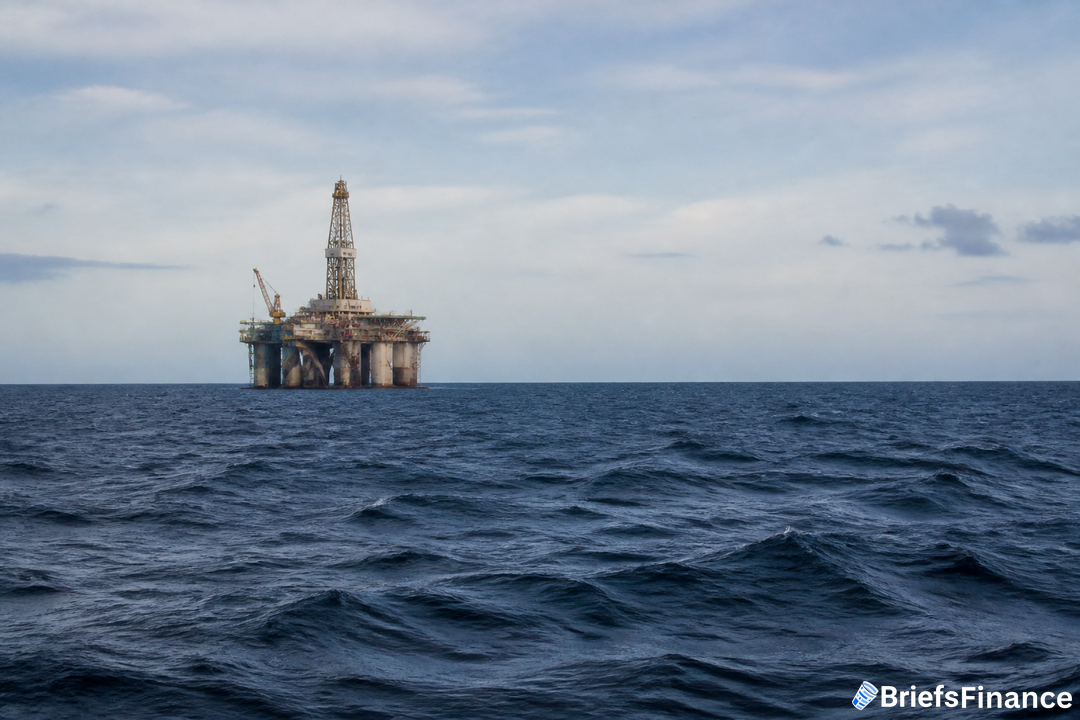
Sea Lion aims for first oil in March 2028 at about 35,000 barrels of oil plus equivalent gas per day; a UK subsidiary of Israel's Navitas Petroleum holds the majority stake, with Rockhopper Exploration owning the balance.
Buenos Aires relied on a 2011 statute to seek to prohibit Navitas, Rockhopper and their vendors from doing business in Argentina; it still awaits congressional approval yet has already led Halliburton and others to back away.
What the tribunal said, and why it matters
A United Nations-backed maritime court in Hamburg declined to order a pause on UK-linked drilling near the Falkland Islands. Tribunal president Maurice Kamga said the court lacks authority because the dispute raises sovereignty questions that the Law of the Sea does not address, and judges rejected Argentina's request for provisional measures by a vote of 18 to 3.
Argentina petitioned the court last month to freeze operations while a case proceeds pursuant to the UN Convention on the Law of the Sea. A ruling in that broader case is not expected soon, and Buenos Aires is pushing for judges to be appointed quickly.
The project at the center
Sea Lion is slated to begin output in March 2028, starting at roughly 35,000 barrels of oil along with equivalent gas each day. The majority interest is held by a UK subsidiary of Israel's Navitas Petroleum LP, and Rockhopper Exploration Plc owns the remainder.
The pressure campaign has already altered the project's contractor list. In September, President Javier Milei turned to a 2011 law to seek restrictions on Navitas, Rockhopper and their suppliers doing business in Argentina amid an ongoing shale boom. Those sanctions still need approval from Congress, yet the message has had real effects: Halliburton Co. and other major oil-service providers have said they will not take on Sea Lion work, compelling the project to find replacements for two contractors that withdrew.
Political heat on both shores
Milei put Argentina's claim to the Falklands, or Islas Malvinas, back in the spotlight even as his approval wanes before a reelection run next year. After the ruling, he said he respects the decision but it is "not the final word," adding it "in no way legitimizes the unilateral exploitation of our natural resources" and that "The national government will continue exercising all necessary actions to impede its exploitation."
London welcomed the outcome and urged Buenos Aires to end "economic pressure" on the islands. "Argentina sought to stop the Falkland Islanders making their own sovereign decisions and failed in this attempt," Foreign Minister Ed Miliband and Attorney General Ellie Reeves said, adding, "The UK has no doubt of our sovereignty of the Falkland Islands, our sovereignty and sovereign rights over the surrounding maritime areas, and the right of self-determination of the Falkland Islanders."
When global developments touch energy and finance, stay informed with the free Market Briefs to get clear five-minute explanations
Milei's tight ties with US President Donald Trump have introduced a new wrinkle to the standoff and unsettled some officials in the UK. Earlier this month, a spokesman for Prime Minister Andy Burnham said the UK planned to defend itself forcefully in the arbitration.
The market angle
The sovereignty claim is embedded in Argentina's constitution.
Markets are already zeroed in on next year's presidential contest, and fears of a possible return of the left have helped drive a selloff in Argentine sovereign bonds. The bottom line: watch Sea Lion's build-out timeline and contractor lineup as a live read on energy exposure, UK-Argentina legal risk, and any spillover into Argentina's credit story.
Big-picture context makes complex international stories easier to follow, so subscribe to the free Market Briefs newsletter for quick daily updates
Anthropic has gone public at a valuation of about $1.5 trillion, while Amazon went public in 1997 at around $440 million. Anthropic has about $33 billion in revenue this year and no profit, and investors are paying more than 40 times its sales, against about 3 times for Amazon. Briefs Finance CEO Jaspreet Singh says nobody knows what comes next, and that long-term investors use downturns to buy instead of panic selling.
Tech stocks are selling off because investors don't know who will lead Nvidia, the company that has been funding the AI industry and selling it chips.
Inflation has the Federal Reserve planning to raise interest rates, with a hike expected in December, and that puts pressure on homebuyers, private equity and the $40 trillion national debt.
Briefs Finance CEO Jaspreet Singh says nobody has a crystal ball, so his rules are to buy when markets are low, hold long term and invest only what you're willing to lose.
The national debt is above $40 trillion, and the Federal Reserve has gone from sending Washington its profits to losing money.
President Trump's four-part plan leans on shorter-term debt, stablecoin companies buying Treasuries, a bigger balance sheet and government stakes in private companies.
The goal is to outgrow the debt, not pay it off, so Jaspreet Singh points investors to the seven industries where Washington wants growth.
The Fed makes its next rate decision on December 9 and is now talking about jumbo interest rate hikes of 0.5%, though one in December looks unlikely.
Washington will pay a record $1.05 trillion in interest this year on $40 trillion of debt, and that debt resets at higher rates as the Fed hikes.
Jaspreet Singh's five moves are to pay down variable-rate debt, earn interest on your savings, know which stocks feel the pressure, look at value and hedge.
Margin debt, the money investors borrow to buy stocks, is at a record of around 4.6% of GDP, up from 3.9% in 2021.
ETF money has more than tripled in five years to 7% of GDP, while corporate buybacks and 401(k) money sit below their earlier peaks.
Margin calls and panic selling can make the next downturn deeper, so Jaspreet Singh keeps buying broad market funds and says most investors should skip margin debt.
Jensen Huang is out at Nvidia over affairs with multiple people, and the company he founded has been the bank of American AI, with about $30 billion into OpenAI and $10 billion into Anthropic.
A hotter-than-expected inflation report has Fed officials talking about a possible 0.5% hike in December, and gold, silver, and bitcoin fell on the news.
President Trump said the US may not need a deal with Iran, keeping oil prices and inflation risk high. Jaspreet Singh breaks down what it all means for AI stocks and your portfolio.
Stocks are booming at the fastest pace in years, jobless claims just hit a 57-year low, and most investors still feel like nobody is hiring.
The Fed is protecting the dollar over the economy, oil swings on every Iran headline, and a few AI companies are carrying an S&P 500 where four of five stocks sit in a correction.
Jaspreet Singh explains why circular financing between Nvidia, OpenAI, Anthropic, and SpaceX rhymes with 2008's house of cards, and how his three investing pillars handle a stock market bubble.
The Fed has raised rates, cut them, then raised them again only twice in the last 60 years, and both times the economy fell into a recession and stocks crashed.
The same stop-and-go cycle is playing out now, with one big difference: US debt is 125% of GDP today versus about 30% in 1980.
In the 1970s gold rose roughly 24x, real estate 157%, stocks lagged, and cash lost half its value. Jaspreet Singh lays out five assets to consider before the next flip.
The IRS 2027 tax plan keeps the same seven rates but widens every bracket and lifts the married-filing-jointly standard deduction to $33,200.
The 0% long-term capital gains bracket rises to $102,100, so a household living on $135,300 of investment income could owe $0 in federal income tax.
C corporations still pay 21%, small businesses keep the 20% QBI deduction, and the 401(k) limit climbs to $25,500 with an $8,500 catch-up for investors over 50.
Make sure to check your inbox for the first email.
Before you go
We’re hosting our first ever livestream on how investors can use ChatGPT & Claude to invest like a pro. It’s on 11/17 and is hosted by our CEO Jaspreet Singh.