Big raise, clear valuation
Science Corp. closed a $400 million financing and pegs its post-money valuation at $3.5 billion that counts the fresh capital. Participants in the financing included Khosla Ventures, Tenet Healthcare Corp., and the Ackman Oxman Institute.
Vinod Khosla, founder of Khosla Ventures, put a big target on growth: "My bet is this company can quickly get to hundreds of millions in revenue, and longer-term get to billions."
Eye implant progress and commercialization plans
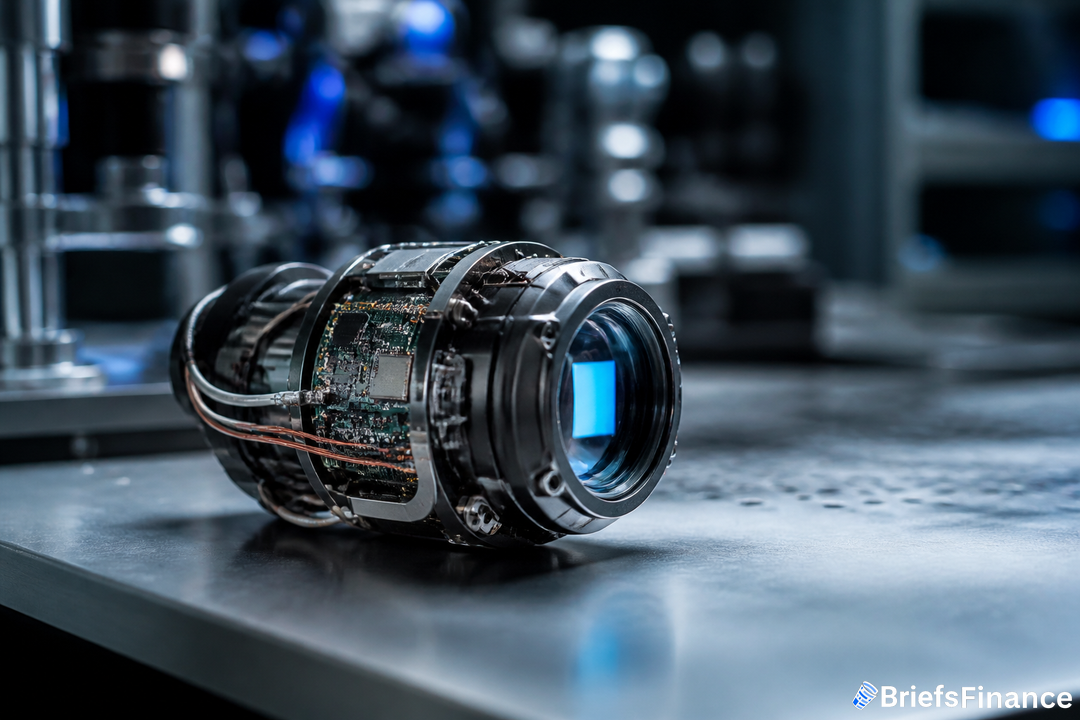
Earlier this year, Science's Prima system secured European approval to treat an advanced form of age-related macular degeneration, the top driver of vision loss in older adults, and is billed as the first approved option that restores some vision for that condition. The implant is a small chip placed in the eye that pairs with dedicated glasses.
Science says the commercial version has already been implanted in two patients in Germany, with dozens more scheduled. A spokesperson said patients are receiving the implant in Germany now, with availability coming soon in Italy, France, and the UK.
When innovation reshapes industries, investors who learn new tools gain an edge. We're hosting our first ever investor livestream on 11/17 to show you how to use ChatGPT and Claude to invest like a pro, hosted by Briefs Finance CEO Jaspreet Singh. Save your seat.
The company plans to offer the device for cash-paying patients at Moorfields Private Eye Hospital in London, but is not disclosing price. CEO Max Hodak said the new funds will support studies in other eye diseases and a next-gen system aimed at widening the field of view and shrinking electronics to deliver more usable sight. Hodak previously co-founded and served as president of Neuralink, the Elon Musk-backed brain implant company.
Neural ambitions, testing timeline, and the bigger market
Beyond ophthalmology, Science is developing a second implant that forms a direct interface with the brain via neurons engineered in the lab. The company has selected its first disease target but has not named it. The device has already undergone tests in animals, and Science aims to start human trials within the next 16 months.
Science sits inside a broader wave of brain computer interface startups drawing global interest and funding to tackle neurological disorders. Over the past decade, US brain implant companies have raised more than $3 billion, according to PitchBook, and China's government is backing development of a domestic industry.
What this means for your portfolio
Keep an eye on the 16 month window Science hopes to hit for first-in-human testing of its brain implant, and on how quickly studies broaden to additional eye diseases.
Curious investors explore fresh tools to better see technological change ahead. On 11/17, our CEO Jaspreet Singh goes live for our first ever investor livestream on how to use ChatGPT and Claude to invest like a pro. Register to join him.