A federal antitrust suit claims McDonald's uses an AI "pricing engine" to set menu prices and overcharged U.S. customers for Big Macs and fries, a claim the company disputes.
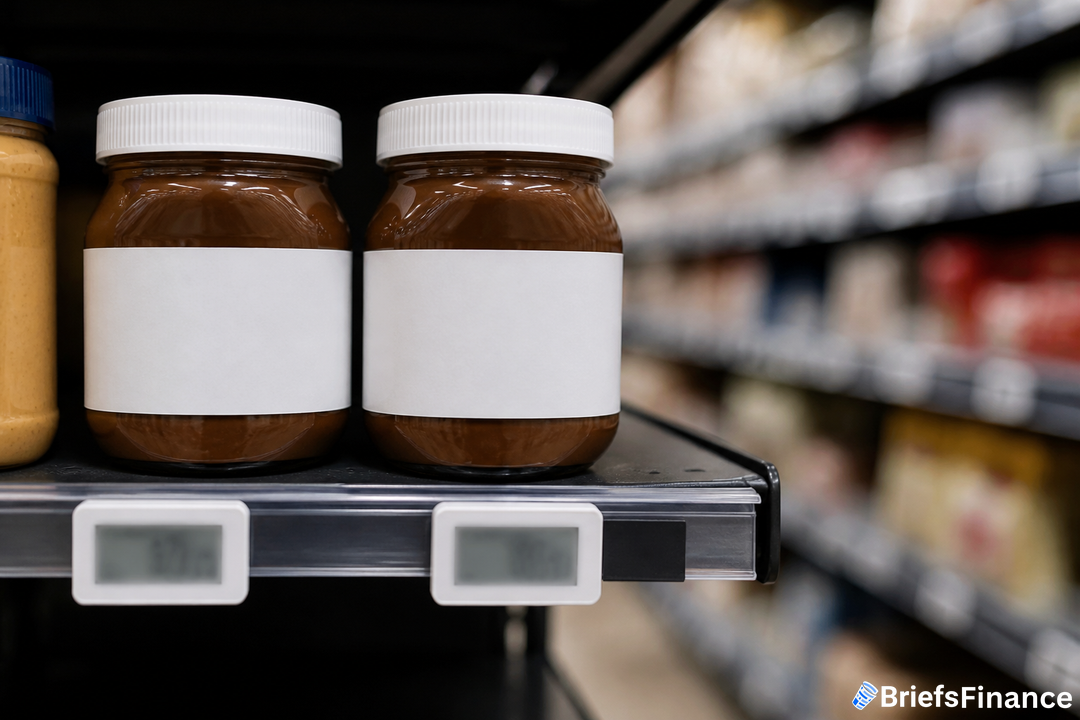
Retailers are rolling out tools like digital shelf labels, facial recognition checkout, and AI list builders, from Kroger's FlashFood to Sainsbury's new SmartLists.
Economists warn smarter tech could make prices move more often and become more individualized, complicating inflation readings and reshaping how shoppers compare deals.
Why this is showing up on your receipt
This week a federal antitrust complaint landed on McDonald's doorstep, alleging the chain relies on an AI driven "pricing engine" to establish menus across its U.S. outlets and that customers paid more for Big Macs and fries. McDonald's pushed back, saying it is not deploying AI to figure out what any particular customer is willing to pay, and that it provides its franchisees with "tools, resources, research and recommendations to help them make informed decisions."
The AI now in your aisle
Grocers are wiring up their stores with data tools. Earlier this year, Kroger said it uses an AI tool called FlashFood to mark down perishable goods nearing expiration and to advertise those deals in its app. Electronic shelf labels are spreading at chains like Kroger, Amazon Fresh, Walmart, and Whole Foods, making it easier to update prices in stores.
The trend is global. U.K. supermarkets including Tesco, Morrisons, and Asda are adopting electronic shelf labels, and Revolut recently piloted pay-by-face checkout in certain coffee shops so customers could pay with a glance. On Wednesday, Sainsbury's rolled out SmartLists, an AI feature that builds shopping lists and helps customers find products from uploaded photos or typed meal ideas. CNBC contacted Amazon Fresh, Whole Foods, Tesco, Morrisons, Asda and Revolut about their AI use and did not receive immediate responses.
Walmart and Kroger have publicly said in recent years they steer clear of dynamic or surge pricing and do not set person-specific prices, describing their tools as focused on streamlining operations.
As retailers normalize AI, experts see a greater risk of dynamic pricing, where prices change quickly and frequently in response to conditions. "Dynamic pricing means changing prices in response to changing market conditions, such as demand, timing, capacity or competitors' prices," said Miroslava Marinova, a senior lecturer at the University of East London in commercial law. "It is not new. Airlines, hotels, and ride-hailing services have used it for years."
In April, Bank of England economists Clare Lombardelli and Rupal Patel observed that advances in technology are making prices adjust more frequently and become more tailored to individuals, which could lead to more firms charging "as close to the maximum price a consumer is willing to pay for a good or service," which they defined as "perfect price discrimination."
That shift also complicates inflation tracking. They noted that it becomes harder to "measure and interpret" month to month inflation when the CPI relies on a representative basket. "That works well when prices mostly move slowly and uniformly. But when prices shift continually - and differently for each shopper - the idea of a 'representative' price becomes strained," they said.
Data, rules and what it means for your wallet
AI and digital tools expand what companies can learn about you, from purchase histories and browsing behavior to location and shopping patterns. Marinova said this helps blur lines between pricing approaches. "This is also why the traditional distinction between dynamic and personalised pricing is becoming less clear in practice," she explained. "Dynamic pricing responds primarily to market conditions, whereas personalised pricing uses information about the consumer to estimate willingness to pay." As firms mix market level data with granular customer information, "the boundary between dynamic and personalised pricing becomes thinner," she added.
Some U.S. regulators are trying to get ahead of this. New York now obliges most businesses that leverage customers' personal data for pricing to make that use plainly disclosed. Maryland has restricted food sellers and delivery apps from using personalised, data driven pricing to levy higher prices on certain food, and New Jersey and Connecticut have put in place rules aimed at "surveillance pricing."
For shoppers, the impact is mixed. Marinova noted that dynamic and personalised pricing can make some goods cheaper for some people. The risk is transparency. "That makes it much harder to compare prices and to know whether another consumer is being offered a different price for the same product," she said. If consumers cannot tell why they got a price, cannot compare it to others, and cannot easily switch, "the normal disciplining effect of consumer choice becomes weaker."
The BOE economists warned that personalized pricing "splinters the consumer experience," so households may see increasingly different inflation rates. "And when prices differ for the same thing, inflation becomes even more personalised - and aggregate measures may no longer reflect households' experience," they said.
Bottom line for your budget: more prices could update in the background, and the sticker you see might not be the sticker your neighbor sees. Keep an eye on how stores present prices and disclosures, because the way prices are set may matter as much as the number on the tag.
Anthropic has gone public at a valuation of about $1.5 trillion, while Amazon went public in 1997 at around $440 million. Anthropic has about $33 billion in revenue this year and no profit, and investors are paying more than 40 times its sales, against about 3 times for Amazon. Briefs Finance CEO Jaspreet Singh says nobody knows what comes next, and that long-term investors use downturns to buy instead of panic selling.
Tech stocks are selling off because investors don't know who will lead Nvidia, the company that has been funding the AI industry and selling it chips.
Inflation has the Federal Reserve planning to raise interest rates, with a hike expected in December, and that puts pressure on homebuyers, private equity and the $40 trillion national debt.
Briefs Finance CEO Jaspreet Singh says nobody has a crystal ball, so his rules are to buy when markets are low, hold long term and invest only what you're willing to lose.
The national debt is above $40 trillion, and the Federal Reserve has gone from sending Washington its profits to losing money.
President Trump's four-part plan leans on shorter-term debt, stablecoin companies buying Treasuries, a bigger balance sheet and government stakes in private companies.
The goal is to outgrow the debt, not pay it off, so Jaspreet Singh points investors to the seven industries where Washington wants growth.
The Fed makes its next rate decision on December 9 and is now talking about jumbo interest rate hikes of 0.5%, though one in December looks unlikely.
Washington will pay a record $1.05 trillion in interest this year on $40 trillion of debt, and that debt resets at higher rates as the Fed hikes.
Jaspreet Singh's five moves are to pay down variable-rate debt, earn interest on your savings, know which stocks feel the pressure, look at value and hedge.
Margin debt, the money investors borrow to buy stocks, is at a record of around 4.6% of GDP, up from 3.9% in 2021.
ETF money has more than tripled in five years to 7% of GDP, while corporate buybacks and 401(k) money sit below their earlier peaks.
Margin calls and panic selling can make the next downturn deeper, so Jaspreet Singh keeps buying broad market funds and says most investors should skip margin debt.
Jensen Huang is out at Nvidia over affairs with multiple people, and the company he founded has been the bank of American AI, with about $30 billion into OpenAI and $10 billion into Anthropic.
A hotter-than-expected inflation report has Fed officials talking about a possible 0.5% hike in December, and gold, silver, and bitcoin fell on the news.
President Trump said the US may not need a deal with Iran, keeping oil prices and inflation risk high. Jaspreet Singh breaks down what it all means for AI stocks and your portfolio.
Stocks are booming at the fastest pace in years, jobless claims just hit a 57-year low, and most investors still feel like nobody is hiring.
The Fed is protecting the dollar over the economy, oil swings on every Iran headline, and a few AI companies are carrying an S&P 500 where four of five stocks sit in a correction.
Jaspreet Singh explains why circular financing between Nvidia, OpenAI, Anthropic, and SpaceX rhymes with 2008's house of cards, and how his three investing pillars handle a stock market bubble.
The Fed has raised rates, cut them, then raised them again only twice in the last 60 years, and both times the economy fell into a recession and stocks crashed.
The same stop-and-go cycle is playing out now, with one big difference: US debt is 125% of GDP today versus about 30% in 1980.
In the 1970s gold rose roughly 24x, real estate 157%, stocks lagged, and cash lost half its value. Jaspreet Singh lays out five assets to consider before the next flip.
The IRS 2027 tax plan keeps the same seven rates but widens every bracket and lifts the married-filing-jointly standard deduction to $33,200.
The 0% long-term capital gains bracket rises to $102,100, so a household living on $135,300 of investment income could owe $0 in federal income tax.
C corporations still pay 21%, small businesses keep the 20% QBI deduction, and the 401(k) limit climbs to $25,500 with an $8,500 catch-up for investors over 50.
Make sure to check your inbox for the first email.
Before you go
We’re hosting our first ever livestream on how investors can use ChatGPT & Claude to invest like a pro. It’s on 11/17 and is hosted by our CEO Jaspreet Singh.