Free NewsletterPro Login

Warning: Undefined variable $stocks in /var/www/briefs.co/htdocs/wp-content/plugins/oxygen/component-framework/components/classes/code-block.class.php(133) : eval()'d code on line 448

Warning: foreach() argument must be of type array|object, null given in /var/www/briefs.co/htdocs/wp-content/plugins/oxygen/component-framework/components/classes/code-block.class.php(133) : eval()'d code on line 448

Warning: Undefined variable $funds in /var/www/briefs.co/htdocs/wp-content/plugins/oxygen/component-framework/components/classes/code-block.class.php(133) : eval()'d code on line 472

Warning: foreach() argument must be of type array|object, null given in /var/www/briefs.co/htdocs/wp-content/plugins/oxygen/component-framework/components/classes/code-block.class.php(133) : eval()'d code on line 472
/* the link was here */

How a missed email sent F-35 parts through Hong Kong and into Chinese hands

Published Oct 7, 2026
Share:
Summary:
  • China got hold of F-35 components after a UPS worker didn't act on a routing alert that barred moving the shipment through Hong Kong under US export rules.
  • The shipment comprised an F-35 canopy and a weapons-bay door, each covered with radar-absorbing material, and was slated to reach San Francisco by way of South Korea and Taiwan.
  • Pentagon officials briefed House committee staff for about an hour on Sept. 29, and the mishap has triggered Pentagon and State Department probes plus fresh pressure from lawmakers to tighten defense logistics.

What happened

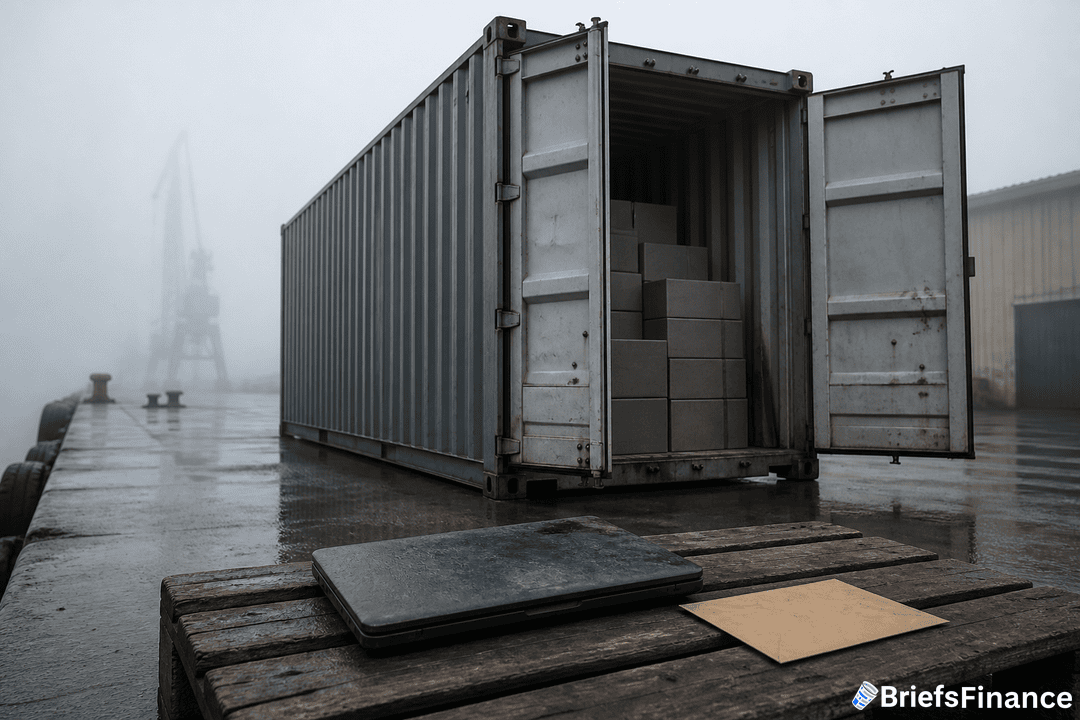
Leaving Australia behind schedule, a load of F-35 spare parts ended up going through Hong Kong as a supposed shortcut to get them to the US faster. According to a person familiar with the matter, the diversion happened because an employee at United Parcel Service Inc. failed to heed instructions banning passage through specific countries under the US International Traffic in Arms Regulations, or ITAR.

The freight forwarder DSV A/S had alerted handlers that the box contained an F-35 cockpit canopy and a weapons-bay door, both treated with radar-absorbing material. The intended route ran from Australia to San Francisco, stopping in South Korea and Taiwan, which are both US defense partners. Instead, the shipment was diverted through Hong Kong, and China ended up with the parts. The person spoke anonymously because they were not authorized to speak publicly.

Who was involved and what was disclosed

DSV was acting for F-35 maker Lockheed Martin Corp. when it flagged the ITAR restrictions, as US rules require. The person said the notice may have gone out through an IT platform other than the system the UPS employee was using to process the shipment.

Pentagon officials shared new details during an approximately hour-long Sept. 29 briefing with staff from the House Foreign Affairs and Armed Services committees. The account added context to how a chain of mistakes may have allowed access to highly sensitive US military technology, creating an embarrassment for both the Pentagon and Lockheed.

Lockheed manages a large portion of the global spare-parts pool that keeps F-35s flying for the US alongside 19 other countries. After Bloomberg initially disclosed the missing parts last month, Lockheed said, "our logistics decisions are not made unilaterally," adding that it picks carriers that align with government rules. It also said, "While we cannot discuss the details of which logistics partner was involved, we are working closely with them to help develop and implement preventive measures to strengthen our collective oversight and prevent recurrence." When presented with the new timeline of events, the company said Wednesday, "we have nothing to add or correct on the series of events you mentioned."

DSV spokesman Stephan Ghisler-Solvang would not comment. UPS spokesman Malcolm Berkley also declined to comment. UPS does not break out revenue in detail by sector, but in recent years has emphasized a push to win more business in areas that can include aerospace and defense.

Supply chain controls only work when the paperwork actually gets read. Market Briefs covers export rules free every morning.

Reactions and investigations

The Defense Department has tried to distance itself from responsibility and labeled the parts "unserviceable." US Transportation Command said it "was not involved in the transportation or coordination of the shipment in question." The Pentagon added, "We are actively working with U.S. authorities and industry partners to retrieve these components, investigate the incident, and place safeguards to avoid a future occurrence."

During the congressional session, Erica Plath, the Pentagon's deputy assistant secretary responsible for defense logistics, said she has assembled a team that is taking steps to prevent a repeat, according to the person familiar with the meeting. A Pentagon spokesman declined to provide specifics on the measures under consideration. Also present was a compliance officer from the State Department's Directorate of Defense Trade Controls, the office that enforces export-control laws, who is now examining the diversion.

Lawmakers are pressing for answers. Senator Mark Warner, the top Democrat on the intelligence committee, requested the Pentagon briefing. Committee chairman Senator Tom Cotton has called for an examination of the defense supply chain. Senator Kevin Cramer, a Republican from North Dakota who leads the Armed Services Committee panel probing the incident, asked, "Did China have a plan all along to intercept this?"

Why it matters

The F-35 is the most advanced fighter jet in service and the costliest US weapons program ever. China has tried for years to gather intelligence on it. The two misdirected parts, both treated with radar-absorbing material, were being shipped to the US in late May for potential repair or disposal, according to people familiar. Calling the loss "a big deal," Diana Maurer of the non-partisan Government Accountability Office, who leads oversight of F-35 sustainment assessments, said, "It's not good the Chinese now have" an F-35 canopy. She added, "I'm sure the Chinese celebrated and then they got busy trying to reverse engineer it and figure out how to counter it with their own technical capabilities."

For your wallet, here is the takeaway: a single logistics error can trigger investigations, briefings, and political heat for contractors and shippers tied to defense supply chains. How much that ultimately matters will hinge on what the Pentagon, State Department, and industry partners do next as they try to retrieve the parts, reconstruct what went wrong, and tighten controls.

Small administrative failures create very large security problems. Get the free Market Briefs daily newsletter and follow the story.

Disclosure

Recent News

1 2 3 … 95

Get Market Briefs delivered to your inbox every morning for free!

No fluff. No noise. No politics. Just finance news you can read in 5 minutes.

Blogs

October 5, 2026
What Is the Briefs Connector? A Simple Guide
  • The Briefs Connector lets your favorite AI read Briefs research, like Pro reports and the Briefs Score.
  • Without it, an AI asked about investing can give answers that sound right but aren't backed by that research.
  • It explains the research, but it won't tell you what to buy or sell.
Read More
October 5, 2026
Is a Recession Coming? What the Last Five Rate Hiking Cycles Say
  • The Fed has started raising rates again, and in the last five hiking cycles going back to 1994, a recession never started while the hikes were underway.
  • The pain showed up where there was a bubble to pop - housing in 2008, dot-coms in 2000, the pandemic money-printing boom in 2022 - and usually after the hikes ended.
  • Private equity and private credit are feeling this cycle first, and how far the pain spreads depends on how high rates go and how long they stay there.
Read More
October 2, 2026
Fed Interest Rates May Rise Again in 2026 - and the Newest Culprit Is AI
  • Fed Governor Barr told a meeting our head of investing research attended that higher rates are likely in 2026, lower inflation may not come soon, and AI is now pushing prices up.
  • The same week, President Trump asked the biggest AI companies to police themselves under an accord that's morally but not legally binding, because the White House sees AI as a race with China.
  • Higher rates put downward pressure on asset prices and squeeze borrowers, but the way through hasn't changed: own investments, buy on a schedule, and treat downturns as discounts.
Read More
October 1, 2026
Housing Market 2026: Why Office Buildings Are Cracking Before Houses Do
  • Office buildings are selling for 80% to 95% off because their five-year loans are resetting at much higher rates while half-empty floors have gutted the income those buildings are valued on.
  • Housing is under pressure, not cracking: a $400,000 mortgage costs $975 more a month than at 3%, but six of every seven mortgages are still under 6% and those owners are staying put.
  • Whether pressure turns into cracks is a race between unaffordability and the economy, and either way Jaspreet's rule is to treat your house as a liability and buy only what you can afford.
Read More
September 30, 2026
Dividend Investing vs. Growth Investing: Why the Slower Portfolio Can End Up Bigger
  • "What stock should I buy?" is the wrong first question. Growth, income, or wealth preservation comes first, and the goal changes which stocks even make sense.
  • At $500 a month for 30 years, 13% growth builds about $1.75 million. 10% growth plus a reinvested 4% dividend builds a little more than $2.2 million and pays a little more than $80,000 a year.
  • Income investors have US dividend ETFs, REITs, and international dividend funds to study. Growth investors have the Nasdaq 100, AI and chip funds, and small caps. None of it is a recommendation.
Read More
September 29, 2026
Why Is Gold Going Down? A 5.2% Treasury Yield Just Took Its Job
  • President Trump rejected Iran's deal to reopen the Strait of Hormuz, oil prices jumped back up, and gold fell instead of rising.
  • Treasury yields hit their highest level in more than 20 years, so investors sold gold and bought Treasuries that pay interest.
  • Higher Treasury yields make the national debt, mortgages, car loans, and credit cards more expensive, with the Fed's next rate decision due October 28.
Read More
September 28, 2026
The Strategic Bitcoin Reserve: Why the Government Wants Bitcoin to Explode
  • The US government holds about 328,000 Bitcoin, worth roughly $25 billion, and since a 2025 executive order it keeps seized coins instead of selling them.
  • Washington wants a bigger pile of assets so its $40 trillion national debt looks smaller next to them, which lets it keep borrowing and spending.
  • Bitcoin's wild price swings, and a government holding a coin built to escape governments, are the two risks investors need to watch.
Read More
September 25, 2026
BRIEFS EXCLUSIVE: 43% Of Respondents Say Bills Outran Their Income Over Past Two Years
  • 43% of the 494 Market Briefs readers surveyed said their bills grew faster than their income over the past two years, even though 79% could cover a surprise $5,000 expense tomorrow.
  • Half of readers own gold or crypto, the two classic bets against a weaker dollar, and only 13% bought nothing at all in the last 12 months.
  • The median reader says it takes $150,000 a year to feel financially secure, about $62,000 above the U.S. median household income.
Read More
September 25, 2026
The Economy Is Booming. So Why Did Stocks and Bonds Fall Together?
  • S&P Global says the US economy is growing at its fastest rate since 2021, with corporate profits up 28.9% in a year, almost four times the historical average.
  • Stocks and bonds fell at the same time, which is not how the two markets normally behave, because Treasury yields above 5% now compete with stocks for investors' money.
  • Jaspreet Singh lays out three ways to invest through a shift like this: always be buying, buy the crash, or follow the money before it hits the headlines.
Read More
September 24, 2026
The 2026 Economic Reset Is Starting: Are We in a Recession, or Is the Pain Still Ahead?
  • The Federal Reserve has flipped from stimulating the economy to fighting inflation with higher interest rates, while the White House still wants growth at almost any cost.
  • The national debt tops $40 trillion, has outgrown the entire U.S. economy, and its interest payments are now the government's fastest-growing expense.
  • Higher rates bring pain for private equity, private credit, and speculative assets, but they open opportunities for investors holding cash, treasuries, and value assets.
Read More
1 2 3 … 28
Share via
Copy link










