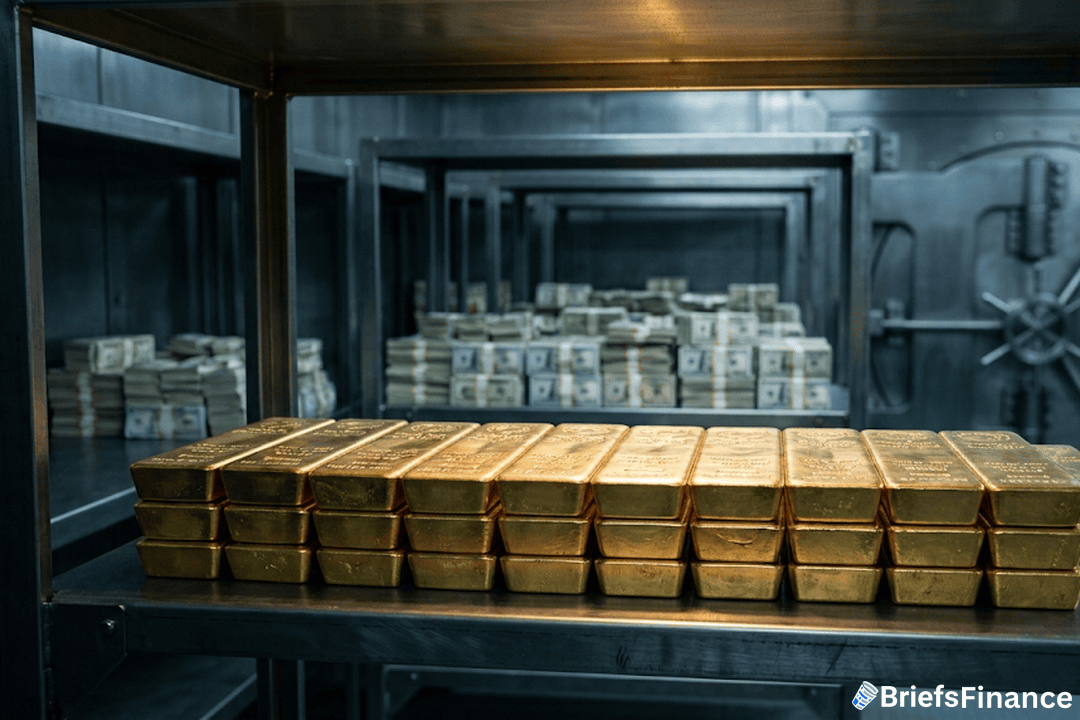
In 2020, the government started spending to keep money flowing to people while nobody was working, and the national debt jumped about $4.5 trillion in a single year. It has not stopped climbing since.
| Year | US national debt | What was happening |
|---|---|---|
| 2020 | $22.5T to $27T | Pandemic spending while the economy was shut down |
| 2022 | $30T | Record inflation from all the money printing |
| 2025 | $37T | Interest on the debt cost more than the entire military for the first time in US history |
| 2026 | $40T+ | The Treasury struggles to find lenders |
And that 2025 row happened while President Trump spent heavily on the military.
Then came 2026. The country broke $40 trillion, lenders got harder to find, and the bond market turned chaotic.
On September 9, 2026, Treasury Secretary Scott Bessent announced an emergency plan: the United States will start borrowing money from the United States.
In plain English, the government is opening a new Amex to pay off its Visa. The twist is that it can print the money to fund the Amex.
If that is the road ahead, the question for investors is no longer whether America pays its bills but what those dollars will buy when it does. That is the question Briefs Finance CEO Jaspreet Singh is tackling in a free live investor workshop on September 29: what to do with your money as the dollar loses value.
Ray Dalio Says US Debt Has Passed the Point of No Return
Ray Dalio, founder of the biggest hedge fund in the world, says the US has already passed the point of no return. Debt payments squeeze out other spending, he says, the way plaque in an artery squeezes out blood flow.
Bessent is trying to keep investors calm. His message: the United States will never default, because it can always borrow more and raise the debt ceiling, the legal cap on how much the government may borrow.
Then the US announced it would print money to lend to itself. Dalio answered with a LinkedIn post, "How Countries Go Broke: The Dynamic Behind What Is Happening Right Now," and for the first time he attached a date.
His guess is about three years, give or take two, if the country stays on its current course. He was upfront that it is only a guess.
The Four Phases of the Big Debt Cycle
Dalio says every empire in history follows the same four steps, which he calls the big debt cycle:
- Productive debt. A new empire borrows to grow its economy and make its people richer.
- The bubble. People get used to debt, borrowing inflates what was already built, and everyone feels richer and wants in.
- The peak. Debt stops being productive but everyone keeps piling in, and asset values climb until the load turns unsustainable.
- Deleveraging. The bubble bursts and things start to come down.
The Debt to GDP Ratio Is Rising in a Healthy Economy
The economy is measured by GDP - gross domestic product, which adds up all the spending that happens in the United States. Divide the debt by GDP and you get the debt to GDP ratio, the number Dalio watches most.
| Year | National debt | GDP | Debt to GDP ratio |
|---|---|---|---|
| 2020 | $27T | $21T | 128% |
| 2022 | $30T | $26T | 115% |
| 2025 | $37T | $30T | 123% |
| 2026 (so far) | $40T+ | $32T expected | 125% |
In 2020 the country owed more than its whole economy produced, but it was shut down and in the worst recession since the Great Depression. By 2022 the economy was outgrowing the debt and the ratio fell.
Then the trend flipped. By 2025 the economy was still growing, just slower than the debt.
With four months left in 2026, the ratio is already 125% and expected to climb, because more debt is coming and the economy is not. No pandemic, no recession, and the debt is still outrunning a healthy economy.
Every Reserve Currency Before the Dollar Eventually Lost the Title
History does not repeat itself exactly, but Dalio says it rhymes. So he studies the countries that held the world's reserve currency - the money the rest of the world holds and trades in - before the dollar took the job in 1944.
| Empire | Reserve currency era | How long it lasted |
|---|---|---|
| Portugal | 1450 to 1530 | About 80 years |
| Spain | 1530 to 1640 | About 110 years |
| Netherlands (Dutch guilder) | 1640 to 1720 | About 80 years |
| France | 1720 to 1815 | About 95 years |
| Britain (pound sterling) | 1815 to 1944 | About 130 years |
| United States (dollar) | 1944 to today | 82 years and counting |
At 82 years, the dollar has already outlasted Portugal and the Netherlands. Dalio's question is how much longer it stays on top.
Countries Don't Default on Their National Debt. They Debase It
Most people assume a superpower ends when it defaults on its debt. That is generally not what happens.
What you see instead is debasement - inflating away the value of the debt by printing more money. The country still pays its bills, just with money nobody wants anymore, and people stop trusting the currency.
What Is the Gold Standard, and Why Did Nixon Leave It in 1971?
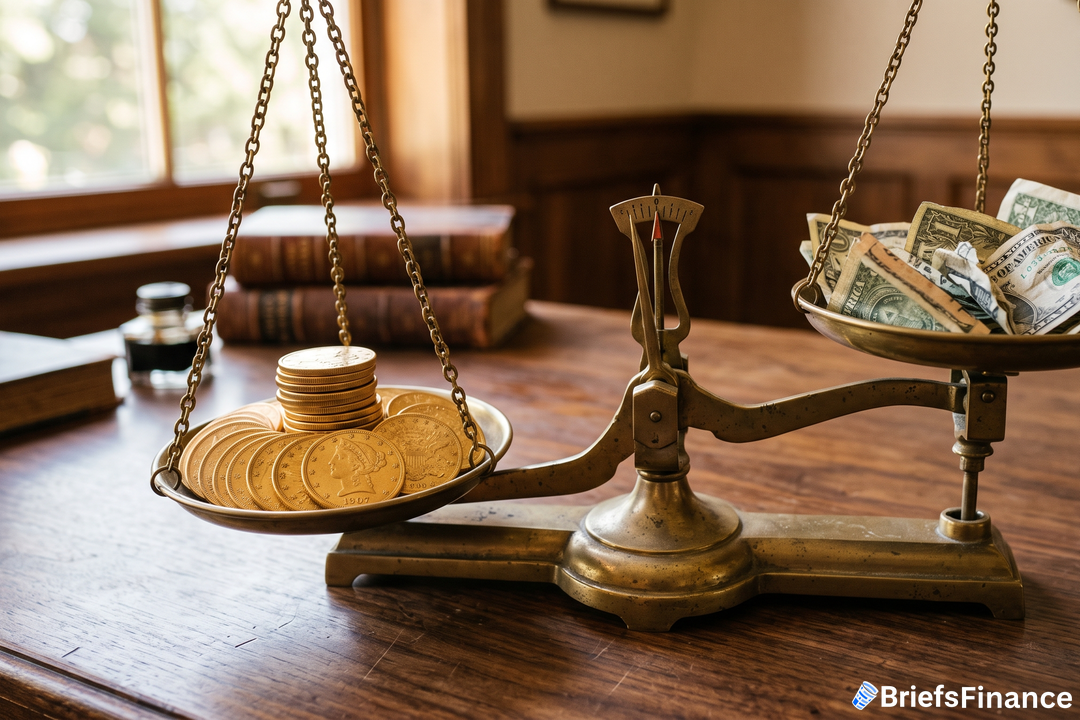
America's shift toward debasement started on August 15, 1971, when President Richard Nixon took the dollar off the gold standard. Under the gold standard dollars were backed by gold, which capped how many the government could print.
Nixon called the move temporary. Fifty-five years later, the US is still temporarily off the gold standard.
The bills were due, other countries wanted to be paid, and the government did not have the money. It could sell off assets or get creative, and creative meant printing unlimited dollars, paying everybody, and keeping all of its gold.
At first everyone felt rich, because the government could write blank checks. Then the debt grew without the wealth to back it, and the dollar became a fiat currency - money backed by a promise that it has value, not by gold.
That promise is why inflation keeps showing up, since the only thing behind government spending now is the strength of the economy. When the economy does not grow fast enough, the value of the dollar goes down and the average paycheck buys less.
Post-pandemic, the US is in a healthy stretch but still addicted to government spending to keep the economy going. That spending creates jobs and growth, and the bill for it is inflation.
The World Is Slowly Backing Away From US Debt
The 2026 plan did not come out of nowhere. Three cracks have been spreading for decades.
- The dollar's share of global reserves is shrinking. In 2000, about 72% of the world's reserves were held in dollars. By 2025 it was 57% - still the majority, but the trend is easy to see.
- Central banks are swapping dollars for gold. Countries worried the dollar is losing value have been buying physical gold instead, betting it is the better store of value.
- The biggest lenders are walking away. China used to be the largest lender to the US and is now a seller of US debt. Japan is now the largest lender, and it cannot keep lending either.
Their message is blunt: America is borrowing money faster than they can lend it.
Median Household Income Grew 8x Since 1971. Houses Grew 17x
Debasement is not something you feel overnight. It builds slowly, one round of money printing at a time.
Median household income grew about 8x between 1971 and 2026, which sounds good until you compare it with what that income buys.
| Item | 1971 | 2026 | Growth |
|---|---|---|---|
| Median household income | $10,000 | $83,000 | About 8x |
| Average new car | $3,700 | $49,000 | About 13x |
| Median house | $25,000 | $420,000 | About 17x |
| Public college, all in | $1,500 | $26,000 | About 17x |
| $1,000 in the S&P 500, dividends reinvested | $1,000 | $360,000 | About 360x |
The house number does not even include today's higher property taxes and insurance costs.
The income line hides a catch. In 1971 that number usually came from one earner, because the man went to work and the woman generally did not.
In 2026 it usually takes two earners to produce the median household income, and it still has not kept up with prices.
Put $1,000 into the S&P 500 - the broadest measure of the stock market - in 1971, reinvest the dividends, and never add another dollar. You would have about $360,000 today.
The person who got rich over those 55 years was the person investing their money. Most of us were taught to be workers, not investors.
Why a Recession Would Push the Debt to GDP Ratio Even Higher
Dalio's three-year clock comes down to one number: national debt to GDP. In 2026 it is the highest outside the pandemic, higher than World War II, and this is a strong economy.
If a recession hits, the playbook is predictable. The government stimulates, which means borrowing more, and the debt to GDP ratio jumps higher still.
Dalio's worry is that the next jump breaks the dollar, and with it America's run as the world's economic superpower.
Whether he is right is his opinion, not a fact. The point here is to show what is happening, not to tell you what to believe.
The New Plan: Use Short-Term US Debt to Pay Off Long-Term US Debt
The Treasury is struggling to find lenders, and when the government needs to borrow, it has only a few places to go:
- Foreign countries like Japan and China, which are now saying they do not want to keep lending more.
- Regular people, many of whom are worried about inflation or simply do not have the money to keep lending.
- The Federal Reserve, America's central bank. Borrowing straight from the central bank is the classic version of quantitative easing - the Fed creating money to buy government debt - and the concern is that it creates more inflation.
So the government is trying something more sophisticated: buying back its own debt.
The catch is that it has no money of its own, since it is already $40 trillion in debt and borrowing trillions more every year. Some of that money will be printed, and the rest comes from a quirk in who still wants to lend.
Bessent's answer: plenty of demand for short-term US debt, almost none for long-term. Investors do not know what the dollar will be worth in 30 years, but they have no problem lending for one to five years.
Why Stablecoins Became One of America's Biggest Lenders
Part of that short-term demand is written into law. In 2025 the Trump administration passed the Genius Act, which requires stablecoin companies to back their coins with US debt, generally short-term debt.
Stablecoins are cryptocurrencies built to hold a steady price. Companies like Tether now have to own US government debt by law, which created a surge of short-term buyers and made crypto companies the fastest growing lender to the United States.
Tether is now one of the largest lenders to the US, and that raises its own question. If those companies ever start having problems, it is not hard to see where that would go.
So the Treasury will issue more short-term debt, use it to pay off long-term debt, and hope it does not create too much inflation along the way.
Other investors are not so calm. Creating money to pay off your own loans creates inflation, and a new Amex to pay off the Visa is a sign of financial problems.
The White House Says the US National Debt Is Fine if the Economy Grows Faster
The other side of this debate believes America can grow its economy faster than its debt and shrink the problem that way.
The pitch is to supercharge growth. Lead the world in AI and in rare earth metals, put more people to work, get more efficient, and let a bigger economy make the debt look smaller.
Whether $1 million of debt is a problem depends on what else you have. With $15 in the bank it is a crisis, but with $10 million in assets and $5 million in cash, that same $1 million looks small.
Two camps have formed around whether that works:
- One camp says the debt is the problem, and the economy is not growing fast enough to fix it.
- The Trump administration says it is not concerned about the debt. It wants to run the economy like a growing business and hopes the debt never becomes a problem.
What the US National Debt Means for Your Portfolio
The camp you believe points you toward different assets, and there are ways to lean either way or both. Jaspreet goes much deeper on these moves in the September 29 workshop - live at 10:30 a.m. and 8 p.m. Eastern - but the broad strokes look like this:
- If you are worried about debasement, the debasement trade is gold, silver, and bitcoin. These are the assets that generally benefit when investors stop trusting the dollar - generally, not always.
- If you believe the economy will outpace the money printing, you invest in the economy itself. That means owning individual companies or getting broad exposure to the markets, because if the economy grows you want a piece of it.
- If you want both, international companies and international funds give you growth without betting everything on the dollar.
Value investments - quality companies bought on sale - have a foot in each camp, tending to do well when investors are nervous and also when the economy is booming. Think dividend paying companies and blue chip stocks, the large, established names with a long track record.
Real estate plays both sides too. Debasement brings inflation, inflation lifts real estate, and if the economy grows, your property value and rental income grow with it.
Whichever camp turns out to be right, the investors who think like investors and know the different ways to put money to work come out ahead. They build wealth through every cycle the economy throws at them.