The most important investment market in the world has started to crack, and it isn't the stock market. What's happening in the bond market today lands directly on your money, your savings, and your paycheck.
Right now the U.S. government is paying its highest rate in about two decades to borrow money for 30 years, the result of a global bond selloff. Jamie Dimon, CEO of JPMorgan Chase, the largest bank in the world, called it in advance: a crack in the bond market was coming, people would panic, and he wouldn't.
The cracks got bad enough that the government announced an emergency program to become its own lender - the United States lending money to the United States - to keep the bond market stable.
Lenders are backing away from U.S. debt because they think the dollars they get paid back in will buy less. That is the exact problem our CEO Jaspreet Singh is tackling in a free live workshop on September 29th on how investors can still profit while the dollar loses value.
A Bond Is a Loan, and That Changes Who Gets Paid First
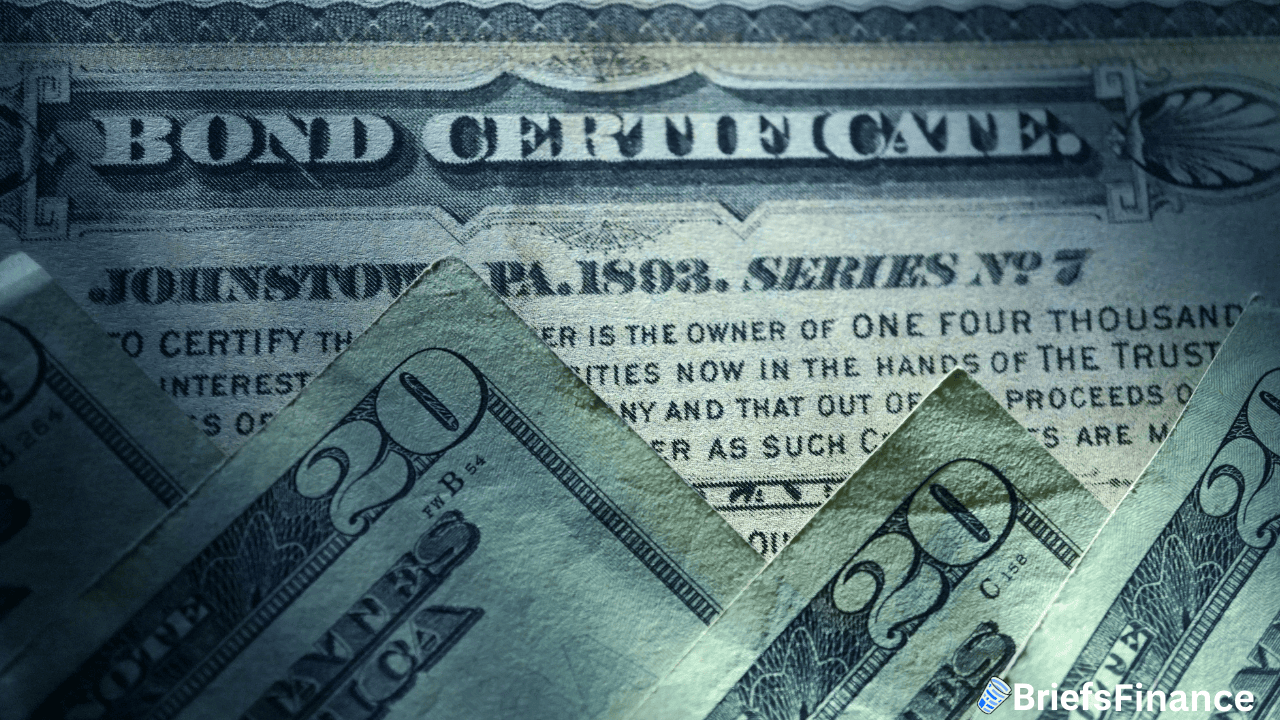
A stock is ownership, so buying one share of McDonald's makes you one of the owners of McDonald's. A bond is debt, so buying a McDonald's bond means you're lending the company money.
Owners work for profit, which arrives as a rising share price and as dividends, the cash a company pays out to shareholders. There's no ceiling if McDonald's takes over the world.
Lenders get their contracted interest and nothing more. A 6% bond pays 6% whether McDonald's doubles its profits or ten-x's them.
The difference that matters most shows up in a bankruptcy. A judge sells off the company's assets, bondholders get paid first, and stockholders are last in line and will probably get nothing.
Treasury Bonds Exist Because Washington Spends More Than It Collects
The bond market matters more than the stock market because companies aren't the only borrowers. The biggest countries in the world borrow there too, including the United States.
The government has one source of revenue, taxes. In 2025 it collected roughly $5 trillion and spent roughly $7 trillion on the military, health care, Social Security, and interest on its debt.
That $2 trillion gap gets covered with debt, and when it's U.S. debt, it's called a Treasury bond, a loan you make to the federal government.
Treasuries carry a nickname: the risk-free investment. Stocks can lose money, and even a bank can fail.
FDIC insurance covers only the first $250,000, so $1 million in a failed bank gets a quarter of it back. A Treasury only fails to pay you if the U.S. government defaults, and every textbook says it won't.
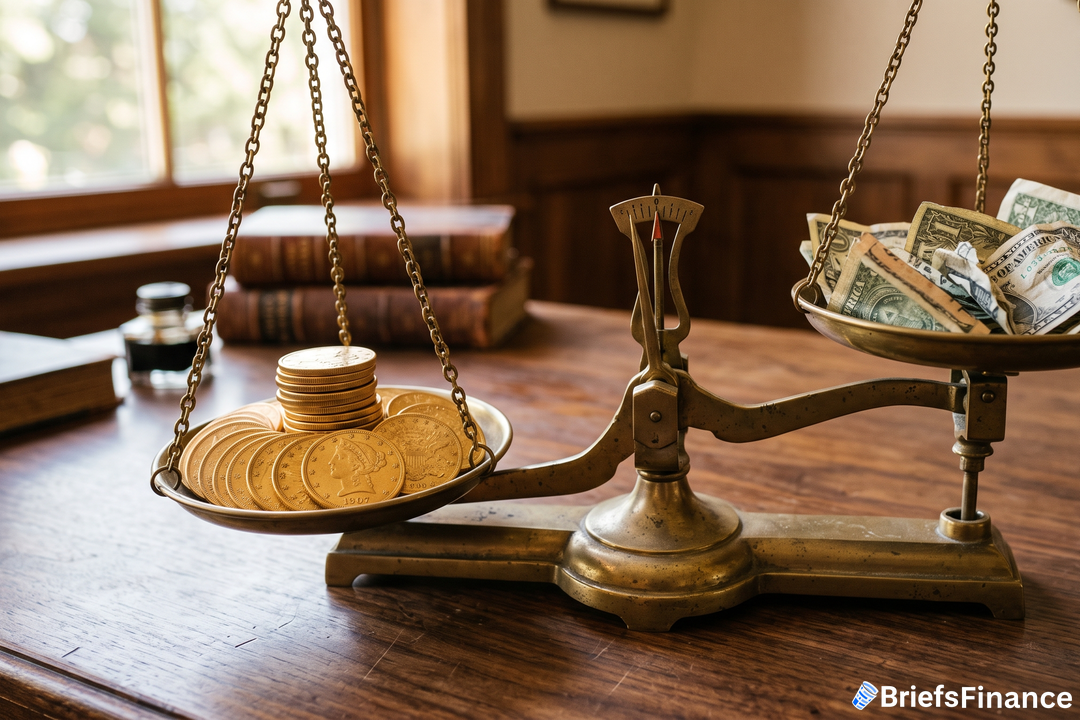
The reason is a word worth learning: debasement. Instead of defaulting, the government works with its central bank, the Federal Reserve, to print new dollars and pay its debts with them.
You get paid back in full, but the dollars you get buy less than the ones you lent, and that is the cost of debasement.
The 10-Year Treasury Yield Sets Your Mortgage Rate
One Treasury matters more than the rest: the 10-year, meaning a 10-year loan to the government. Its yield, the interest rate the government pays on it, sets your mortgage rate, your car loan rate, and pretty much every other interest rate in the market.
When you walk into Chase for a mortgage, the bank is weighing two options: lend to you, or lend to the government. You could lose your job or forget to pay, while the government can't default.
Since you're the riskier borrower, the bank needs a premium above the Treasury rate to justify lending to you instead of Washington. That premium is why the 10-year yield moves everything: when it climbs, your mortgage, your car loan, your credit card, and every business loan in the country climb with it.
Treasury Yields Are Rising Because Lenders Fear Debasement, Not Default
Treasury yields are at their highest levels in decades because lenders no longer want to keep lending to the U.S. government. They aren't worried about default; they're worried about debasement, inflation, the dollar, and the state of the economy.
When demand for your debt falls, you have to sweeten the deal to attract lenders, and for a government, sweeter means a higher interest rate.
It got bad enough that the government couldn't find enough lenders and stepped in to become one, to keep rates from climbing high enough to cause even more pain.
Higher Treasury Yields Made Interest a Bigger Bill Than the Military
The four largest expenses for the U.S. government are Social Security, health care through Medicare and Medicaid, interest on the debt, and the military. For the first time in history, interest comes in ahead of the military.
Two things got it there. The first is size: the national debt is about $40 trillion, more than the country has ever owed.
The second is that the debt isn't at a fixed rate. In 2020 and 2021, when interest rates were the lowest in history, the government refinanced the way a lot of homeowners did.
Instead of locking in a 30-year fixed loan at about 2.1% or 2.2%, it got greedy and took a five-year loan at about 1.8% to save a little on interest. Those five-year loans are coming due in 2026, and a huge chunk of the debt is resetting at today's much higher rates.
That reset is also when new lenders started asking whether they want to keep lending.
At 125% Debt to GDP, America Is Underwater on Its Own House
Any lender sizing up a borrower looks at the health of what backs the loan, and by that measure the U.S. is underwater. Real estate is the easiest place to see what underwater means.
Buy a $500,000 house with $400,000 of debt and you have $100,000 of equity, or an 80% loan-to-value. Put $600,000 of debt on that same house and you're at 120% loan-to-value, which means you owe more than the house is worth.
For a country, the loan is the national debt and the asset is the economy, measured by GDP, the number that tracks the size of the economy.
| The house | The United States | |
|---|---|---|
| What's owed | $600,000 | About $40 trillion |
| What it's worth | $500,000 | About $32 trillion (2026 GDP estimate) |
| Loan-to-value | 120% | Debt-to-GDP ratio of about 125% |
| Status | Underwater | Underwater |
Outside the pandemic, 125% is the worst debt-to-GDP ratio the country has ever had, worse than World War II, and it's happening in a healthy economy. Back in 2000 the ratio was about 55%, so over 26 years the economy grew and the debt grew much faster.
That's why the biggest lenders to the U.S. are saying they no longer feel comfortable lending. So who are they?
The Four Lenders Behind Treasury Yields Are All Getting Nervous
1. The Federal Reserve
The Fed is the central bank of the United States, and the old joke is that it isn't federal, isn't a reserve, and isn't a bank. What it can do is print money, and it has printed and lent to the government every time Washington wanted to spend more.
Printing money without creating more wealth has a cost, which is inflation, and the country has had a big inflation problem since the pandemic. That's why the Fed recently started quantitative tightening, which in plain English means lending the government less.
That tightening stopped in 2026 and flipped back to quantitative easing, meaning the Fed is lending to the government and printing money to fund those loans again. It has to be cautious, though, because unlimited printing would push an already-bad inflation problem out of control.
2. Foreign Governments
China used to be the largest foreign lender to the United States. Today it isn't lending at all; it's selling U.S. debt because it doesn't want to keep owning Treasuries.
Japan is now the largest foreign holder, and it has stopped buying too. It's selling, partly over worries about its own economy and partly over worries about the U.S. government and the U.S. economy.
3. Banks and Private Investors
Silicon Valley Bank collapsed in 2022 while holding its savings in Treasuries, the safest investment in the world. The reason is the one rule of bond pricing: when the interest rate on a bond goes up, the price of the bond goes down.
In 2022 the Fed started raising rates to fight the inflation created by the 2020 and 2021 money printing, and Treasury rates rose with them. The Treasuries banks held paid more interest but were worth less, leaving Silicon Valley Bank underwater on assets it thought were worth billions.
Banks don't want a repeat, so they're more cautious about Treasuries. Private investors are thinking the same way, wondering whether to keep their money in Treasuries or hold gold instead.
Meanwhile the government is spending even more this year, so the deficit is up and it needs more debt right as it has fewer lenders. That mismatch is the chaos in the bond market, and it's starting to spill into the economy.
4. Crypto Companies
In 2025 the government passed the GENIUS Act. It requires any crypto company issuing stablecoins, crypto tokens designed to hold a steady price, to back them one-to-one with U.S. Treasuries.
When a company like Tether issues stablecoins, it now has to buy an equal amount of Treasuries. That has made crypto companies the fastest-growing lender to the U.S. government.
It hasn't been enough. Crypto companies buy short-term debt, under 10 years and usually five or less, while the government's real trouble is finding buyers for its long-term debt.
The Government Is Now Lending Money to Itself
With no one lining up for its long-term debt, the government has started buying its own. How do you lend to yourself when you're already spending trillions you don't have?
Step one is issuing more short-term debt, which crypto companies are buying up, and using that money to pay off the long-term debt nobody wants. Step two is working with the Fed to print some money and pay off debt with that.
It's like opening a new Amex to pay off the Visa, except the Amex is fueled by the money printer.
Higher Treasury Yields Hit Your Mortgage, Your Job, and Your Stocks
Mortgage rates are up, car loan rates are up, and credit card rates are up. The job market is hurting and the stock market is starting to feel it, and all five trace back to the 10-year rate rising because there aren't enough lenders.
Your Job
Businesses borrow a lot of money too, and they don't get 30-year fixed mortgages; they get adjustable-rate loans. In 2021 many of them locked in five-year loans at the lowest rates ever, and those loans are resetting right now at far higher rates.
So a company's costs are rising not just because salaries, office rent, and software cost more, but because its debt payments do.
To protect its margins, that company hires fewer people or cuts some. Companies boxed in by debt can't keep growing, and that's a lot of the pain in the job market.
Your Stocks
The stock market isn't a one-to-one mirror of the economy; it's a bet on what people think the economy will do. When investors buy stocks, they believe the economy will grow.
A sharp rise in interest rates, especially Treasury rates, has historically been one of the biggest signals of a coming recession. It can be self-fulfilling: higher rates make it harder to do business and harder to service debt, which creates defaults, which creates the recession.
Rates have stayed higher for longer and climbed quickly, so investors are asking whether these yields will spill into the economy and whether to keep putting money into stocks right now. Stack that on the war in the Middle East and inflation, and you get the volatility in the stock market today.
Two Futures: Outgrow the Debt or Enter the Doom Loop
Ask the White House and the plan is to outgrow the debt. Focus on the economy rather than the debt, grow the economy much faster than the debt, and the 125% debt-to-GDP ratio comes down without ever paying the debt back.
If that doesn't happen, the other path has a name: the doom loop.
- The economy struggles.
- The government spends more to stimulate it, which means more debt.
- Treasury rates climb higher because the government already doesn't have enough lenders, and mortgage rates, car loans, and business loans climb with them.
- The national debt gets more expensive because it resets every year instead of being locked in for 30 years. More tax dollars go to interest, and more money may have to be printed.
- The money printing creates more inflation, which brings more pain to the economy, and the cycle starts again.
Once you're in it, more of it creates more of it.
What Rising Treasury Yields Mean for Your Portfolio
Understanding which future is winning decides how you allocate your money. If you believe the doom loop is coming, you don't want to be holding dollars in cash.
You want debasement assets instead, things like gold, though even those can get hurt. If you believe the economy will outpace the debt, you want to own the economy.
That choice is the whole question Jaspreet Singh is working through in his free live workshop on September 29th, on how investors can still profit while the dollar loses value.
Either way, the job is to read what's happening in the economy and keep investing through the changes.
Jamie Dimon said the crack would come, that people would panic, and that he'd probably make money instead. The difference between those two reactions is knowing what the bond market is telling you.