Why This Matters to You as an Investor
Some of the biggest companies you know like Amazon, Apple, Ford, Walmart, and Nike are all public.
Why should you care?
When you buy a stock, you're buying ownership in a public company.
That means if the business does well, your shares could be worth more, which is how millions of investors have built wealth over the last 100 years.
But here’s the thing: Not every company is public - in fact less than 1% of all U.S. businesses are publicly traded.
This is important for investors to understand, so you know what can build your wealth and what your options and potential opportunities are.
Let’s break down what a public company is, what a private company is, the differences, and everything else you need to know.
But first: You can invest in public companies - but with thousands of them out there, how do you know which ones to choose?
Our market analysts are researching new stocks every week and showing you which ones they’ve got their eye on.
Discover potential stock market investing opportunities by subscribing to Market Briefs Pro today.
What Is a Public Company?
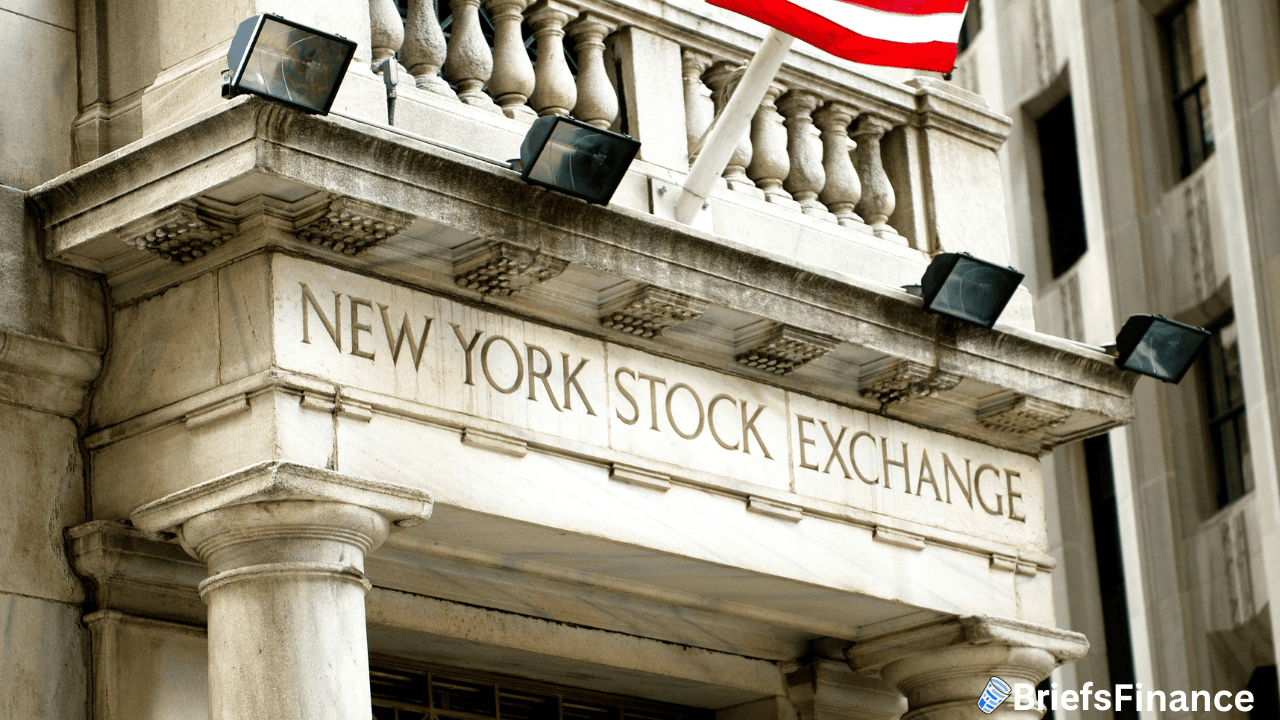
A public company is one that has sold shares of ownership to the general public through a stock exchange - like the New York Stock Exchange (NYSE) or the NASDAQ.
When you buy one share of Amazon, McDonald's, or Tesla, you become a part owner of that company.
That's it. That's what a stock is - one share of ownership in a public company.
As an owner, you get to:
- Participate in the company's growth - if the stock price goes up, your investment goes up with it.
- Collect dividends - some companies pay you a portion of their earnings just for holding shares
- Vote in shareholder meetings - the more shares you own, the more say you have
There's one catch. Owning stock doesn't mean you get to manage the company day to day.
You own it on paper. You can't walk into a McDonald's and tell the staff what to do - even if you own shares.
The company is run by its management team, not its shareholders.
Public companies are also regulated by the SEC (Securities and Exchange Commission).
They're required by law to publish their financials - things like annual reports (10-Ks) and quarterly reports (10-Qs).
That transparency is a big deal. It's how investors can research and evaluate whether a company is worth buying.
Examples of public companies: Amazon, McDonald's, Tesla, Meta, Coca-Cola, and UPS.
What Is a Private Company?
A private company has not offered its shares to the general public. You can't buy a piece of it through your brokerage account.
Private companies still have investors. But those investors are typically founders, early employees, venture capital firms, or private equity groups - not everyday retail investors like you and me.
Because there are no public shareholders, private companies aren't required to publish their financials.
They operate with a lot more secrecy. There's no stock ticker to look up. No 10-K to read.
Examples of private companies: Many early-stage tech startups, and even some large household names that have chosen to stay private
The Big Difference at a Glance
| Feature | Public Company | Private Company |
| Shares available to public? | Yes | No |
| Traded on stock exchange? | Yes | No |
| SEC regulated? | Yes | Limited |
| Required to publish financials? | Yes | No |
| Can retail investors buy in? | Yes | Generally no |
| Early investors can cash out? | Yes (via stock market) | Not easily |
How Does a Company Go From Private to Public?
When a private company decides to go public, it does so through an IPO - an Initial Public Offering.
This is the first time that company's shares become available to everyday investors.
Companies go public for a few key reasons:
1. To raise money. Going public allows a company to sell shares and bring in large amounts of capital to fund growth.
Alibaba raised $21 billion in its 2014 IPO. Meta (formerly Facebook), Kraft, and UPS all raised billions when they went public, too.
2. For legitimacy and publicity. When a company goes public, it comes under SEC oversight. That level of scrutiny adds credibility.
It signals to the market: we're legit, we're regulated, and we're here for the long haul. The buzz around an IPO can also build massive investor excitement.
3. To pay back early investors. When a company is private, its early investors - the people who funded the business before it was well-known - have money tied up in the company.
Going public creates a market for those shares. Early investors can finally sell their stake and get paid.
What Happens to Investors After an IPO?
Once a company is public, its shares trade on an exchange every business day. Investors can buy or sell at any time during market hours.
The stock price goes up when more people want to buy than sell.
It goes down when more people want to sell than buy.
Over time, the price tends to reflect how well the company is actually doing - its revenue, its growth, its competitive edge.
This is why learning to research companies matters so much.
Public companies give you the data. The 10-K, the income statement, the balance sheet - it's all there. The question is whether you know how to read it.
The Bottom Line On Public Vs Private Companies
Here's the simplest way to remember this:
Public company = you can buy it.
Private company = you can't (usually).
As a retail investor, the stock market is your primary access point to building wealth through company ownership.
That means you're almost always dealing with public companies.
Understanding what makes a company public - the transparency, the regulation, the IPO process - gives you a massive leg up.
Because the more you understand how these businesses work, the smarter your investment decisions become.
Being a smarter investor can help you get an edge on Wall Street.
Market Briefs Pro gives you all of the data and research you need to make smarter investment decisions and spot potential opportunities before the rest of the market catches on.