Free NewsletterPro Login

Yum Brands Just Previewed What Its Books Look Like Without Pizza Hut

Published Apr 29, 2026
Share:
Summary:
  • Adjusted EPS hit $1.50 against the $1.38 Wall Street expected, with revenue also beating at $2.06 billion.
  • Taco Bell same-store sales jumped 8%, lapping the 5.6% estimate, while KFC and Pizza Hut came in light.
  • Yum's earnings release added a new line breaking out system sales, unit count, and core operating profit with Pizza Hut stripped out.

Yum Brands beat Wall Street estimates on Wednesday, but the more interesting move was buried in the release. The company carved out a new set of numbers that show what it looks like without Pizza Hut.

Net income hit $432 million for the quarter, up from $253 million a year earlier and worth $1.55 per share on a reported basis. Adjusted earnings per share - a measure of profit per share of stock that strips out one-time items like the Pizza Hut review - came in at $1.50, leaving the $1.38 estimate behind.

Taco Bell Did The Heavy Lifting

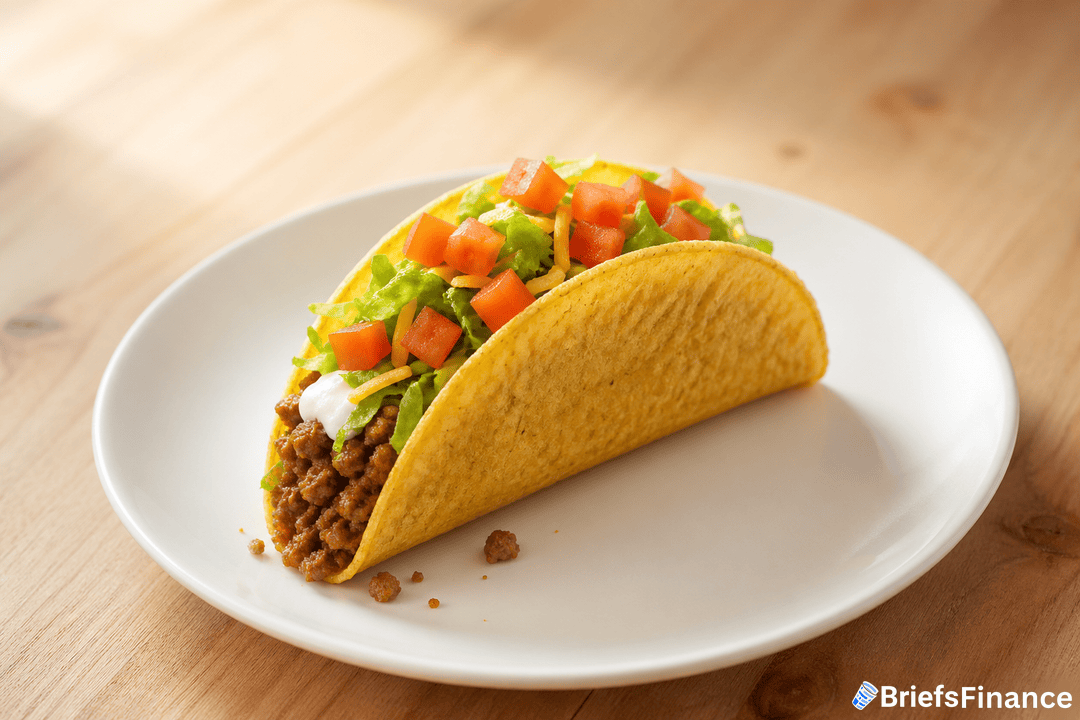
Same-store sales at Taco Bell rose 8% in the first quarter, well past Wall Street's 5.6% estimate. CEO Chris Turner called the result "outstanding" and said it was "meaningfully ahead" of the broader fast-food industry.

Net sales across Yum rose 15% to $2.06 billion, with most of the boost coming from company-owned restaurants after Yum bought more than 100 Taco Bell locations across the Southeast last year. The deal was meant to speed up new store openings and squeeze more profit out of the locations Yum already owned.

That acquisition is showing up in the numbers, and Taco Bell now looks less like one of three brands and more like the brand carrying the other two. Wall Street's $1.38 EPS estimate had already factored in a strong Taco Bell quarter, and the chain still topped it by a clear margin.

KFC And Pizza Hut Are The Drag

KFC same-store sales rose 2%, just under the 2.5% Wall Street wanted, while the chain's US business shrank 2% on system sales as customers picked cheaper rivals.

KFC's plan is to borrow Taco Bell's playbook, leaning harder into deals and new menu items to win back value-focused diners. Yum has flagged KFC's international business as one of its growth engines, but the US side has struggled for years against tougher rivals and customers expecting more for their money.

Pizza Hut had it worse, with same-store sales flat globally and down 4% in the US even as analysts had expected only a 0.7% global drop. International sales rose 2%, but the brand has been the clear laggard of the portfolio for years.

The Pizza Hut Tell

Yum announced last November it was exploring strategic options for Pizza Hut, and Reuters reported earlier this month that Apollo Global Management and Sycamore Partners are among the private equity firms in talks to buy the chain.

Yum did not update investors on the sale process Wednesday. The earnings release did something it had not done before, breaking out system sales, unit count, and core operating profit with Pizza Hut stripped out.

The new disclosure is the cleanest signal Yum has given investors about how it sees its portfolio, and it lands right as PE buyers are circling. That's a company showing investors the math for life after Pizza Hut.

What To Watch

Whether Yum confirms a buyer for Pizza Hut and what price the chain fetches. Whether KFC's Taco Bell-style reset shows up in next quarter's numbers.

The reported $1.55 EPS easily covers the $1.38 estimate, but the bigger story is what Yum just told investors about its portfolio. Right now, one brand is carrying three.

Disclosure

Get Market Briefs delivered to your inbox every morning for free!

No fluff. No noise. No politics. Just finance news you can read in 5 minutes.

Blogs

April 28, 2026
Core-Satellite Portfolio: The Best of Both Worlds
  • A core-satellite portfolio splits investments into stable core holdings and higher-risk satellite picks.
  • The core is usually 60% of the portfolio, with satellites at 40%.
  • It blends passive index investing with active opportunity bets.

Read More
April 28, 2026
Bond Ladder Strategy: The Income Plan With Built-In Flexibility
  • A bond ladder is a series of bonds with staggered maturity dates, often one to five years apart.
  • It gives you regular access to cash, predictable income, and protection from rate changes.
  • It works for Treasuries, corporate bonds, municipal bonds, and CDs.
Read More
April 28, 2026
Silver vs Gold Investing: Which One Belongs in Your Portfolio?
  • Gold is the stable store of value, used as crisis insurance during recessions and conflict.
  • Silver is both a precious metal and an industrial metal, with more volatile pricing.
  • Most investors hold a mix in their alternative investment allocation, often 5% to 12% of portfolio.
Read More
April 28, 2026
What Is a Dividend Reinvestment Plan? The Wealth Snowball Explained
  • A dividend reinvestment plan, or DRIP, automatically uses dividend payments to buy more shares.
  • DRIPs power compound growth - dividends buy shares that pay dividends that buy more shares.
  • Most brokerages offer DRIPs free, and many include fractional shares so every penny goes back in.
Read More
April 28, 2026
How Tariffs Affect the Stock Market
  • Tariffs are extra fees on goods imported into a country, and they hit company profit margins.
  • The S&P 500 dropped over 3% in one day after the 2025 tariff announcement.
  • Tariffs reshape trade flows, creating both losers and unexpected winners.
Read More
April 28, 2026
What Is a 13F Filing? The Smart Money Tracker
  • A 13F filing is a quarterly disclosure of stock holdings from large institutional investors.
  • It shows what hedge funds and asset managers bought, sold, and held last quarter.
  • You can find any 13F free on SEC EDGAR.
Read More
April 28, 2026
Debt-to-Equity Ratio: The Number That Tells You If a Company Is Drowning
  • The debt-to-equity ratio compares what a company owes to what shareholders own.
  • The formula is total liabilities divided by total shareholder equity.
  • Lower ratios mean less risk - one of the value markers Warren Buffett looks for.
Read More
April 28, 2026
Non-Financial Analysis of Stocks: The 4-Step Method
  • Non-financial analysis evaluates a company's business, not its financial ratios.
  • It covers four things: business model, CEO, innovation, and moat.
  • It's how investors find companies with long-term staying power.
Read More
April 28, 2026
SEC EDGAR Tutorial: The Free Tool the Pros Use
  • SEC EDGAR is the official free database of public company filings.
  • You can pull 10-Ks, 10-Qs, 8-Ks, and insider trades by ticker or company name.
  • It's the source journalists and analysts use to write their stock stories.
Read More
April 28, 2026
How to Read a 10-Q (Without Losing Your Mind)
  • A 10-Q is a public company's three-month financial update, filed with the SEC.
  • It shows revenue, profits, debt, and cash flow between yearly reports.
  • You can find any company's 10-Q for free on the SEC's EDGAR site.
Read More
1 2 3 18
Share via
Copy link