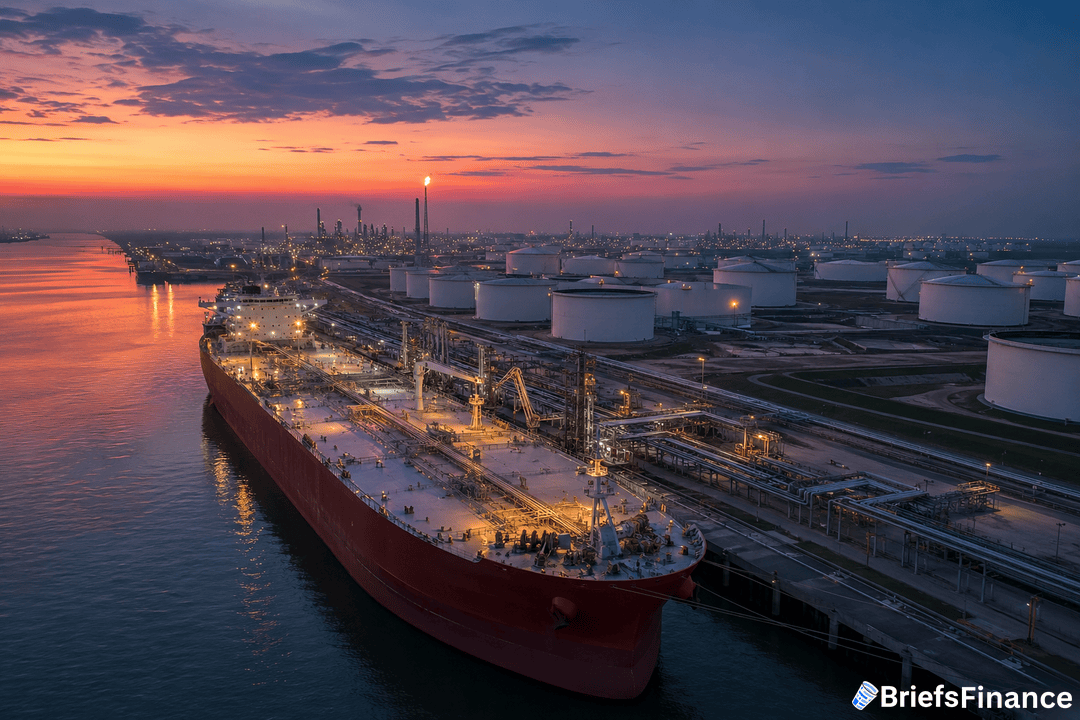
With the Strait of Hormuz nearly closed, the world is leaning hard on one supplier - and the U.S. just shipped out a record 8.2 million barrels of oil products in a single week.
The Energy Information Administration's data, released May 6, shows fuel exports running at a level no one outside of energy traders thought possible last year.
Diesel Is Driving The Surge
The biggest piece of the move is distillate fuels - mostly diesel and heating oil - which hit a record 1.9 million barrels a day. Jet fuel exports also climbed to 427,000 barrels a day, just shy of the all-time peak set in early April.
Why? Refiners in Asia and Europe have been cut off from Middle East crude since the war began, and refiners west of Hormuz can't get product out either.
American refiners can. So American product is heading to places that almost never buy U.S. fuel, including Australia.
Ryan McKay, a commodity strategist at TD Securities, said it plainly: "Product-market tightness is more acute than crude globally."
A Win For Refiners, A Headache For Drivers
Refiners are in the best spot they've been in years, with strong global demand and tight global supply driving fat margins.
But it's a different story for U.S. drivers. Retail diesel is averaging $5.67 a gallon, according to AAA, while jet fuel on the Gulf Coast is $3.77 a gallon - up 57% since the war started.
Higher diesel costs ripple through every grocery shelf and trucking route in the country, since diesel is what moves freight.
The political risk is also stacking up, with the Trump administration watching American consumers pay more while U.S. fuel sails out of the country.
What To Watch
The bigger flag is on stockpiles, which now sit at their lowest level since 2005. The country is shipping out more than it's keeping at home, and the gap is widening every week the war drags on.
At some point, you can't be both the world's lifeline and the world's cheapest pump.