Trump owes corporate America $160 billion. He'd prefer they not ask for it.
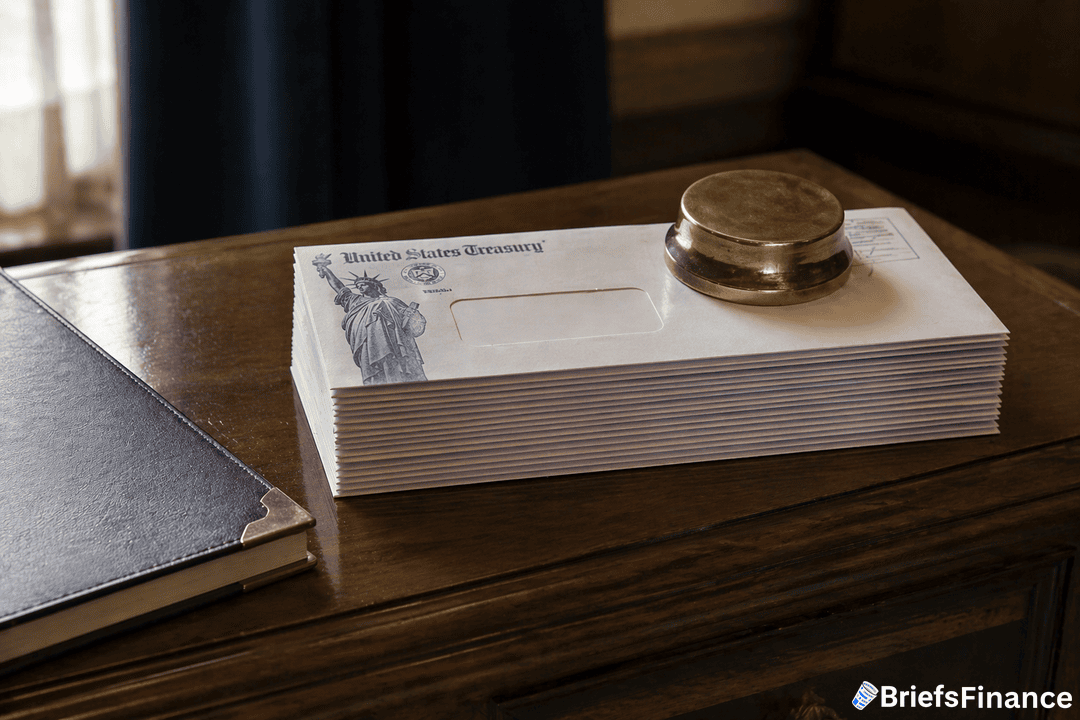
The Supreme Court voided his IEEPA tariffs in a 6-3 ruling. On Monday, US Customs and Border Protection opened a portal where importers can file for their money back. On Tuesday, Trump went on CNBC and made it clear how he sees it.
"If they don't do that, I'll remember them," he said. He called it "brilliant" if companies decline the refund.
The Math Is Huge
Levi Strauss, which imports denim, is looking at about $80 million back. Its CFO said it straight: they're filing. Gap is tracking its potential refund but hasn't put it in its outlook yet.
Apple and Amazon are the big names flagged as possibly not filing. Both have been called out by analysts for being careful about "offending" Trump. Apple is already dealing with him directly on chip manufacturing. Amazon's cloud business works with a lot of federal agencies.
Think of it like finding $80 million on the sidewalk while the president stands at the window watching to see if you pick it up.
The Political Math Is Harder
Trump's complaint with the Supreme Court ruling is simple. He says it didn't order him to give the money back, just to stop collecting more. He wants companies to leave the cash with the government anyway.
Legally, that's not how it works. The tariffs were ruled an unlawful use of emergency powers. The money was collected without authority. That makes the refund process mechanical, not optional.
But the politics are different. Companies with big federal contracts, supply chain deals, or pending approvals have more than a refund to think about.
The Asymmetric Politics
Levi's $80 million refund is a material number for a company its size, which is why CFO Harmit Singh said on the record they're filing. Gap's CFO Katrina O'Connell confirmed they're tracking the refund potential but hasn't baked any of it into the current outlook.
That split shows up in public versus quiet filings. Companies that import consumer goods and don't rely heavily on federal contracts are the loudest. Companies with Washington exposure are filing through attorneys without press releases.
Either way, the filings are going to trigger guidance revisions. Apparel, electronics, and big-box retailers that claim will likely raise their full-year outlooks as the cash lands, which is the kind of quiet tailwind analysts start baking in three quarters ahead.
The asymmetry is what makes the politics real. A small importer with no Washington exposure just picks up the check. A hyperscaler with federal cloud contracts has to weigh a refund against whatever comes up in the next procurement cycle.
That's why the first wave of filings will look heavier on apparel and mid-cap retail. The biggest names will show up last, if they show up at all.
Worth Noting
Retailers that claim will likely raise their financial outlooks once the cash starts landing. Watch for guidance revisions from apparel, electronics, and big-box names over the next earnings cycle.
The portal is open. The money is there. The question is who's willing to walk up and ask for it.