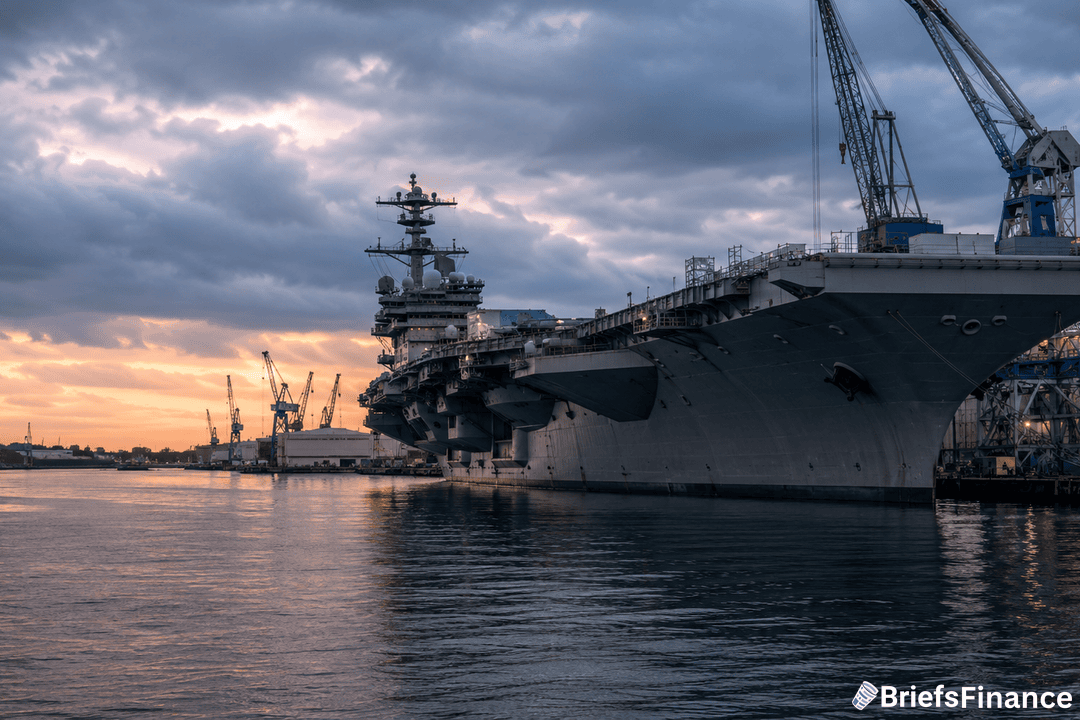
The Plan and the Price Tag
Trump first presented the Golden Fleet idea on Dec. 22, unveiling it at Mar-a-Lago in Palm Beach, Florida. The plan calls for a new class of nuclear-powered battleships with heavy firepower.
The nonpartisan Congressional Budget Office, or CBO, ran the numbers. In a report released Wednesday, August 5, 2026, it calculates that the entire program could reach $275 billion from now through 2056. That estimate covers roughly 15 nuclear-powered battleships.
The first ship, known as the lead ship, would cost about $23 billion. The other 14 would run roughly $18 billion apiece.
Those figures would set a record for the costliest U.S. warships ever. For context, the USS Gerald Ford, currently the most expensive warship in U.S. history, cost $13.2 billion.
The proposal lands at a time when the Navy's shipbuilding base is already stretched. Bath Iron Works and Ingalls could make parts, but only Newport News has certification for nuclear-powered surface-ship assembly. With Newport News already behind on three carriers, adding a new battleship class would force a squeeze on existing Navy programs.
The Hard Part Is Building It
One reason the price is so high: the ships would be nuclear-powered. That makes construction a lot harder than a regular warship.
Get the free Always Be Buying eBook and learn the simple system for building wealth on any income
So adding battleship assembly could delay both the carriers and the battleship itself. As the CBO put it, "adding the final assembly of a nuclear-powered battleship to the shipyard's workload could lengthen the delays for those programs, in addition to delaying the construction of the battleship itself."
Cost Overruns and Politics Could Change the Bill
Cost estimates for new warships are not exactly reliable. New lead ships in a class often run over budget, and the Ford's final price ended up almost $3 billion above its original estimate.
The CBO cautions that the numbers are highly uncertain, since they rest on how the agency evaluates the design of the ship and the full scope of the program. The design includes hypersonic missiles (which fly many times the speed of sound), cruise missiles with nuclear warheads, and laser weapons, which the CBO says "would add considerable firepower to the Navy's fleet".
Then there is politics. Because the program is tied to Trump, it could be among the first major defense efforts canceled if Republicans lose the House in the November midterm elections, and a Democratic president elected in 2028 would create even more risk.
Senator Jeff Merkley, the Senate Budget Committee's senior Democrat, requested the CBO review. "At a time when families are struggling to afford groceries, gas, health care and child care, Congress cannot throw hundreds of billions of dollars at Trump's Golden Fleet, including plastering his name across a new battleship," he said.
What Investors Should Watch
There is a big difference between a proposal and a purchase order. The CBO number is a preliminary estimate, not a signed contract.
For anyone with defense stocks in their portfolio, the useful takeaway is how easily the plan could change. The final bill depends on elections, budget fights, shipyard capacity, and the usual pattern of cost overruns.
And the timeline is long. The full fleet would not be built until 2056, which leaves plenty of room for delays, design changes, or a new president to scrap the whole idea.
Big numbers tend to make headlines, but the ships that actually get built are the ones that survive decades of budget reality. A $275 billion estimate is a starting point, not a finish line.
Download the free Always Be Buying eBook and start putting your money to work today