Market's dipped a bit on Wednesday after digesting the Supreme Court's tariff pause.
U.S. Secretary Bessent says the U.S. is prepared to pay back companies for the tariffs they received, if needed.
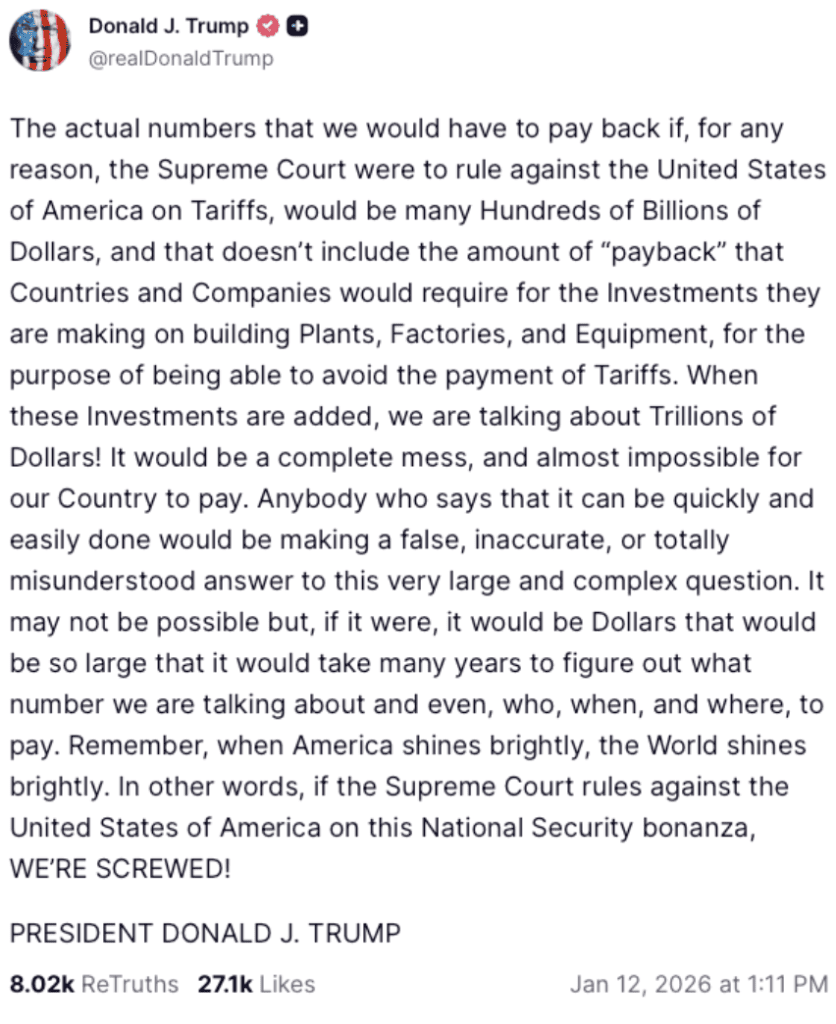
President Trump said the tariffs were a success and a ruling against them would mean the U.S. is 'screwed.'
Markets held their breath Wednesday morning as investors awaited a Supreme Court decision on the Trump administration's tariff policy - a decision that never came.
The court handed down three decisions on Wednesday, and tariffs were not among them.
A verdict from the highest court in the land has been looming over much of the market, as many companies are looking to plan out their shipping and freight orders for Q2 and Q3 of 2026.
The freight industry itself has faced significant struggles in the face of the tariffs, with many companies loading up on goods before the tariffs hit, triggering a destocking event.
The Tariffs, which were implemented using the International Emergency Economic Powers Act, have been challenged by many of the impacted companies as an illegal tax, and an overreach of presidential authority.
If the supreme court does rule them as illegal, it could trigger widespread refunds to companies that have been paying the cost.
National Economic Council Director, Kevin Hassett, said that the White House is creating a contingency plan if that happens, telling CNBC’s Squawk on the Street:
“There was a big call last night with all the principals to talk about if the Supreme Court were to rule against this IEEPA tariff, what would the next step be? “
U.S. Treasury Secretary, Scott Bessent, also displayed confidence, saying “It won't be a problem if we have to do it.”
President Trump himself did not echo that same confidence, taking to his social media to say that if the Supreme Court were to rule against the tariffs “we’re screwed!”
Trump has been championing the tariffs as the major reason for a strong U.S. economy, saying his tariff policy has generated $18 trillion in U.S. investment.
On Tuesday, January 14th the President spoke to the Detroit Economic Club, saying “one of the biggest reasons for this unbelievable success has been our historic use of tariffs.”
While some analysts have questioned the validity of the $18 trillion dollar claim, U.S. markets have shown a strong start to 2026, hovering around record highs.
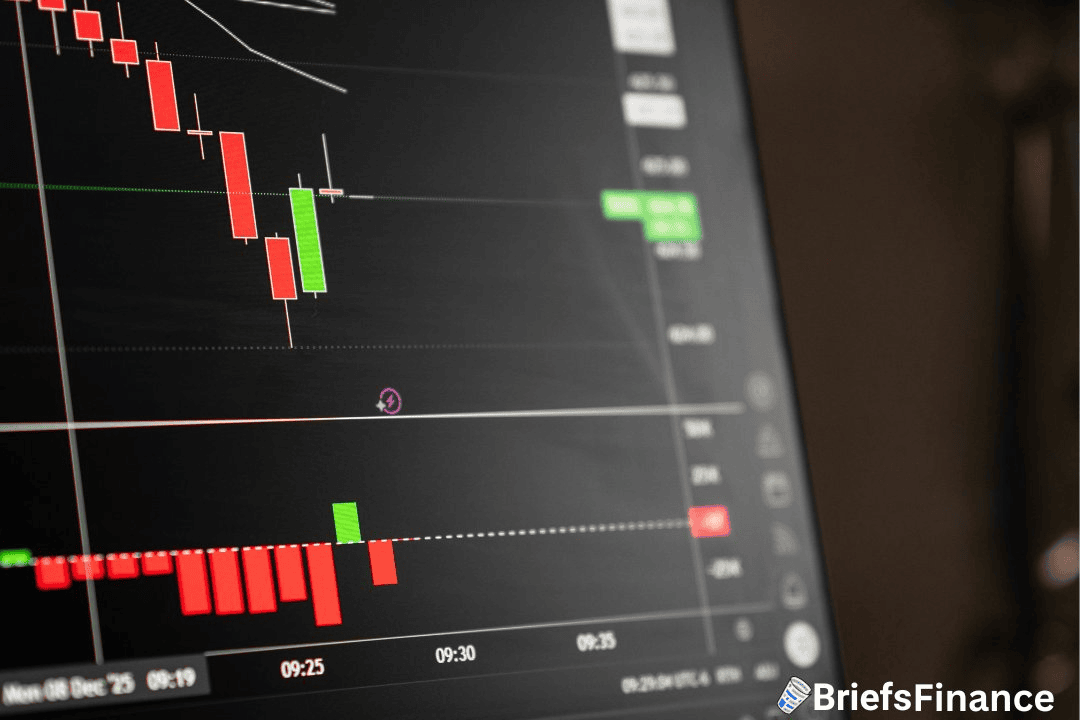
However, markets began to slip on Wednesday after news broke that the Court’s decision had been delayed, with the S&P 500 down more than 1% by 12:00 PM EST.
Briefs Finance analyst Jackson Moreland said the losses are expected, describing a market on-edge:
“The court’s decision is looming over a big portion of the American economy. It’s not just freight, this ruling will set the tone for retail, luxury, even industries like energy. Right now, there’s an air of uncertainty, and investors are frozen”
Not everything is down in the face of the Court’s delayed decision, as precious metals are on the rise, with both Gold and Silver showing gains.
Non taxable income is money you earn that the IRS does not tax - like Roth IRA cash, muni bond interest, and certain investment gains. The U.S. tax code taxes workers, investors, and business owners at very different rates. Tools like Roth accounts, muni bonds, and real estate write-offs can help you keep more of what you earn.
Micron (MU) is the only U.S. company that makes HBM chips - the short-term memory layer that AI systems need to run.
By early 2026, data centers were using about 70% of all memory chips made in the world, creating an 18-month backlog for new orders.
Micron's DRAM - or short-term memory chip - revenue jumped 69% year over year, and the company shifted away from consumer products to focus almost entirely on AI.