Pro Login

Regional Bank Stocks Crash on Fears of Bad Loans Spreading Through System

A stylized illustration of a cylindrical cup with blue arrows and lines indicating a swirling or rotational motion inside the cup.
Published Oct 21, 2025
Share:
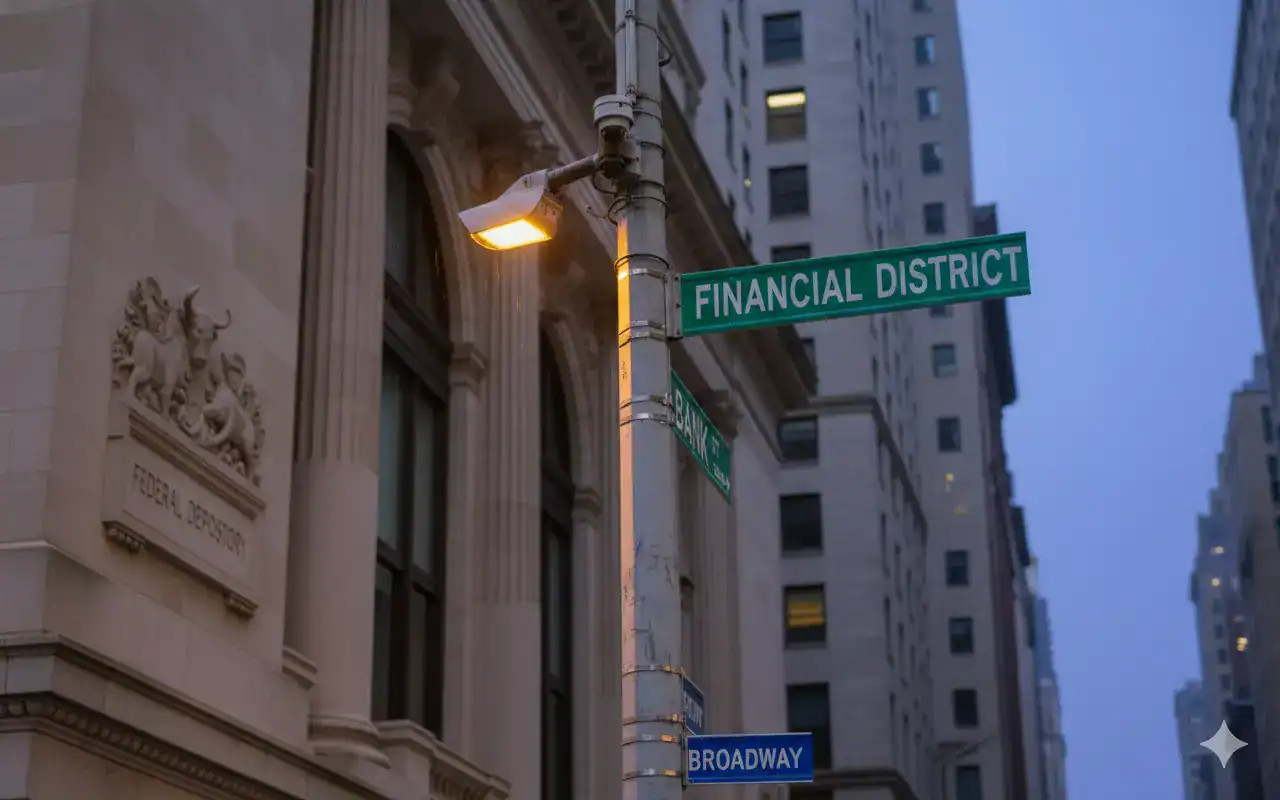
A street pole with signs for Financial District and Broadway stands next to the Federal Reserve Bank building in a city with tall buildings at dusk.

The Bad News Keeps Coming

Regional banks are getting crushed.

Zions Bancorporation dropped over 10% Thursday. Western Alliance fell more than 9%. The regional banking ETF lost over 4%.

Investment bank Jefferies got hit even harder - down more than 9% in a single day. The stock has plunged 23% in October alone. That's its worst month since Covid crashed markets in March 2020.

What's causing the panic? Bad loans are surfacing.

Two auto industry-related companies went bankrupt this year: • First Brands • Tricolor Holdings

Those bankruptcies revealed that banks and investment firms had lent them massive amounts of money. Money they're not getting back.

How Bad Is It?

The numbers are ugly.

Jefferies runs hedge funds that are owed $715 million from companies tied to First Brands. UBS has about $500 million in exposure.

Zions announced Wednesday it's facing a big charge from bad loans to a couple borrowers. Western Alliance claimed Thursday that one of its borrowers committed fraud.

Here's the scary part: Nobody knows how many more bad loans are hiding out there.

JPMorgan CEO Jamie Dimon summed it up perfectly on his earnings call this week: "When you see one cockroach, there are probably more."

Why This Matters

The concern is about the private credit market.

Private credit has boomed over the past few years. It's basically non-bank lenders making loans outside the traditional banking system. Less regulation. Less transparency. More risk.

When times are good, everyone makes money. But when borrowers start failing, it's hard to know who's holding the bag.

The worry isn't just about regional banks anymore. Alternative asset managers got hit Thursday too: • Blue Owl Capital down nearly 4% • Ares Management and Blackstone each fell over 3% • Apollo Global dropped almost 3% • Carlyle Group declined more than 2%

These firms are major players in private credit. If loan quality is deteriorating, they're exposed.

Is This a Banking Crisis?

Not yet - but people are nervous.

Regional banks already went through hell in 2023 when Silicon Valley Bank collapsed. That crisis shook confidence in the entire sector.

Now concerns about bad loans are bubbling up again.

The good news? Major banks seem okay. JPMorgan only fell about 1% Thursday. Bank of America dropped 2%. Those are manageable declines.

One analyst said the risk to regional banks is "idiosyncratic" - meaning it's specific problems at individual banks, not a system-wide meltdown.

But the risk to private credit "could be more systemic," especially if the economy weakens.

The Bottom Line

Two bankruptcies have Wall Street asking uncomfortable questions.

How many other bad loans are out there? Who made them? How much money is at risk?

The private credit boom happened with loose lending standards. Companies that couldn't get traditional bank loans turned to private lenders willing to take more risk for higher returns.

That works great until it doesn't.

For investors, this is a yellow flag. Not a full-blown crisis yet, but enough smoke to worry about fire.

Regional bank stocks are already getting punished. If more bad loans surface, the selling could accelerate.

Jamie Dimon's cockroach comment is the quote everyone's remembering right now. Finding one problem often means there are more hiding underneath.

The stock market stabilized later Thursday after the initial panic. The S&P 500 only saw minor losses. That suggests investors think this is contained - for now.

But keep watching regional banks and private credit firms. If more "cockroaches" appear, this story could get much worse.

Disclosure

Get Market Briefs delivered to your inbox every morning for free!

No fluff. No noise. No politics. Just finance news you can read in 5 minutes.

Blogs

April 15, 2026
What Is a Put Option? A Simple Guide for Investors
  • A put option is a contract that gives you the right to sell a stock at a set price before a set date.
  • Investors use put options to protect their portfolio against losses or to profit when they think a stock will drop.
  • The most you can lose when buying a put option is the premium you paid for the contract.
Read More
April 13, 2026
What Is Free Cash Flow? How To Find It & Why It's Important
  • Free cash flow is the cash a company has left after paying its bills and putting money back into the business.
  • Investors use free cash flow to figure out what a company is really worth - and if the stock is a good deal.
  • You can find free cash flow on a company's cash flow report, one of three key reports every public company files.
Read More
April 13, 2026
Non Taxable Income: What It Is and Why Investors Care

Non taxable income is money you earn that the IRS does not tax - like Roth IRA cash, muni bond interest, and certain investment gains. The U.S. tax code taxes workers, investors, and business owners at very different rates. Tools like Roth accounts, muni bonds, and real estate write-offs can help you keep more of what you earn.

Read More
April 11, 2026
Nasdaq Index Fund: A Beginner's Guide to Investing in the Nasdaq 100
  • A Nasdaq index fund lets you invest in the 100 biggest non-bank companies on the stock market all at once.
  • You can access the Nasdaq through index funds, mutual funds, or ETFs like QQQ - each with its own fees, trading rules, and style.
  • Picking the right Nasdaq index fund comes down to three things: who runs it, what is in it, and what it costs.
Read More
April 11, 2026
What Is Wealth? It's Not What Most People Think
  • Wealth is about owning assets that grow and pay you - not just earning a high salary.
  • In a capitalist system, there are two ways to get paid: from your labor and from your capital.
  • Building wealth takes a shift in mindset, a money system, and the habit of investing before you spend.
Read More
April 10, 2026
Micron Stock: The AI Memory Play Most Investors Are Missing
  • Micron (MU) is the only U.S. company that makes HBM chips - the short-term memory layer that AI systems need to run.
  • By early 2026, data centers were using about 70% of all memory chips made in the world, creating an 18-month backlog for new orders.
  • Micron's DRAM - or short-term memory chip - revenue jumped 69% year over year, and the company shifted away from consumer products to focus almost entirely on AI.
Read More
April 10, 2026
What Is Working Capital? What Investors Need To Know
  • Working capital is current assets minus current liabilities - it shows if a business can pay its short-term bills.
  • You find it on a company's balance sheet inside its 10-K report.
  • Changes in working capital show up on the cash flow statement and affect how much cash a business really makes.
Read More
April 9, 2026
What Is a Meme Stock? A Simple Guide for New Investors

You've probably heard the term "meme stock" thrown around on […]

Read More
April 9, 2026
Enterprise Value Formula: What It Is and How to Calculate It
  • Enterprise value (EV) shows what a company is really worth - debt and cash included - not just its stock price
  • The enterprise value formula is: Market Cap + Total Debt - Cash and Cash Equivalents
  • Investors use EV with metrics like EBITDA to compare stocks more fairly than market cap alone
Read More
April 8, 2026
Return on Equity: What It Is and How to Use It
  • Return on equity (ROE) measures how much profit a company earns for every dollar of shareholder equity
  • The formula is simple: net income divided by shareholder equity
  • A higher ROE can signal a company that is good at turning investor money into profit - but it is not the full picture
Read More
1 2 3 17
Share via
Copy link









