Most investors grow up hearing the same financial advice. Study […]

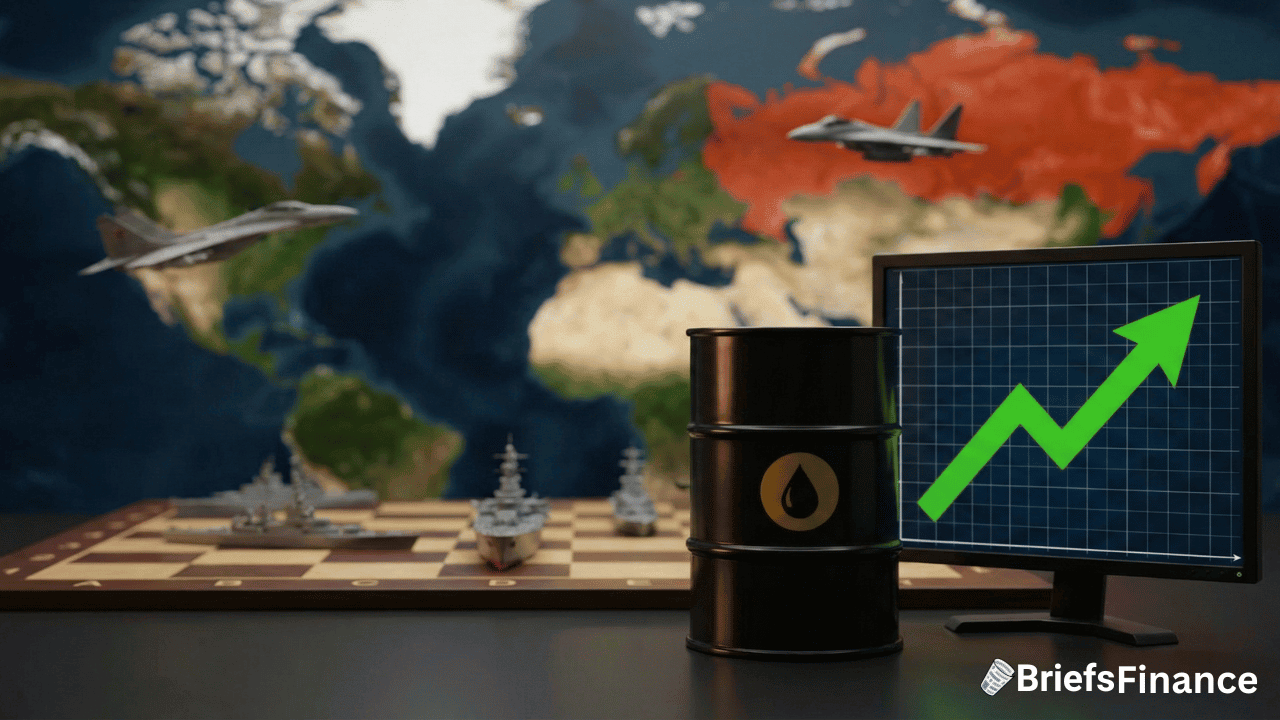
Oil prices rose more than 2% on Wednesday as concerns about Iran's nuclear negotiations heightened. U.S. crude oil climbed $1.56, or 2.5%, reaching $63.89 per barrel.
Similarly, the global benchmark Brent crude increased by $1.61, or 2.4%, to $69.04 per barrel. This surge in oil prices reflects market anxiety over geopolitical tensions.
Vice President JD Vance commented on the recent nuclear talks with Iran, indicating that Iran did not address important U.S. demands.
He stated, "In some ways it went well, they agreed to meet afterwards. But in other ways it is very clear that the president has set some red lines that the Iranians are not yet willing to actually acknowledge and work through." This statement suggests that military action is still a possibility if diplomacy fails to yield results.
U.S. envoys Steve Witkoff and Jared Kushner participated in nuclear discussions with Iran in Geneva. Iran's Foreign Minister Abbas Araghchi characterized the discussions as "constructive," claiming they reached a general agreement on guiding principles.
However, Vance's comments highlight a disconnect between the U.S. expectations and Iran's responses during the negotiations.
In light of the ongoing negotiations, President Trump has taken measures to prepare for potential military action. He has stationed the USS Abraham Lincoln aircraft carrier in the Middle East and announced that the USS Gerald Ford is also en route to the region.
This deployment is intended to signal U.S. readiness to use military force if diplomatic efforts do not succeed.
Market worries are heightened by military exercises conducted by Iran's Revolutionary Guard in the Strait of Hormuz, a crucial passage for global oil trade.
About one third of all waterborne crude exports pass through this narrow waterway. Iranian state media reported that part of the strait was closed due to these military drills. Disruption of oil flows in this region could have significant implications for global oil prices and supply.
As tensions continue to rise, the oil market remains on edge.
The potential for military conflict could lead to further increases in oil prices. Investors are closely monitoring both the diplomatic developments and military actions in the region, as these factors will play a crucial role in determining the future trajectory of oil prices.
Most investors grow up hearing the same financial advice. Study […]
The tax code in the United States is over 2,000 […]
Most banks pay you almost nothing to hold your money. […]
Most investors start their journey the same way. They Google […]
Warren Buffett earned $704 million in dividends in 2021. His […]
You wouldn't buy a house without looking at the inspection […]
You've decided you want to start investing. You open your […]
You check your portfolio one morning and see red everywhere. […]
Investing is not a one size fits all approach. Some […]
Everyone with an internet connection is using AI to better […]