In 2026, the drone economy is starting to take off.
That’s because drones are so much more than just taking cool aerial photos - drone companies are now focusing on things like taxi’s military equipment, and more.
And while the low-altitude economy, as some experts call it, has been around for a few years, this industry really got a kick-start in 2025.
Flashback. On June 6th, 2025, President Trump signed an executive order titled: "Unleashing American Drone Dominance."
This was a regulatory move aimed at increasing spending for flying car type infrastructure, supersonic vehicles, drones, and more.
The end result? This move, followed by potential demand, could create a new commercial industry for vehicles that fly just below helicopters.
That’s creating massive opportunities for investors who understand which companies stand to benefit.
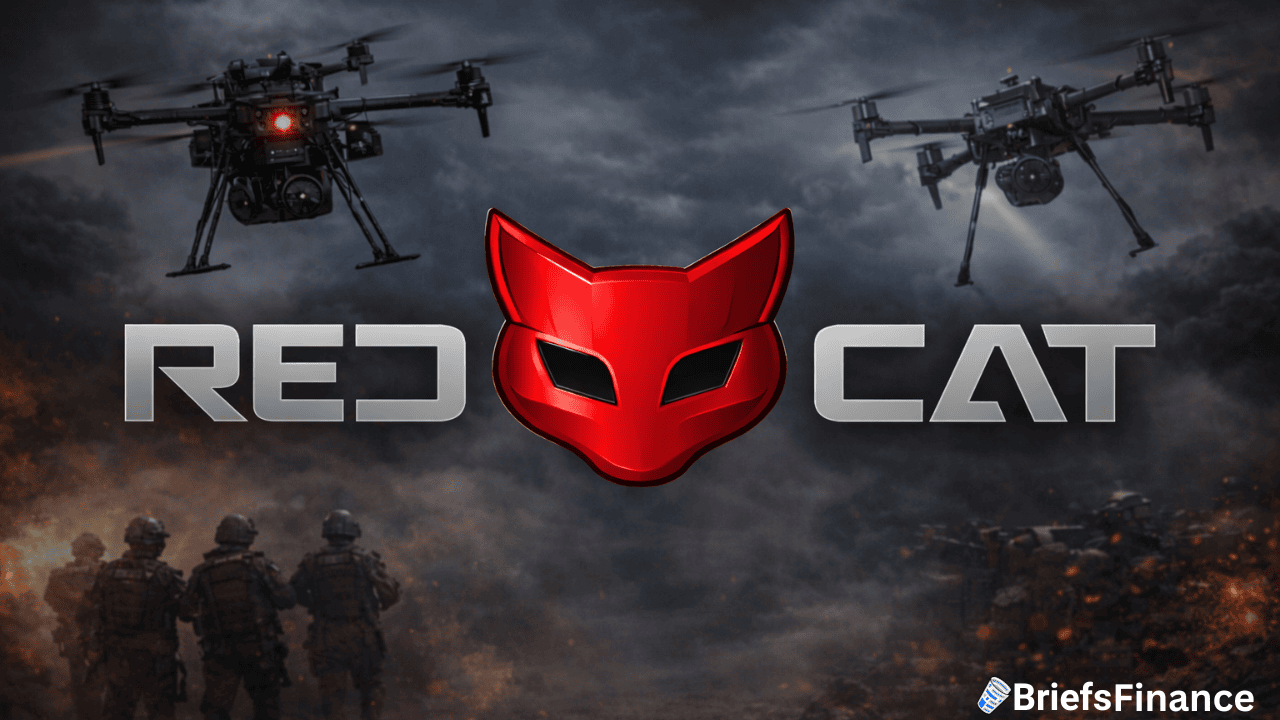
One of those companies quietly benefiting is Red Cat Holdings (RCAT).
It produces different drones than say Joby, but as of February 11 2026, shares are up over 24% in the last year, outpacing the S&P 500.
Our market analysts did a full deep dive on Red Cat & Joby in an exclusive investment report as well - you can read the full report by subscribing to Market Briefs Pro.
But today, let’s break down Red Cat Holdings - what is its moat, why it’s up so much in the last year, and the risks to its growth investors may want to consider.
What Is Red Cat Holdings (RCAT)?
Red Cat Holdings is a U.S.-based drone manufacturer that makes both military and commercial surveillance drones.
Unlike consumer drone companies, Red Cat specializes in drones used for:
- Military reconnaissance and surveillance.
- Law enforcement monitoring.
- Agriculture and crop monitoring.
- Topological mapping and infrastructure inspection.
Red Cat has been innovating by partnering with companies like Palantir (PLTR) to incorporate AI into their drones.
This allows drones to fly long distances beyond an operator's line of sight, relying on AI and data feeds to navigate safely.
Why RCAT Stock Spiked After Trump's Executive Orders
Red Cat's share price jumped following the June 6th executive order. But it wasn't just hype.
The drone industry has been dominated by Chinese manufacturers - particularly DJI, which controls over 70% of the global drone market.
This dominance has raised national security concerns. For years, there have been discussions about:
- 100% tariffs on Chinese drones.
- Total bans on Chinese-made drones (similar to the U.S. ban on Huawei phones).
The challenge? Law enforcement and businesses currently rely heavily on Chinese drones. Replacing them would cost billions.
But Trump's executive orders signal a clear policy direction: the U.S. wants to build its own drone industry and reduce dependence on foreign manufacturers.
That's where Red Cat comes in.
Red Cat's Competitive Advantage & Moat
Red Cat has struggled in recent years because Chinese drones are significantly cheaper. DJI's market dominance made it nearly impossible for American companies to compete on price.
But the game is changing.
If the federal government implements tariffs or bans on Chinese drones, Red Cat would become one of the few American alternatives for:
- Law enforcement agencies.
- Federal contractors.
- Military applications.
- Commercial surveillance operations.
Red Cat's technology already serves military customers, and they're positioned to expand into the commercial market as regulations shift in favor of domestic manufacturers.
The Numbers: RCAT Stock Performance
Red Cat's stock has been volatile over the past few months, but the executive orders provided a clear boost:
- 6-month performance: Up around 26%.
- Response to June 6th order: Share price spiked.
- Current momentum: Investors are watching for federal contract announcements
Red Cat is a small-cap company, which means it carries higher risk but also higher potential returns if federal spending shifts toward American drone makers.
What Could Happen Next for RCAT Stock
According to Michael Healander, CEO of Airspace Link (a drone infrastructure company), the industry will see "a lot of mergers and acquisitions" over the next year.
Smaller drone companies like Red Cat could either:
- Land major federal contracts and grow rapidly.
- Get acquired by larger defense contractors looking to expand their drone capabilities.
- Partner with companies that need American-made drones to comply with new regulations.
The timeline? Healander predicts early commercial drone operations in cities like Detroit within the next year, with nationwide services and major IPOs for commercial drone companies about three years away.
Risks to Consider
Investing in RCAT stock isn't without risks:
1. Chinese Competition Isn't Going Away
Even with tariffs, Chinese drones may still be cheaper. DJI has years of R&D and manufacturing scale that American companies don't.
2. Federal Contracts Take Time
Government spending moves slowly. Even with executive orders, it could take months or years for major contracts to materialize.
3. Small-Cap Volatility
Red Cat is a small company with limited cash reserves. They've been burning through capital, and if revenue doesn't increase quickly, they could face financial pressure.
4. Regulatory Uncertainty
Executive orders can be reversed or modified. If trade policies shift, the competitive landscape could change again.
How to Track RCAT Stock
If you're interested in RCAT stock, here's how to stay informed:
- Monitor federal contract announcements: Watch for DoD and federal agency contracts awarded to Red Cat.
- Track tariff and ban developments: Policy changes will directly impact RCAT's competitive position.
- Follow earnings reports: Red Cat needs to show revenue growth to justify investor confidence.
- Watch for M&A activity: Acquisitions could provide a quick exit for investors.
The Bottom Line on RCAT Stock
Red Cat Holdings is a high-risk, high-reward opportunity tied directly to government policy.
If the U.S. government follows through with tariffs or bans on Chinese drones, Red Cat could see a surge in demand.
Federal contracts, law enforcement upgrades, and commercial adoption could all drive revenue growth.
But if policy doesn't materialize or Chinese competitors adapt, Red Cat could continue to struggle.
For investors who believe in the "low-altitude economy" and want exposure to American-made drones, RCAT stock could be worth watching.
Want our full report on drones & other potential investment opportunities?