The Middle East war is now 10 weeks old, and Wall Street had been pricing in a deal. Sunday morning, that bet got blown up.
Trump rejected Iran's response, Tehran said it would "never bow," and oil opened Monday up nearly 5%.
What Iran Actually Asked For
Iran's counter was not a quiet redraft. Tehran wants war reparations, full sovereignty over the Strait of Hormuz, sanctions lifted, and frozen assets released.
The White House wants Iran to end its nuclear program, but Iran said it would only pause enriching uranium for a fraction of the 20-year freeze Washington asked for.
Iran also refused to dismantle any enrichment sites. It did offer to dilute some of its highly enriched uranium and ship the rest to a third country, with a clause that the uranium returns if the U.S. walks away from any deal.
Trump called the response "totally unacceptable" on Truth Social, and Iranian President Masoud Pezeshkian said his country would "never bow our heads before the enemy."
Israeli Prime Minister Benjamin Netanyahu said on CBS's "60 Minutes" that the war was not over because Iran had not handed over its enriched uranium or shut down its enrichment sites.
Every morning, Market Briefs breaks down moves like this in five minutes, plus a free investing masterclass when you sign up.
Why Oil Won't Sit Still
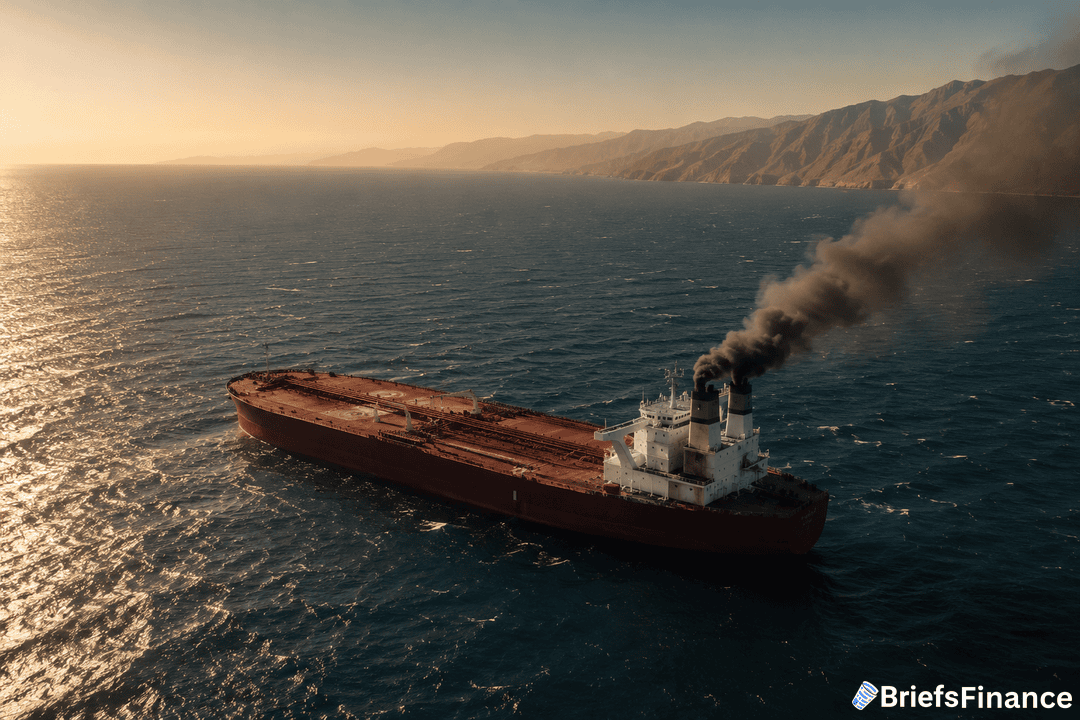
The Strait of Hormuz handles about a fifth of the world's oil, and a single tanker passage is not a re-opening. A Qatari liquefied natural gas tanker did cross the strait Sunday, approved by Iran as a gesture to Qatar and Pakistan.
It was the first crossing since the war started. But drones did most of the talking over the weekend.
The UAE intercepted two Iranian drones, while Qatar reported a drone strike on a cargo ship in its waters and Kuwait said its air defenses caught hostile drones in its airspace.
"Oil has stayed highly sensitive to headlines, with markets caught between hopes of de-escalation and the risk that sporadic clashes keep an energy-risk premium embedded," said Christopher Wong, currency strategist at OCBC Bank.
What To Watch
Trump meets Chinese President Xi Jinping in Beijing later this week, where the war is expected to take over the talks. Washington wants Beijing to push Tehran to reopen Hormuz.
Beijing hosted Iranian Foreign Minister Abbas Araghchi last week, with Chinese top diplomat Wang Yi reaffirming the "strategic partnership" between the two countries while urging Tehran to pursue a diplomatic resolution.
Ben Emons, managing director at Fed Watch Advisors, said the base case is a "managed détente with potentially thin deliverables." Translation: more talk than action.
Iran's new supreme leader, Mojtaba Khamenei, has not appeared publicly since the war began. He has issued "new and decisive directives" for military operations, state media reported, without giving details.
Until oil moves back below $100, the war's price tag is showing up at the pump.
Sign up here for the daily Market Briefs newsletter and get a 45-minute investing masterclass thrown in as a bonus.