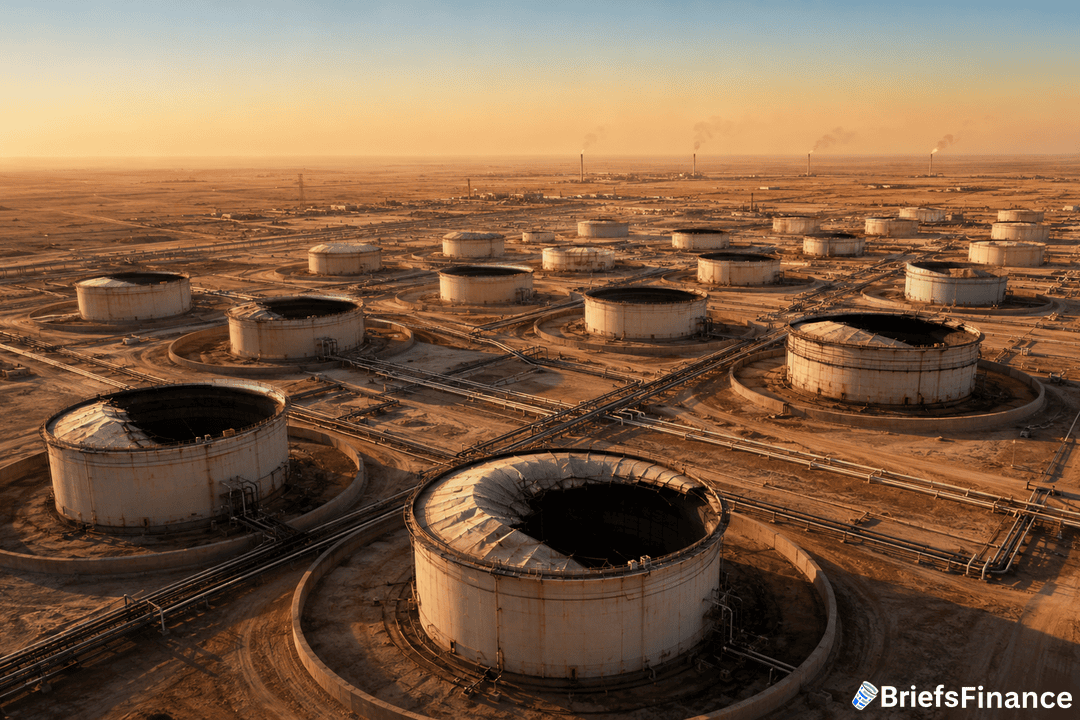
The oil market is short 100 million barrels every week.
That's the warning from the head of the world's biggest oil company, Saudi Aramco. And he isn't making a forecast.
He's describing what's already happening, with the Strait of Hormuz still closed and most Gulf supply locked out of global trade.
A Number That Sets The Global Oil Story
Aramco CEO Amin Nasser made the call on Monday at an industry conference in Dubai.
He said the market is losing roughly 100 million barrels every week the Strait of Hormuz stays shut, with about 1 billion barrels already gone from global supply since the war started in late February.
For now, companies and governments are pulling oil out of storage to cover the gap, and those reserves are running low fast.
We break down the moves Wall Street is actually watching in Market Briefs - five minutes a day, plus a free investing masterclass when you join.
Why No One Can Step In To Help
When supply goes missing, the world's biggest producers usually pump more to cover the hole.
That isn't happening this time. Most of the world's spare oil capacity sits inside the Persian Gulf, which means it can't reach buyers while shipping through Hormuz is blocked.
Saudi Arabia is the world's biggest oil exporter, and even it can't move what it has out the door.
That leaves the global market leaning on stored barrels and cut-back demand to stay balanced.
Nasser said Aramco expects demand rationing to keep going as long as supply stays cut off. In plain English: buyers are using less because oil is so expensive, and that's the only thing keeping the market from breaking.
The Bigger Stakes For Investors
Aramco's number is the clearest sign yet that the supply hole is getting harder to plug.
Most prior takes on the crisis focused on price, while Nasser flipped the framing to volume - showing investors how much oil is simply not reaching the market.
Energy costs feed into everything from airline tickets to grocery bills, and central banks have warned that the longer Hormuz stays shut, the more inflation creeps back in.
The IMF has already cut its global growth forecast because of the conflict.
What To Watch
Nasser's parting line was forward-looking. If normal trade resumes, he expects a very strong return to demand growth.
That cuts both ways - a fast recovery if shipping reopens, a deeper crisis if it doesn't.
The 100 million number is the new line in the sand.
If you want this kind of read on the market every morning, join the 350,000+ investors reading Market Briefs - you also get a free 45-minute investing course as a bonus.