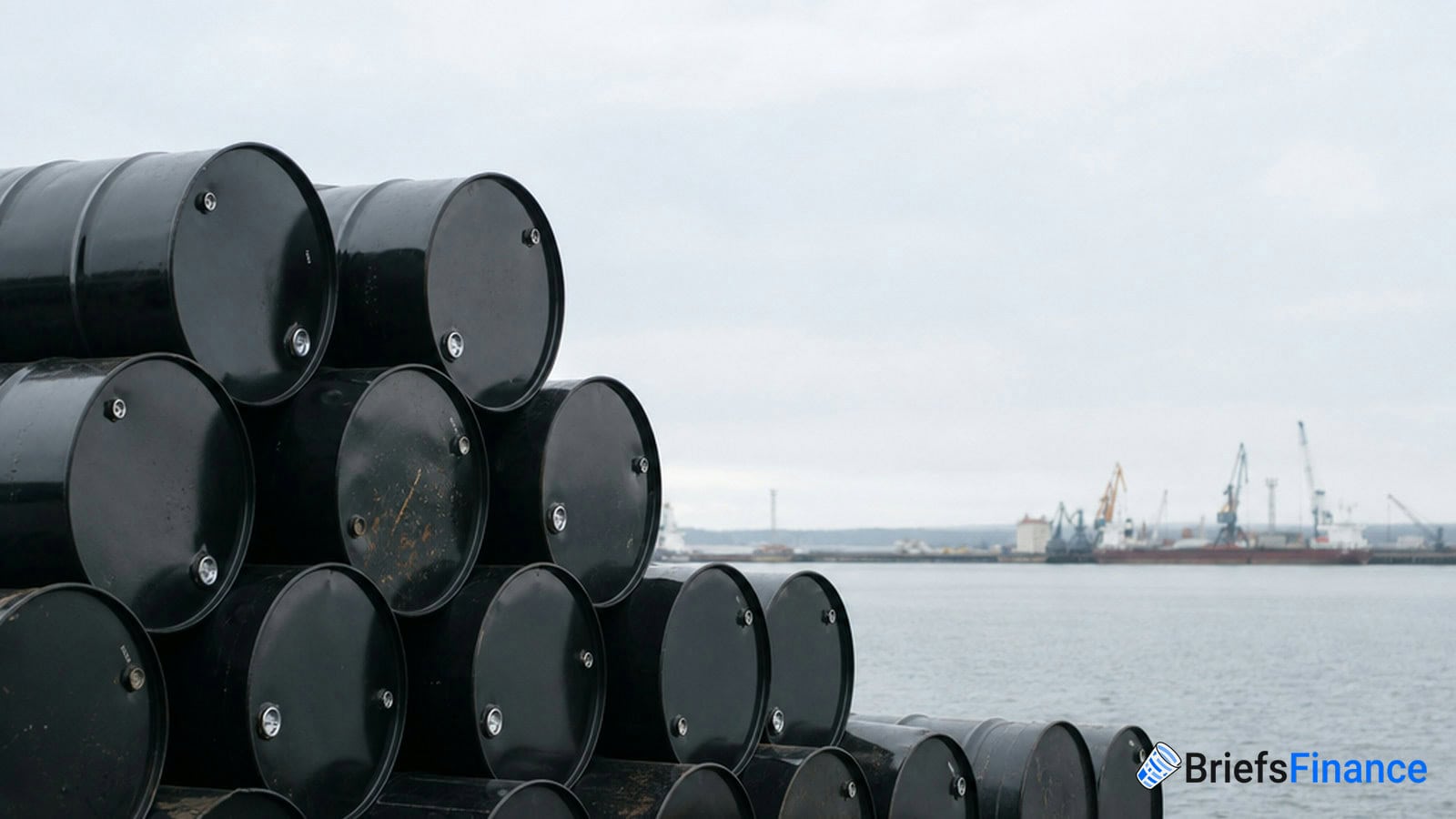
Oil just broke a line it hasn't crossed in three months. Crude slipped under $80 a barrel after a pending U.S.-Iran deal to reopen the Strait of Hormuz sparked bets that a wave of Middle East supply is about to return to global markets.
Why The Drop Happened
For most of the last quarter, tight supply held oil prices up, with Persian Gulf barrels effectively locked out of the market by the U.S.-Iran war and a double blockade of the Strait of Hormuz that propped up the price of every other barrel.
Now that math is shifting as an interim deal between Washington and Tehran - due to be signed in Switzerland on Friday - would reopen the Strait and let Gulf crude flow back into the global pool.
Iran was pumping around 3.2 million barrels a day before the conflict dragged output lower, and Goldman Sachs now expects Persian Gulf exports to reach pre-war levels by year-end - enough to add real weight to global supply.
More supply with steady demand means lower prices, which is exactly what showed up on traders' screens this week. Brent fell as much as 4% in London, on course for its longest losing streak of the year.
We break down what moves like this actually mean for your portfolio in Market Briefs - delivered every morning in five minutes, plus a free investing masterclass when you join.
What It Means For Investors
Oil at $80 isn't just a number on a screen - it shapes gas prices, airline costs, grocery bills, and the broader path of inflation.
When crude falls, a lot of other prices tend to follow, which is why cheaper oil often takes pressure off the Fed.
Cooler fuel costs feed into cooler inflation, giving the Fed more room to cut interest rates - a setup that tends to lift stocks broadly.
The flip side: lower crude cuts into producer profits and drags oil stocks like ExxonMobil and Chevron down with the barrel.
Airlines, shipping firms, and big retailers tend to move the other way, since fuel is one of their biggest costs and any drop flows straight to profits.
Refiners can also win when crude falls faster than the price of gas and diesel, since the gap between what they pay and what they sell for gets wider.
What To Watch
The deal isn't done - Washington and Tehran still haven't released the text of their memorandum - and if talks stall, prices could snap back fast as the same supply worries take over again.
Beyond the talks, traders are watching OPEC+, where Saudi Arabia and Russia could shift output to defend prices if Gulf barrels start flowing in real volume. [NEEDS MANUAL VERIFICATION - no current OPEC+ guidance found in source coverage]
Storm season, pipeline outages, or fresh tension in another oil-producing region could also flip the picture in a single trading session.
U.S. oil stockpiles add another wildcard, since the Strategic Petroleum Reserve just fell to 340.3 million barrels - the lowest level since 1983 - after months of releases to blunt the war-driven price spike.
For now, the path of least resistance is lower.
If you want this kind of read on markets every morning, join 350,000+ investors reading Market Briefs - you also get a 45-minute investing course thrown in as a bonus.