Free NewsletterPro Login

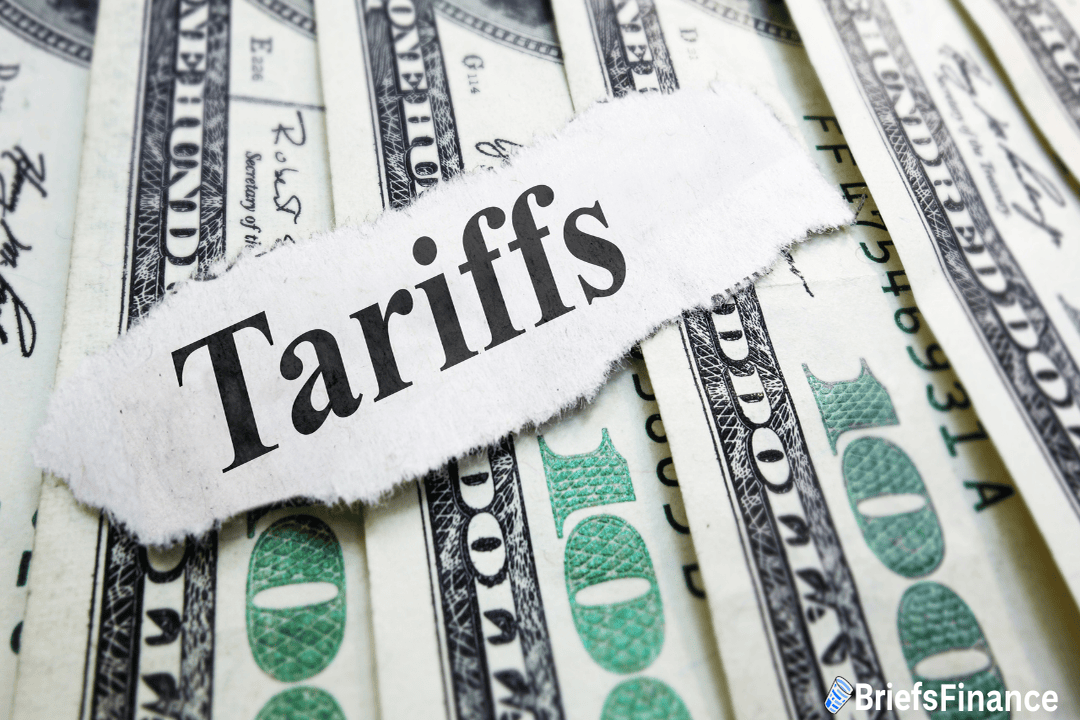
New York Fed: Americans Paid 90% Of Tariff Costs In 2025

A stylized illustration of a cylindrical cup with blue arrows and lines indicating a swirling or rotational motion inside the cup.
Published Feb 12, 2026
Share:
A grocery bag with a red dollar sign contains bread, lettuce, bananas, eggs, wine, and packaged foods on a kitchen counter—highlighting the tariff costs Americans face daily. "BriefsFinance" logo appears in the corner.
Summary:
  • Americans paid the price. U.S. businesses and consumers covered nearly 90% of tariff costs in 2025, not foreign companies.
  • Your wallet took a hit. The average household paid $1,000 extra in 2025, climbing to $1,300 in 2026.
  • Revenue's way up. The government collected $287 billion in tariffs for 2025, nearly triple the previous year.

The New York Fed just dropped a report and it turns out American businesses and consumers paid nearly 90% of tariff costs in 2025.

They also broke it down month by month. From January through August, U.S. importers ate 94% of the cost. By November it "improved" to 86%.

The Real Cost Per Household

Here's where it hits home. The Tax Foundation crunched household numbers and found tariffs cost the average American family $1,000 in 2025.

That number's climbing to $1,300 in 2026 if nothing changes.

Taxes are around the corner - your tax refund might go up a grand, but tariffs already took it back.

How Big Did Tariffs Get?

The average U.S. tariff rate jumped from under 3% to 13% in 2025. That's the highest rate since 1946.

The government collected $287 billion in tariff revenue for 2025, up 192% from the previous year.

And the money keeps rolling in. Through January 2026, the year-to-date total hit $124 billion, up 304% from the same period in fiscal 2025.

What The White House Says

The administration's position? Foreign companies pay most of it.

White House spokesperson Kush Desai told CBS News that tariff rates went up nearly sevenfold while "inflation has cooled and corporate profits have increased".

The New York Fed report says otherwise.

The Supreme Court Wild Card

None of this might even stick. The Supreme Court's about to rule on whether Trump had the legal authority to impose these tariffs under emergency powers law.

If the Court strikes them down? The government could owe businesses $168 billion in refunds.

Until then, you're still paying.

Disclosure

Get Market Briefs delivered to your inbox every morning for free!

No fluff. No noise. No politics. Just finance news you can read in 5 minutes.

Blogs

April 28, 2026
Core-Satellite Portfolio: The Best of Both Worlds
  • A core-satellite portfolio splits investments into stable core holdings and higher-risk satellite picks.
  • The core is usually 60% of the portfolio, with satellites at 40%.
  • It blends passive index investing with active opportunity bets.

Read More
April 28, 2026
Bond Ladder Strategy: The Income Plan With Built-In Flexibility
  • A bond ladder is a series of bonds with staggered maturity dates, often one to five years apart.
  • It gives you regular access to cash, predictable income, and protection from rate changes.
  • It works for Treasuries, corporate bonds, municipal bonds, and CDs.
Read More
April 28, 2026
Silver vs Gold Investing: Which One Belongs in Your Portfolio?
  • Gold is the stable store of value, used as crisis insurance during recessions and conflict.
  • Silver is both a precious metal and an industrial metal, with more volatile pricing.
  • Most investors hold a mix in their alternative investment allocation, often 5% to 12% of portfolio.
Read More
April 28, 2026
What Is a Dividend Reinvestment Plan? The Wealth Snowball Explained
  • A dividend reinvestment plan, or DRIP, automatically uses dividend payments to buy more shares.
  • DRIPs power compound growth - dividends buy shares that pay dividends that buy more shares.
  • Most brokerages offer DRIPs free, and many include fractional shares so every penny goes back in.
Read More
April 28, 2026
How Tariffs Affect the Stock Market
  • Tariffs are extra fees on goods imported into a country, and they hit company profit margins.
  • The S&P 500 dropped over 3% in one day after the 2025 tariff announcement.
  • Tariffs reshape trade flows, creating both losers and unexpected winners.
Read More
April 28, 2026
What Is a 13F Filing? The Smart Money Tracker
  • A 13F filing is a quarterly disclosure of stock holdings from large institutional investors.
  • It shows what hedge funds and asset managers bought, sold, and held last quarter.
  • You can find any 13F free on SEC EDGAR.
Read More
April 28, 2026
Debt-to-Equity Ratio: The Number That Tells You If a Company Is Drowning
  • The debt-to-equity ratio compares what a company owes to what shareholders own.
  • The formula is total liabilities divided by total shareholder equity.
  • Lower ratios mean less risk - one of the value markers Warren Buffett looks for.
Read More
April 28, 2026
Non-Financial Analysis of Stocks: The 4-Step Method
  • Non-financial analysis evaluates a company's business, not its financial ratios.
  • It covers four things: business model, CEO, innovation, and moat.
  • It's how investors find companies with long-term staying power.
Read More
April 28, 2026
SEC EDGAR Tutorial: The Free Tool the Pros Use
  • SEC EDGAR is the official free database of public company filings.
  • You can pull 10-Ks, 10-Qs, 8-Ks, and insider trades by ticker or company name.
  • It's the source journalists and analysts use to write their stock stories.
Read More
April 28, 2026
How to Read a 10-Q (Without Losing Your Mind)
  • A 10-Q is a public company's three-month financial update, filed with the SEC.
  • It shows revenue, profits, debt, and cash flow between yearly reports.
  • You can find any company's 10-Q for free on the SEC's EDGAR site.
Read More
1 2 3 18
Share via
Copy link