Trump wants a rate cut. His own nominee won't promise one.
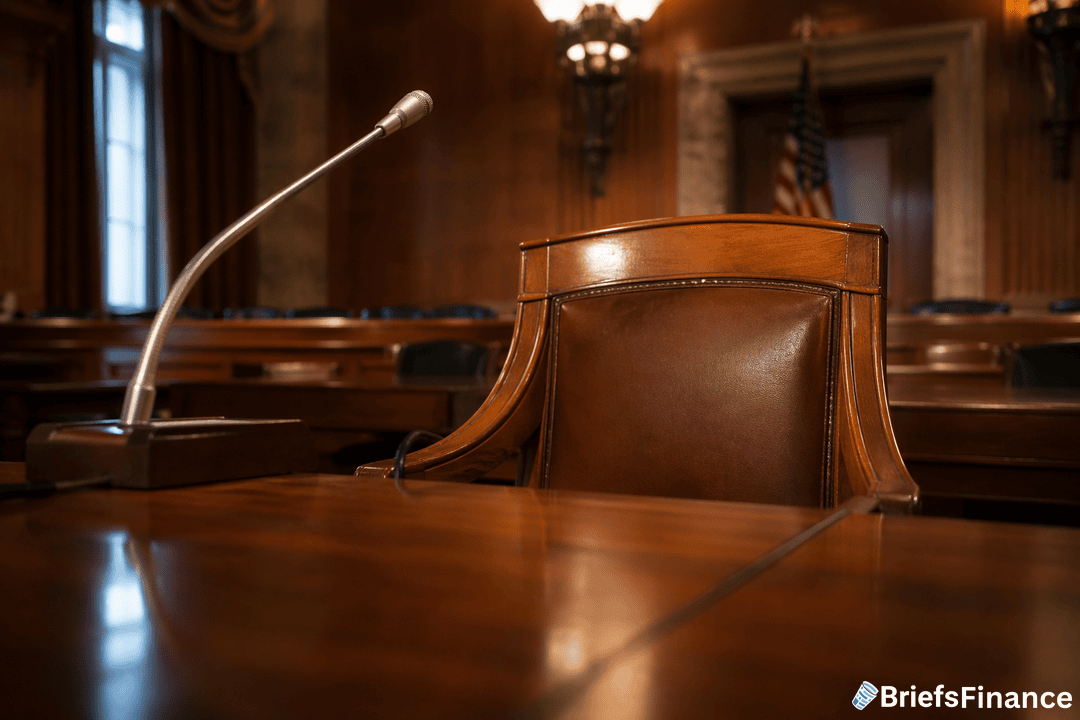
Kevin Warsh went in front of the Senate Banking Committee Tuesday to make his case for the Fed's top job. Then he said the one thing Trump didn't want to hear.
He called himself an "independent actor." When Sen. John Kennedy asked if he'd be the president's "human sock puppet," Warsh said "absolutely not." Sen. Elizabeth Warren pressed the same theme in her remarks, warning the Senate against installing Trump's "chosen sock puppet" as Fed Chair. Trump had told CNBC just hours before that he'd be "disappointed" if Warsh didn't cut rates "right away."
Why This Nomination Is Stuck
The Senate math looks simple on paper. Republicans hold a 12-10 edge on the committee. One defection is enough to tank the vote.
That one defection already showed up. North Carolina's Thom Tillis said he backs Warsh but won't let the vote happen until the Justice Department finishes its criminal probe of current Chair Jerome Powell. Pirro, the US Attorney running the investigation, has until May 3 to appeal a court ruling that blocked her subpoena of Powell.
Earliest the full Senate could vote on Warsh is the week of May 11.
Who Warsh Actually Is
Warsh is 56, Stanford and Harvard Law, a Fed governor from 2006 to 2011, and a former Morgan Stanley banker. He's also worth about $135 million thanks to a venture role with Stanley Druckenmiller.
That's where the trickier questions started. His financial disclosures show more than $100 million tied to Druckenmiller's funds, plus heavy crypto bets in Solana and two startups. Warren also noted his name appeared in the Epstein files.
What He'd Actually Do At The Fed
Warsh was blunt about one thing: he thinks the Fed blew it on inflation. He called the 2021-2022 policy response a "fatal policy error" that pushed prices up 25 to 35 percent across nearly every income group.
His fix is a full "policy regime change." A new inflation framework. Messier, more open debates at the Fed's rate-setting meetings. He wouldn't commit to holding a press conference after every meeting - something Powell does now and Bernanke didn't.
The broader read on Warsh: lower rates, a smaller Fed balance sheet, a lighter hand on bank rules.
What The Bond Market Is Pricing
Bond traders spent Tuesday trying to guess whether Warsh actually takes the Fed chair, and if he does, how fast rates come down. Rate-cut futures drifted as his testimony ran long, pulled in two directions by his "fatal policy error" language and his refusal to commit to faster cuts.
The 10-year yield is the tell. If the market starts pricing Warsh in, long yields tick lower on the view that a new chair brings a looser balance sheet and a softer inflation target. If the Tillis blockade holds through May, that trade unwinds and yields drift back up.
Think of the bond market as a room full of people listening to the same song and betting on how it ends. Right now half the room hears a rate cut. The other half hears a stalled nomination.
Worth Noting
The Senate is out the week of May 4. Tillis hasn't moved. The DOJ probe isn't resolved. Trump isn't calling it off.
Markets want clarity on rates. Washington isn't in a hurry to give it to them.