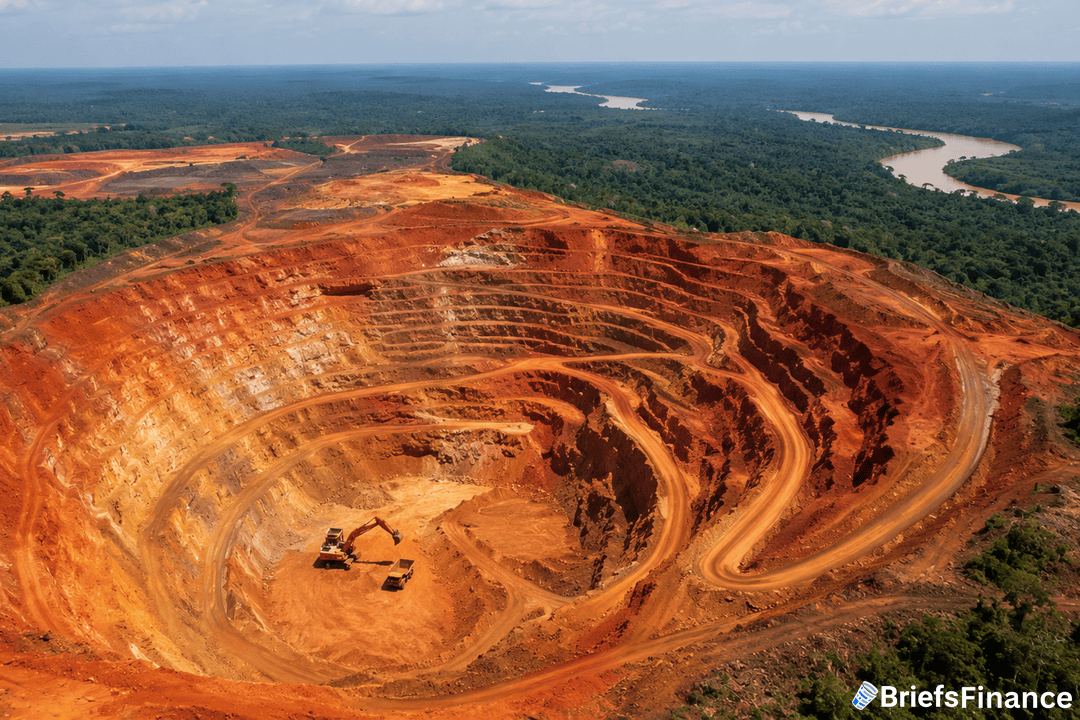
Guinea has more than a third of the world's bauxite, and last year it sent so much of it out the door that prices collapsed.
Now it's cutting the flow on purpose.
The West African nation will roll out formal export controls in June, Mines and Geology Minister Bouna Sylla told Bloomberg News, with the plan being to bolster prices that have slumped almost in half from their peak early last year.
Too Much Of A Good Thing
Bauxite shipments from Guinea jumped 25% in 2025 to 183 million tons, with growth running even hotter in the first three months of 2026.
The result was predictable: global bauxite prices slumped by nearly half from their peak early last year. Mining companies got volume, while Guinea got less revenue per ton.
"Supply mustn't exceed demand," Sylla told Bloomberg. "We want to regulate the quantity to raise prices back to reasonable levels."
Bauxite is the raw rock that gets refined into alumina and then smelted into aluminum, so without it you don't get the metal that goes into cans, planes, and EV battery housings.
Stay ahead of moves like this with Market Briefs - delivered every morning in five minutes, with a free 45-minute investing masterclass when you join.
Guinea Is Following Africa's Critical-Mineral Playbook
Guinea isn't doing this alone, with the Democratic Republic of Congo recently cracking down on cobalt and Zimbabwe doing it with lithium. Both metals flow mostly to China's battery industry.
The pattern is the same across all three: African producers of the metals that power EVs and aluminum want a bigger slice, so export limits raise the price and local processing rules keep more of the value chain at home.
Guinea is pushing miners to build alumina refineries inside the country, with three new facilities planned or under construction to add to its single existing plant.
The government wants five new refineries in total, with combined capacity of 7.2 million tons of alumina a year - though that still only absorbs less than 15% of what Guinea mined last year.
China Has The Most To Lose
China imported 158 million tonnes of bauxite in 2025, and Guinea supplied 75.3% of it - feeding 50% to 60% of all alumina production capacity inside China.
Less Guinean bauxite means tighter input markets for Chinese smelters, higher costs for aluminum producers globally, and a slow squeeze on industries that depend on the metal.
What To Watch
The June policy announcement is the next concrete data point, and the size of the export cap will tell investors how serious Guinea is - and how hard aluminum prices will react.
The shift Guinea is signaling is bigger than one country and one mineral. It's a wider push to capture more value at home, not just dig it up.
Sign up for Market Briefs for a daily read on stories like this - the newsletter plus a free investing course as a bonus.