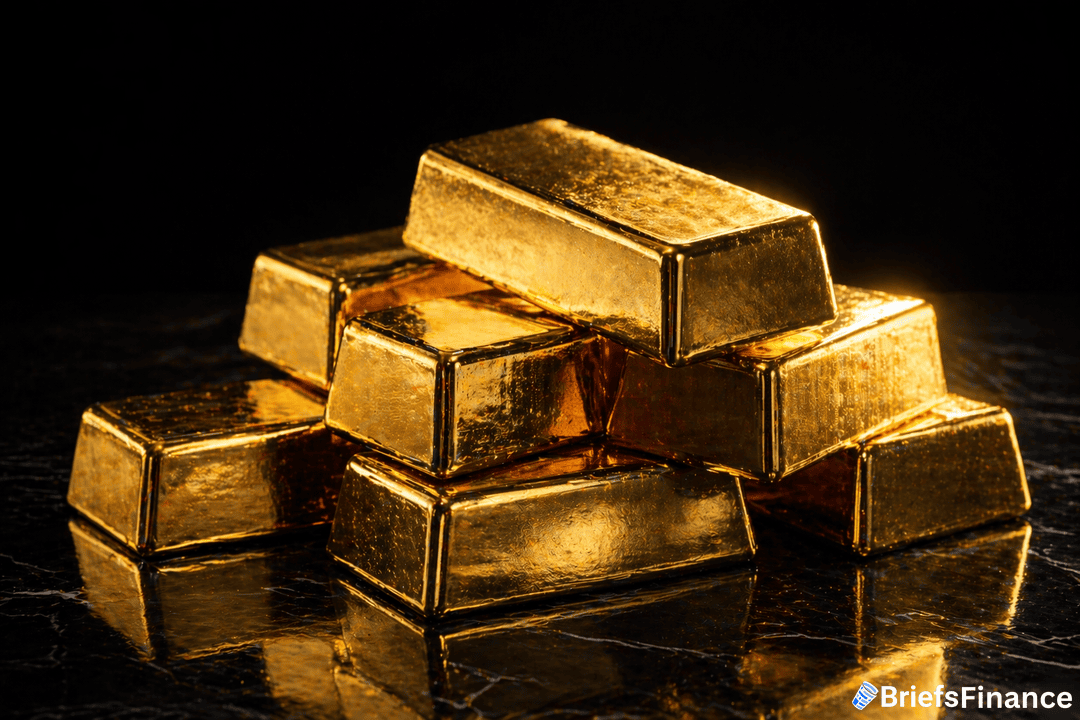
Gold is supposed to rise during a war, and it usually does. Right now it isn't.
Spot gold fell 0.7% Wednesday to $4,705.09 an ounce even as the US-Iran standoff over the Strait of Hormuz intensified and peace talks collapsed before the second round could begin. The reason for the counterintuitive move sits in the oil market, not the geopolitical one.
The Oil-Inflation-Gold Chain
Brent crude is trading above $100 a barrel, with some sources reporting prices above $103. US weekly stockpile data showed larger-than-expected drawdowns in gasoline and distillates, which signaled tighter supply to traders and pushed oil prices higher going into Wednesday.
Higher oil prices feed directly into higher inflation readings because fuel and transportation costs touch nearly every sector of the economy. Higher inflation typically forces the Federal Reserve to keep interest rates elevated for longer.
And higher rates hurt gold, because gold doesn't pay interest and has to compete with yielding assets like Treasury bonds for investor capital. That's the chain that's pulling gold lower even as a major war expands.
The inflation read is louder in the market right now than the safe-haven read, and the two are working in opposite directions on gold's price.
The Talks That Fell Apart
Vice President JD Vance had been scheduled to travel to Islamabad for a second round of US-Iran peace talks. The trip was canceled after Tehran informed the US through Pakistani intermediaries that it would not participate in the second round.
That means the talks didn't collapse at the table - they never actually convened. President Trump extended the existing ceasefire despite the breakdown, but without a clear path back to negotiations, the ceasefire is functionally a pause rather than a framework.
Markets are pricing that uncertainty into oil and equities, while gold is caught in the inflation crossfire. The paradox: Geopolitical risk normally lifts gold.
High oil prices normally lift inflation, which lifts rates, which lowers gold. This week, the second chain is winning.
What Normally Drives Gold
Gold has two main price drivers over most time horizons. Real interest rates - the rate you earn after inflation - are the biggest factor, and they're currently moving higher as the Fed holds policy tight.
Geopolitical risk is the second factor, and it typically supports gold when it's active. When the two forces pull in the same direction, gold moves cleanly.
When they work against each other, the market picks whichever signal is stronger at the moment. Right now, the oil-driven inflation story is winning, which is why gold is down despite rising war tension.
For investors who see gold primarily as an inflation hedge, this week's move is a reminder that the relationship between inflation and gold prices isn't as clean as it's often described. High inflation pushes up interest rates, and higher rates pull down gold.
The hedge works until rates react faster than prices do.
What To Watch
Three variables will move gold from here. Oil prices are the first - any sustained drop below $95 a barrel would take pressure off inflation expectations and give gold room to rally.
Fed rate expectations are the second - a clear signal that the Fed will cut rates in Q3 2026 would also support the metal.
The third is whether the Hormuz standoff escalates into a direct military event. A shooting event in the strait would flip the trade quickly, overwhelming the inflation math with a genuine safe-haven bid.
Without that kind of shock, gold's path depends more on US interest rates than on the Middle East.