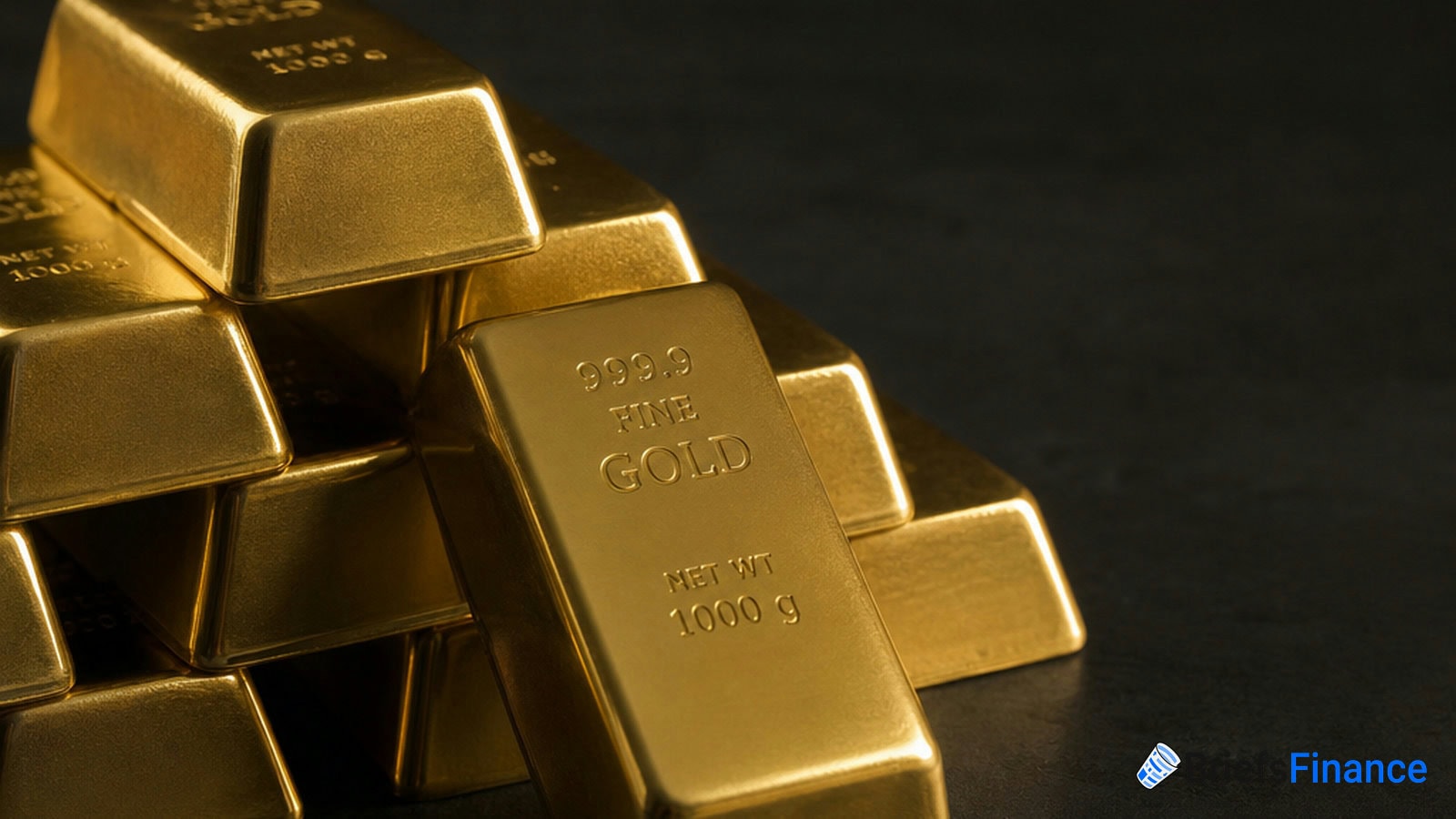
Gold just had its worst session in weeks, dropping 1.7% on Wednesday after two pieces of news landed at once: a U.S.-Iran peace deal and a Fed signaling higher rates by October.
Both work against gold for different reasons, and the metal is now sitting near $4,295 an ounce after a small 0.1% bounce in Thursday trading.
Gold had been on a record-setting run earlier in the year, with investors piling in to hedge inflation, war risk, and Fed rate cuts. Wednesday's drop knocked out two of those three pillars in a single afternoon.
The Fed Dropped Forward Guidance
The Fed held rates steady on Wednesday, which was widely expected. What surprised traders was the language change in the statement.
The central bank dropped a line about future rate adjustments and swapped in new wording about delivering price stability. The message: the Fed is done cutting, and the next move is probably up.
Futures are now fully pricing in a rate hike by October, sending bond yields higher and putting fresh pressure on gold.
Higher rates are a real problem for gold because gold doesn't pay interest, but bonds and savings accounts do. When rates rise, holding a metal that just sits there gets more expensive than parking cash somewhere that actually pays you.
The Fed is the story driving every market right now. Market Briefs breaks down what moves like this mean for your money in five minutes every weekday morning - and you get a free 45-minute investing masterclass when you join.
The Peace Deal Cut Demand for Safe Havens
The U.S. and Iran signed an interim peace agreement electronically on Wednesday evening, which should take some pressure off the energy spike that's been pushing inflation - and rate hike bets - higher.
Less war means less fear, which means less demand for gold as a safe haven.
Lower oil prices would also cool inflation, making the Fed's job easier and weakening one of gold's biggest tailwinds of the past year.
But there's a catch: it's still unclear whether the Strait of Hormuz has actually reopened, or how fast fuel prices can come down once it does.
Ryan Mckay, senior commodity strategist at TD Securities, said in a note that the rate hike was "already baked in" for gold even before Wednesday's Fed decision. His bigger-picture read: the tilt for precious metals is bearish, and only a real shift in the Fed outlook would change that.
What To Watch
The Strait of Hormuz is the next read. If transits return to pre-war levels quickly, oil falls, inflation cools, and the pressure on gold builds.
Silver moved with gold, dropping 3% on Wednesday before bouncing 1.2% to $68.75 an ounce. Platinum and palladium followed the same path with modest gains in Thursday trading.
The next Fed meeting is July 28-29, and traders will be watching every speech between now and then for confirmation the central bank really has shifted.
Both stories pushed the same direction, and gold got the bill.
If you want this kind of read on the market every morning, join 350,000+ investors reading Market Briefs - delivered every weekday, with a 45-minute investing course thrown in as a bonus.