Free NewsletterPro Login

Germany May Put €300 Million Behind A Wind Platform To Counter China

Published Jun 17, 2026
Share:
Summary:
  • Germany is weighing up to €300 million ($348 million) in loan guarantees for a Baltic Sea wind platform.
  • A group including Siemens Energy won 50Hertz's tender for a 2-gigawatt converter platform.
  • Berlin estimates Europe needs about €16 billion in wind-industry guarantees by 2030 to compete with China.

Europe already lost the solar race to China. It does not want to lose wind the same way.

So Germany is lining up public money behind a homegrown wind project. Cheaper options sit right there, but Berlin is paying up anyway.

A small check with a big message

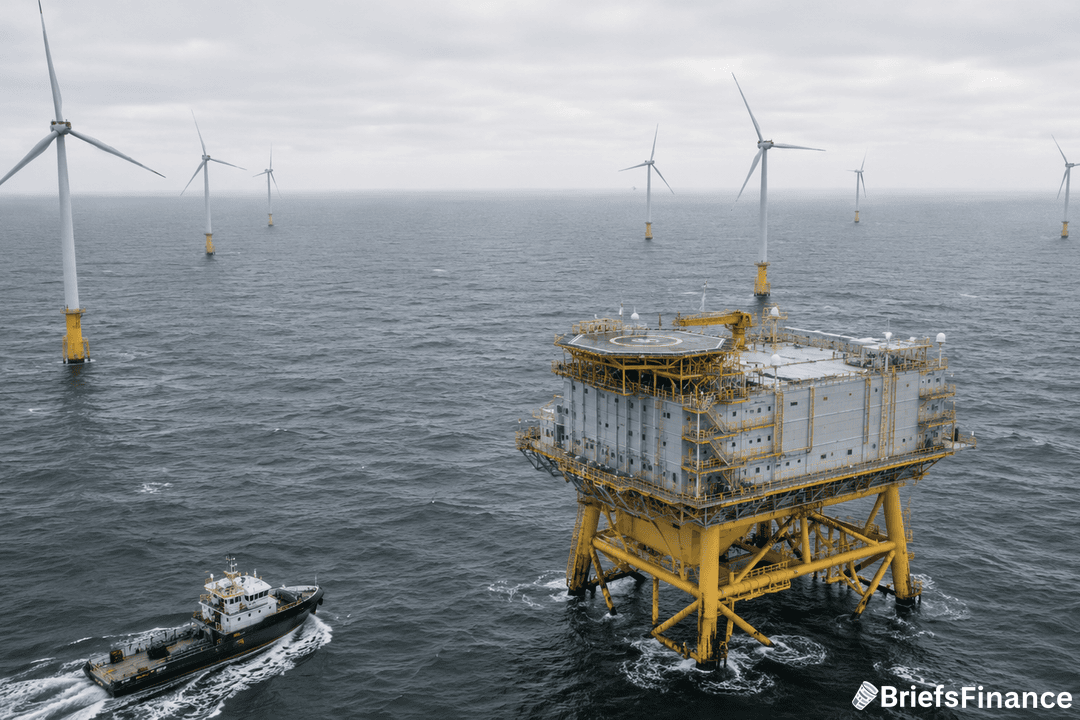
Germany is weighing up to €300 million in loan guarantees for an offshore wind platform in the Baltic Sea. Offshore wind platforms sit out at sea and feed power back to shore.

A loan guarantee means the government promises to cover the debt if the project cannot pay. That lowers the risk for everyone lending the money.

The platform itself is a converter station. It is the giant unit that turns offshore wind power into electricity the grid can use.

Without it, the power from far-off turbines cannot reach homes. A converter platform is also one of the priciest parts of any offshore project.

Grid operator 50Hertz is set to confirm that a group including Germany's own Siemens Energy won the deal. It will build the 2-gigawatt version, enough to power a couple million homes.

The operator plans to name the winner this week.

A final call on the guarantees could follow soon after.

We track how government money reshapes industries like this in Market Briefs - a five-minute morning read, plus a free investing masterclass when you join.

The solar lesson

Backing a local champion costs more than buying from China. Germany is doing it anyway.

The reason is solar. A decade ago, Chinese factories undercut everyone on price, and Europe's solar makers mostly vanished. Berlin does not want to watch that happen again.

China now makes more than 80% of the world's solar panels. Wind leaders fear the same ending.

Wind gear is bulky and costly to ship, yet low prices still win the deals.

China's turbine makers are pushing into Europe with low prices and heavy state support. The worry is they take over wind the way they took over panels.

That is why Berlin wants a strong local builder to win this job, even at a higher price. German wind leaders have warned against ceding the field to China.

What To Watch

This one platform is really a down payment on a bigger plan. Berlin figures Europe needs around €16 billion in guarantees by 2030 to keep its wind industry standing.

Part of that would flow through KfW, the German state bank, to back new and bigger turbine factories. The money would be a promise to step in, not cash up front.

The guarantees act like a backstop for the banks that lend to those projects. That makes building at home less risky.

Watch whether other European governments follow with their own cash. Some may worry about a fresh subsidy race with Beijing.

Either way, the cost of competing with China keeps climbing.

One country protecting its makers is a policy. The whole bloc doing it becomes a trade fight.

Want the energy and policy stories that move markets? Join Market Briefs, and a 45-minute investing course is included free.

Disclosure

Get Market Briefs delivered to your inbox every morning for free!

No fluff. No noise. No politics. Just finance news you can read in 5 minutes.

Blogs

June 16, 2026
Tech Stocks: A Simple Guide for New Investors
  • Tech stocks are companies in the information technology and related sectors, from software to chips to the internet giants.
  • They've driven much of the market's growth, but they can be volatile and richly valued.
  • The smart approach is to understand what you own and not let one sector run your whole portfolio.
Read More
June 16, 2026
What Is a Joint Stock Company? A Simple Guide
  • A joint stock company is a business owned by many people, each holding shares of stock that represent a slice of ownership.
  • It's the basic idea behind every public company you can buy on the stock market today.
  • Owning a share makes you a part-owner, entitled to a piece of the profits and growth.
Read More
June 16, 2026
Capital Gains Tax in California: A Simple Guide
  • Capital gains tax is what you owe when you sell an investment for more than you paid for it.
  • How long you held it matters: long-term gains are taxed more gently than short-term gains at the federal level.
  • Smart investors lower the bill with tools like tax-loss harvesting and holding for the long run.
Read More
June 15, 2026
Top Covered Call ETFs: How to Compare Them
  • Top covered call ETFs are income funds that own stocks and sell call options against them to generate steady cash.
  • The best one for you is the fund whose income, holdings, and fees fit your goals, not simply the one with the flashiest yield.
  • They all share one trade-off: more income today, less upside in a big rally.
Read More
June 15, 2026
What Are Stock Options? A Plain-English Guide
  • Stock options are contracts that give you the right, but not the obligation, to buy or sell a stock at a set price by a set date.
  • There are two kinds: calls (the right to buy) and puts (the right to sell).
  • Options can multiply gains or wipe out your money fast, so they suit investors who already know the basics.
Read More
June 15, 2026
EBITDA Margin: What It Is and How to Calculate It
  • EBITDA margin measures how much core profit a company keeps from each dollar of sales, before interest, taxes, and accounting deductions.
  • The formula is EBITDA divided by revenue, shown as a percent.
  • A higher, steadier EBITDA margin usually signals a more efficient, more durable business.
Read More
June 15, 2026
What Is Taxable Income? A Simple Guide for Investors
  • Taxable income is the portion of your money the government can tax after deductions are applied.
  • Not all income is taxed the same: job income, investment income, and passive income face different rates.
  • Investors and business owners get more tools to legally lower their taxable income, which is a big edge over time.
Read More
June 15, 2026
What Is a Covered Call? How the Strategy Works
  • A covered call is an options strategy where you own a stock and sell someone the right to buy it from you at a higher price.
  • You collect cash, called the premium, up front, and keep it no matter what happens.
  • The trade-off: if the stock soars, your shares get sold at the set price and you miss the extra upside.
Read More
June 15, 2026
What Is Gross Margin? A Simple Guide for Investors
  • Gross margin is the share of each sales dollar a company keeps after paying the direct cost of whatever it sold.
  • The formula is simple: revenue minus cost of goods sold, divided by revenue, shown as a percent.
  • A steady or rising gross margin points to pricing power, and it is one of the first things smart investors check.
Read More
June 15, 2026
What Is a Dividend? A Plain-English Guide for Investors
  • A dividend is a cash payment a company sends you just for owning its stock, usually every three months.
  • Dividends are one of two ways stocks pay you, the other being the share price going up.
  • Dividends are never guaranteed, so the strength of the business behind the payment matters more than the size of the payment.
Read More
1 2 3 23
Share via
Copy link










