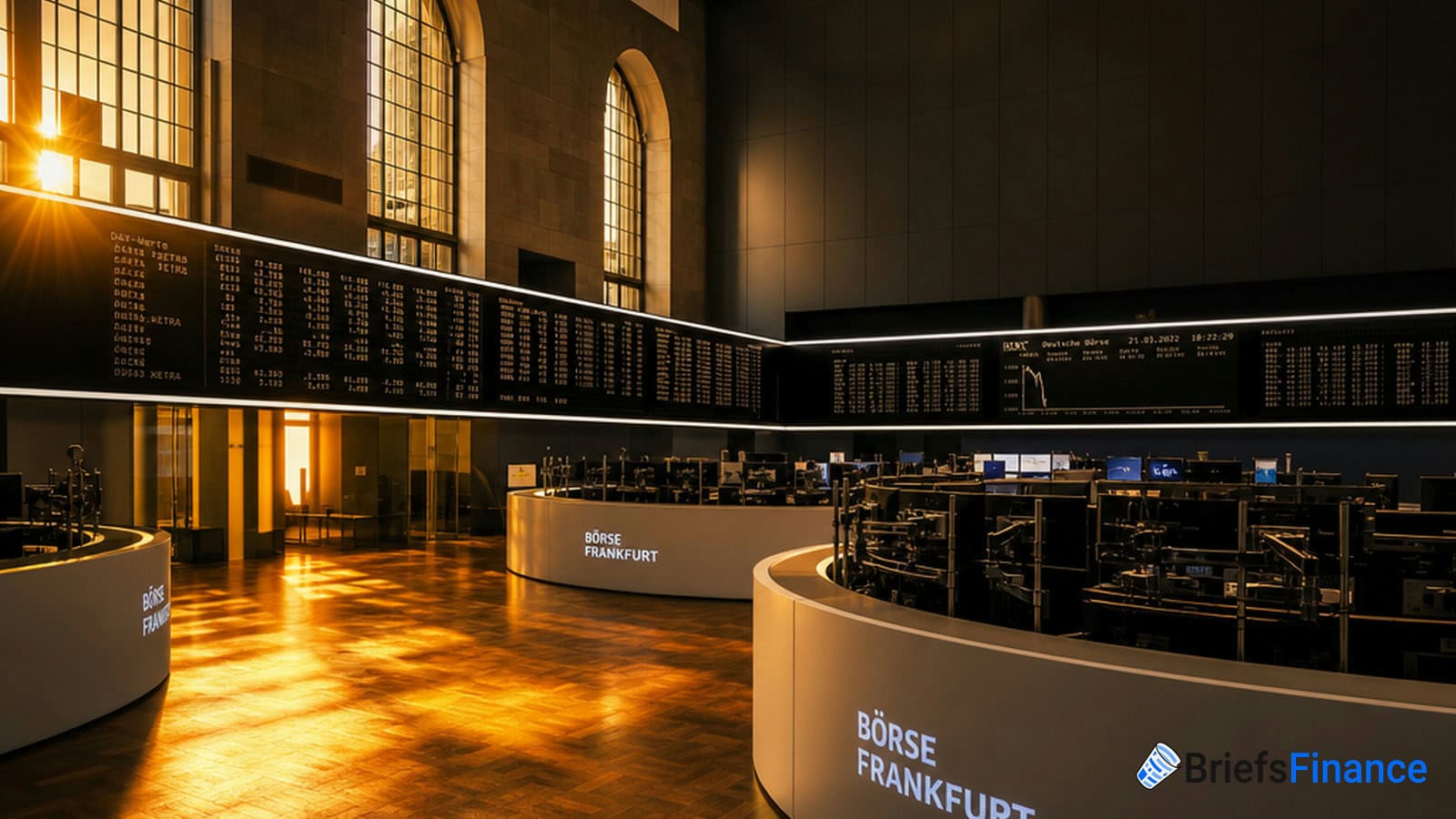
Europe's biggest stock index just hit its first record high since the Iran war started.
Behind the rally: a U.S.-Iran peace deal coming Friday and oil sliding into its longest losing streak of the year.
But strategists still say Europe can't really outperform until the AI bubble in U.S. stocks pops.
Peace Deal Drives Bank and Industrial Rally
The Stoxx Europe 600 closed up 0.2% Tuesday, with banks and industrials leading the tape while telecom and tech lagged.
The catalyst: the U.S. and Iran are set to formally sign their interim peace deal in Switzerland on Friday, which should reopen the Strait of Hormuz - the narrow shipping lane that roughly a fifth of the world's oil passes through.
The interim deal isn't a full settlement, but it's enough to take the most immediate war risk off the table.
With that risk fading, oil is already reacting - crude is on track for its longest losing streak of 2026 as traders price in more supply coming back online.
European industries are especially sensitive to oil prices because most of the bloc imports its energy.
That's why banks and industrials led Tuesday's move - cheaper fuel and a calmer Middle East both work in their favor.
We break down which market moves actually matter for investors in Market Briefs - five minutes a day, plus a free investing masterclass when you sign up.
Why Europe Still Trails the U.S.
Even at a record, Europe is trailing other regions this year. The reason is simple: it barely has any tech.
The AI trade has carried U.S. indexes higher all year, and Europe has almost no equivalent - leaving the Stoxx 600 grinding higher on bank and industrial moves while U.S. benchmarks rip on chipmakers.
That's because European benchmarks have always leaned on banks, energy, luxury, and autos, with no major tech giants on the scale of Nvidia or Microsoft.
Joachim Klement, head of strategy at Panmure Liberum, put it bluntly: "We think AI stocks are in a bubble, but we need that bubble to pop before Europe can outperform again."
His point: Europe's path to leadership runs through a U.S. tech correction, not a peace deal.
What To Watch
Friday's signing is the next real catalyst. Until then, the risk is what BNP Paribas Wealth Management's Stephan Kemper called "buy the rumor and sell the fact" - markets pricing in the deal now and selling off when it actually arrives.
Kemper also flagged that the deal "still seems somewhat fragile," with a real chance it falls apart in the final stretch.
If the deal does fall apart, the same banks and industrials that led Tuesday's rally could be the first to give back gains.
On the single-stock side, Swiss pharma supplier Siegfried Holding fell 7.6% after UBS cut it to neutral, citing another weak growth year ahead in 2026.
Even with the index at a record, single-stock moves like Siegfried's show how unevenly the gains are spreading.
Friday's signing will decide whether the rally extends or unwinds.
If you want this kind of read on the market every morning, join 350,000+ investors reading Market Briefs - you also get a 45-minute investing course as a bonus.