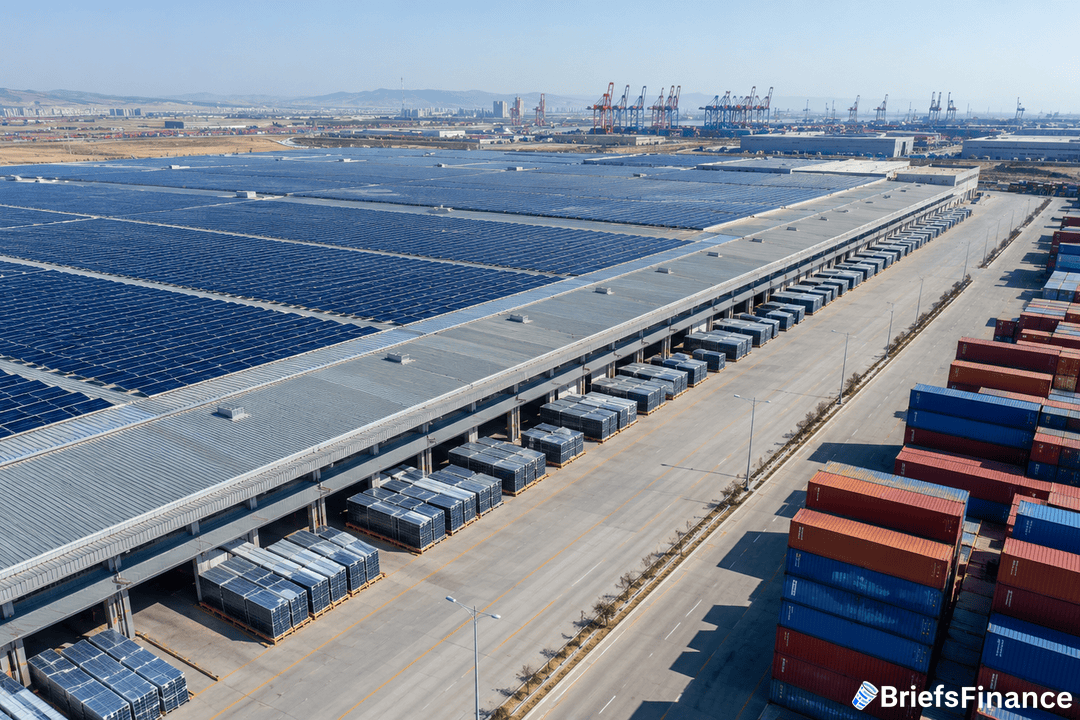
Beijing scrapped a major tax break on solar exports last month, and analysts called the top. Then the April numbers came out, and shipments were up 60% from a year ago.
The export machine is still running fine.
The Tax Break Was Supposed To Hurt
On April 1, China killed the value-added tax (VAT) rebate on solar panel exports. That rebate had been padding the margins of every Chinese panel maker shipping abroad.
Losing it added about 9% to the cost of a panel sent overseas. Most analysts expected demand to crater.
Instead, customs data shows China exported 1.34 billion solar cells worth $3.12 billion in April, with solar cell volume reaching 1.16 million tonnes for the month.
That's the second-best month on record, behind only March 2026. Even with the policy change, April beat almost every other month in history.
Why? Buyers can't easily go anywhere else.
Every morning, Market Briefs breaks down stories like this in five minutes, and gives you a free investing masterclass when you sign up.
Why Demand Held Up
Two things kept the lights on. The first is supply concentration: China makes more than 80% of the world's solar modules, so buyers in Southeast Asia and Africa have nowhere else to go for that kind of volume.
The second is the energy crunch from the Middle East war. With oil near $107 a barrel, governments are pushing harder to lock in renewables, and solar is the cheapest, fastest option on the table.
The big buyers this year have been emerging markets in Africa and Southeast Asia. Solar deployments in those regions are rising fast because grid power is unreliable and oil is too expensive.
April shipments did slip from March, when exports hit 1.71 billion cells worth a record 1.78 million tonnes. March's record came after an 80% surge - buyers were rushing shipments before the April 1 deadline.
April was the first real read on demand without that distortion, and the 60% year-over-year jump shows the real demand is still strong.
Solar deployments worldwide hit a record in 2025 as the world raced to meet climate targets, and 2026 is on pace to top that again.
Worth Noting
The yuan has gained nearly 3% against the dollar in 2026. Normally that would hurt Chinese exporters by making their products pricier abroad.
It hasn't this time. Solar demand is absorbing the price increase, and overseas buyers keep ordering.
Several global banks have raised their yuan forecasts for the rest of the year, citing China's export strength and stable trade relations with the U.S.
Solar makers also benefit from rising oil prices, which make panel-based power cheaper compared with gas or diesel power.
Country-by-country export data drops later this week. That's where investors will see whether Africa and Southeast Asia kept buying at the same pace, and whether any country pulled back after the rebate cut took effect.
Sign up for Market Briefs to follow the real money flows in clean energy each weekday, plus a free 45-minute investing course thrown in.