
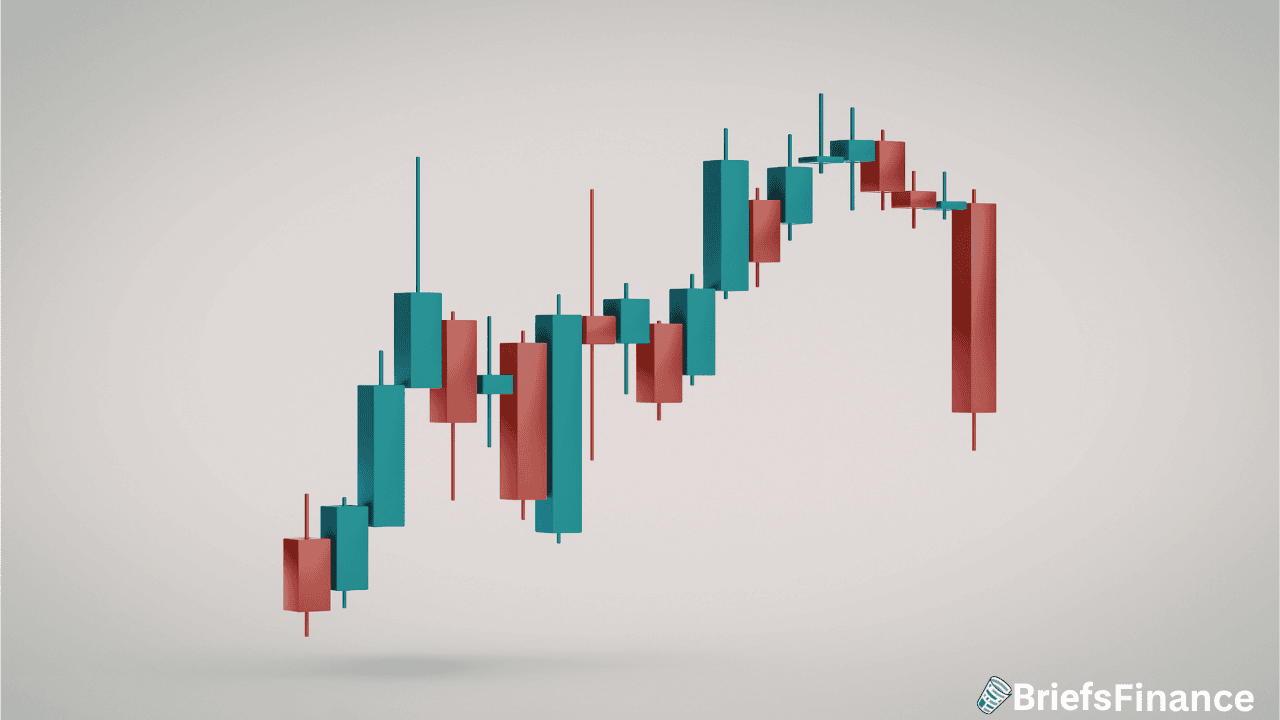
You check your portfolio one morning and see red everywhere.
One of your stocks is down 10%. Another is down 15%.
Your portfolio value just dropped thousands of dollars in a single day. That feeling in your stomach? That's volatility.
It's completely normal. The most volatile stocks in the market can swing 5%, 10%, even 15% or more in a single trading session.
Whether that's a problem or an opportunity depends entirely on how you handle it.
Let’s break down what volatile stocks are - what makes them move so much and the biggest key takeaways investors need to know.
But first - if you want to think like an investor, you need to know how to spot market opportunities.
Join our CEO Jaspreet Singh this month for a free investor workshop that will break down how to spot market shifts and potential investment opportunities.
What Does "Volatile" Actually Mean?
Volatility is how aggressively a stock's price moves up and down.
Every stock fluctuates. But some move way more dramatically than others.
Think of it like the ocean. A mega cap stock like McDonald's is a cruise ship - it rocks a little, maybe 1-2% on a normal day, but it stays steady. A smaller, speculative stock is more like a kayak - the same wave that barely moves the cruise ship can flip the kayak 5-10% in either direction.
There's actually a measurement for this. It's called beta - a number that compares how much a stock moves relative to the broader market.
Let's break down how it works:
- A beta of 1.0 means the stock moves roughly in line with the market
- A beta higher than 1.0 means the stock is more volatile than the market
- A beta lower than 1.0 means the stock is generally less volatile
A stock with a beta of 2.0 tends to move twice as much as the overall market. When the market goes up 5%, this stock might go up 10%.
When the market drops 5%? This stock might drop 10%.
You can find a company's beta on most financial research sites, right alongside its stock symbol, share price, and market cap - short for market capitalization, which is the total value of a company's shares on the stock market.
What Makes a Stock Volatile?
Not all stocks are built the same. Some are naturally more volatile than others - and understanding why can help you decide if they belong in your portfolio.
It starts with company size.
Companies are grouped by how much they're worth:
| Company Type | Market Cap | Volatility Level |
| Mega cap | $200 billion+ | Lower |
| Large cap | $10 billion - $200 billion | Lower to moderate |
| Mid cap | $2 billion - $10 billion | Moderate |
| Small cap | $250 million - $2 billion | Higher |
| Micro cap | $50 million - $200 million | Highest |
Mega cap stocks are the companies everyone has heard of - often referred to as blue-chip stocks. They tend to be slower moving because they're large, well-established businesses with diversified revenue.
Smaller companies can move fast in both directions. They have less financial cushion, fewer resources, and fewer investors trading their shares - which makes price swings more dramatic.
And when the market gets shaky, fewer investors want to own these riskier, smaller names. That's liquidity risk - when too many investors try to sell and not enough want to buy, the price drops fast.
Growth stocks are another big driver.
Growth stocks - companies expected to grow faster than the overall market - tend to be some of the most volatile stocks out there.
The share price doesn't just reflect what the company is today. It reflects what investors believe the company will become in three, five, or ten years.
When a growth company reports strong earnings and revenue keeps climbing, the stock can surge. But when growth slows down - even a little - the stock can get crushed.
Zoom and Roku are two examples. Both saw massive revenue growth during the pandemic.
But when that revenue growth started to slow, share prices crashed. Growth didn't stop - it just decelerated, and that was enough to tank the price.
Investors call this growth deceleration risk - the danger of paying a premium for future growth that doesn't show up as expected. Growth stocks are priced for perfection, so when reality misses those expectations, the correction can be steep. Understanding metrics like EBITDA and cash flow can help you spot these warning signs early.
Even steady companies aren't immune.
Well-established companies can become volatile too, especially when something big hits the market. Some of the most common triggers:
- Federal Reserve interest rate decisions.
- Quarterly earnings reports that miss or beat expectations.
- Tariff announcements or trade deal negotiations.
- Supply chain disruptions, like hurricanes or factory shutdowns.
- Leadership changes within a company.
When tariffs were announced in recent years, the S&P 500 - an index that tracks the 500 largest public companies - dropped over 3% in a single session. Trillions of dollars in market value, gone in hours.
Investors couldn't accurately price the risk because nobody knew how long the disruption would last or how far the impact would spread.
How Smart Investors Handle Volatile Stocks
Most investors don't fail because they picked bad stocks or couldn't read a financial statement - they fail because they can't manage their emotions when the market moves against them. Having the right investing mindset is everything.
You can have the best analytical skills in the world. But if you can't control your emotions during volatility, you're going to lose money.
Picture this. Your portfolio drops 15% in one day and you start thinking: "Should I sell? What if it keeps going down?"
Those thoughts are normal. Fear is a powerful emotion, and losing money - even on paper - triggers it hard.
But if you panic and sell, you might miss the recovery that follows.
March 2020 during COVID. December 2018 during rate hike fears. September 2008 during the financial crisis.
Every time, investors panicked and sold at the worst possible moment. Every time, they missed the recovery.
This is the fundamental difference between traders and investors.
Traders react to short-term price movements without understanding the cause. They see red, they sell.
Investors understand the underlying fundamentals and make rational decisions based on that understanding. They see red, and they ask "why?"
So how do you tell the difference between a dip and a disaster? Knowing when to buy a stock - and when to sell - comes down to research.
If a stock drops because of a temporary event - a single quarterly miss, a short-term supply chain issue, a tariff headline - the company's fundamentals probably haven't changed. The long-term thesis is still intact.
But if you see long-term declining financials, a leadership shakeup, or the threat of being delisted - removed from a major stock exchange, which makes a stock extremely difficult to trade - that might be a company in real trouble.
The investor's job is to figure out which situation they're looking at. And you do that through research - not emotion.
Should You Own Volatile Stocks?
That depends entirely on you.
What's your risk tolerance?
Can you handle watching your portfolio drop 20% or 30% in a market downturn without panic selling? Smaller, more speculative stocks can deliver faster growth - but they come with sharper drawdowns.
If that keeps you up at night, volatile stocks might not be the right fit for your portfolio.
What's your time horizon?
If you need the money in 1-2 years, volatile stocks are risky. The market's short-term moves are unpredictable.
But if you're investing with a 10, 20, or 30-year time horizon - say through a 401k or a long-term brokerage account - you have time to ride out volatility and let compounding work in your favor.
Are you diversified?
Never have too much of your portfolio in any single volatile stock, sector, or asset class. Imagine putting everything into energy stocks right before oil prices went negative in 2020.
A properly diversified portfolio spreads risk across different sectors, company sizes, and asset types. Tools like ETFs can help you diversify without picking every stock yourself. That way, if one volatile stock takes a hit, your entire portfolio doesn't go down with it.
The Bottom Line On Volatile Stocks
The most volatile stocks in the market are volatile for a reason. They're usually smaller companies, growth stocks, or names caught up in major headlines.
Higher volatility means higher risk. But for investors who understand the fundamentals, do their research, and keep their emotions in check - it can also mean higher potential reward.
Volatility isn't something to avoid altogether. It's something to understand. Know what's causing it, figure out whether the drop is temporary noise or real deterioration, and stick to your strategy.
The stock market goes through booms and busts. It always has. But historically, it has always gone up after those downturns.
The investors who win aren't the ones who never experience volatility. They're the ones who know what to do when it shows up.
Don’t forget: Our CEO Jaspreet Singh is hosting a free live investor workshop this month.









