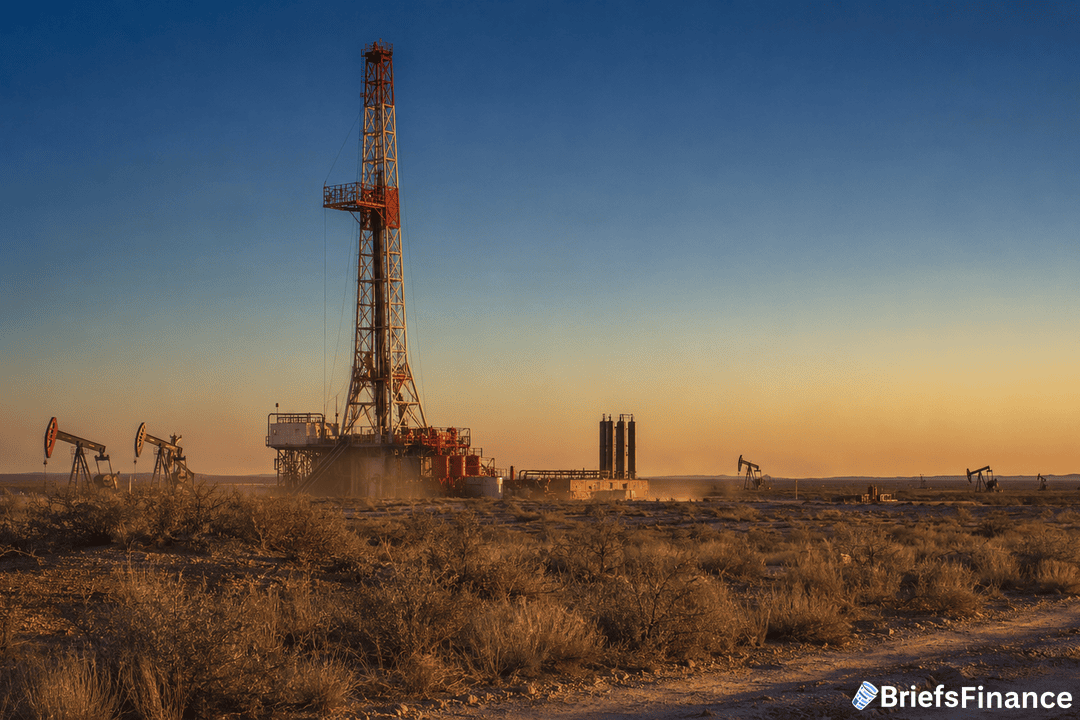
US drillers spent most of the past year sitting still. Crude was too cheap to fire the rigs back up.
Then the Iran war hit. Oil ran higher and the math flipped.
The recovery is now showing up in the count.
What The Rig Count Shows
Total US rigs climbed to 551 in the week ending May 15, per Baker Hughes. That total includes 415 crude oil rigs, up five in a week.
Five rigs sounds small. The size of the jump is what stands out.
The count has not moved this much in nearly four years. For most of the past year, the trend went the other way.
Oil rigs are still down 57 from a year ago. Gas rigs went the opposite way, up 21 over the same span.
The split shows where money was leaving and where it is just coming back. It is a small move with a big tell.
We break down the moves Wall Street is watching in Market Briefs - five minutes every morning, plus a free investing masterclass when you sign up.
Why The Recovery Is Happening Now
The Middle East is doing most of the work. Tensions around the Strait of Hormuz have pushed crude higher this spring.
That route carries about a fifth of the world's oil. Drilling that did not pay off at March prices pays off at today's.
That alone is enough to flip rigs back on. There is a second piece worth flagging.
US shale crews now pull more oil from each rig than ever before. A small bump in rigs feeds a much bigger bump in output.
The US has quietly hit near-record oil output. It has done that while running fewer rigs than at any past output level.
That makes five extra rigs more telling than it sounds. It is not just five new holes in the ground.
It is a sign that the best oil crews on earth have decided the price is right.
Worth Noting
Rig counts are a slow signal. Drillers do not fire up machines on a hunch.
They do it when the math holds up for months, not a week. A four-year high in the weekly jump says they think it will keep working.
The next two Baker Hughes reports will tell us if this is real. Output data from the EIA lags by a few weeks.
So the proof will show up there next. Watch the weekly crude rig number first.
For buyers of US oil and gas stocks, the read is simple. Higher rig counts tend to lead higher cash flow and higher buybacks.
The names tied most closely to US shale will move first. Service stocks that lease rigs and gear to the drillers tend to move even faster.
If prices hold here, that group could see the biggest earnings lift of any oil group this year. The catch is that any deal that cools the Middle East could pull the rug.
A cease-fire in the Strait of Hormuz would knock crude prices back. The rigs would slow down with them.
If you want this kind of read on the market every morning, join the 350,000+ investors reading Market Briefs. You also get a 45-minute investing course thrown in as a bonus.