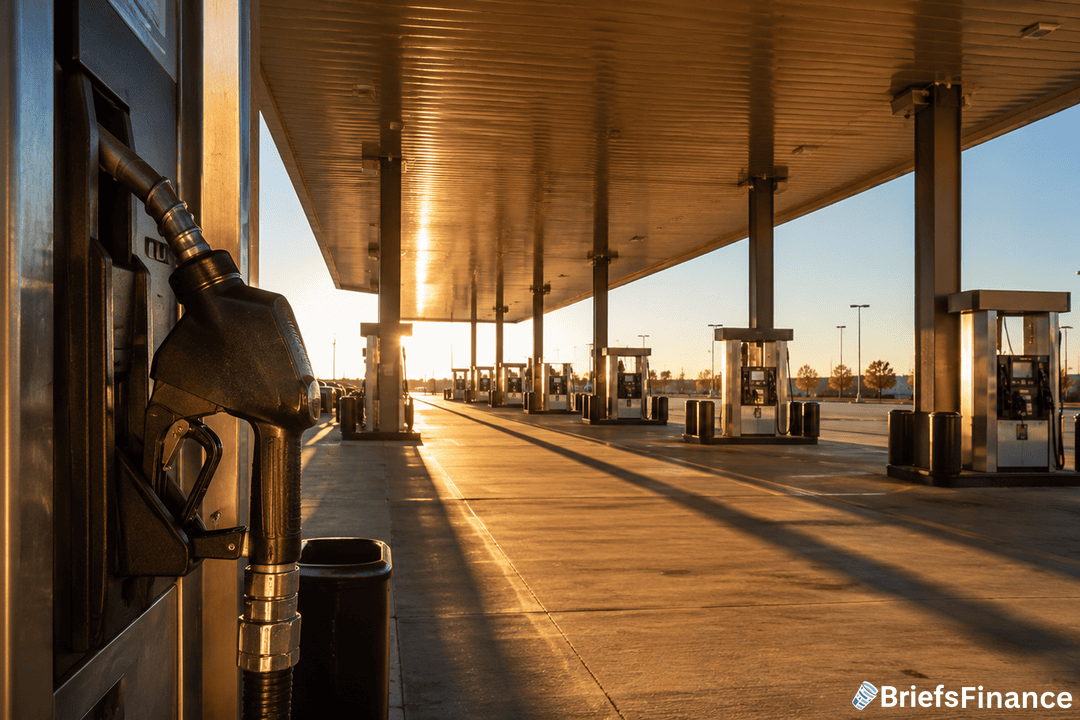
Gas prices are crushing budgets.
They're also crushing it for Costco.
What The Numbers Show
US average gas prices have stayed above $4 for over a month and topped $4.50 last week, which is bad news for most retailers but a tailwind for Costco.
Costco posted $23.92 billion in April sales for the four weeks ending May 3.
Comparable sales - sales at stores open at least a year - rose 11.6% in the US, and even stripping out gas and currency swings, core comps still rose 8%.
Foot traffic told the same story, with total Costco visits up 4.2%, US traffic up 3.8%, and average transactions rising 7.1%.
Want to know which retailers are actually winning right now? Market Briefs is a five-minute morning read on what's moving - and joining unlocks a free investing masterclass as a bonus.
How High Gas Prices Lift Costco Sales
Warehouse club gas is usually 20 to 40 cents cheaper than the average pump, and when gas hurts, that gap matters more.
Why does this matter: membership clubs already had a price advantage on bulk groceries, and tacking on cheaper gas makes the math hard to ignore - one fill-up can effectively pay for half an annual membership.
A Numerator survey found that the share of drivers filling up at club stores like Costco jumped to 36% - up three points from a year ago - with about half using a loyalty program or a fuel-rewards credit card.
Once they're at the pump, they often walk inside - an employee at a Texas Costco told Business Insider that roughly 80% of customers had stopped for gas before heading into the warehouse.
Foot-traffic data from Placer.ai showed club stores outpacing other retailers in the final week of April.
What's Different About Costco's Model
Most retailers feel pain when gas climbs, with higher transportation costs squeezing margins and consumer spending shifting elsewhere.
Costco gets the opposite effect because gas is a loss-leader designed to bring members through the door, and the higher gas climbs, the more valuable that membership math becomes.
Membership renewal rates have run above 90% for years, and the company collects fees upfront - giving Costco a financial cushion no other big-box retailer has.
The K-Shape Is Showing Up In Sales Data
A New York Federal Reserve report this week found that lower-income households cut their gas consumption by 7% but still paid 12% more, while higher-income households actually raised their gas spending 19% and barely cut consumption.
That's the K-shaped economy in plain English - one group pulling back, the other absorbing the hit.
Costco's customer base skews more affluent than most big-box retailers. So the same gas spike that's pushing budget shoppers to cut back is sending Costco's customers in for groceries on the way home.
What To Watch
The bigger question for investors is whether the gas tailwind sticks.
If oil retreats as war risk fades, Costco's sales boost softens with it - and the open question is whether new members signing up for cheaper gas stick around once oil normalizes.
75% of Numerator respondents said high gas prices are forcing them to cut spending - and the cuts are happening everywhere except Costco.
That's the K-shape showing up in real sales data.
Read Market Briefs each morning - 350,000+ investors do, and signup adds a 45-minute investing course to your inbox.