Most people think you need thousands of dollars to buy stocks, or a finance degree.
Or a fancy broker you can call 24/7, 365.
None of that is true.
You can open an investing app right now and buy shares in a company in seconds.
Instead of just eating at Chipotle, you can own Chipotle.
And you can do the same exact thing with any publicly traded company.
We’re talking about some of the biggest companies in the world: Apple, Amazon, Tesla, Nvidia, and thousands more.
The point? We’re not telling you what to buy - we’re saying that owning assets like stocks is how millions of investors build their wealth.
That’s because the stock market is the most accessible way for anyone to own a piece of our economic system.
The problem is most people don't know how to find a good stock, they don't know how to buy the stock, and then they don't know how to make money on that stock.
That's what this guide is for.
Let’s break down how to buy stocks, the simple 5 step plan, and key factors you must consider before getting started.
Once you know how to buy, the next question is: What do you buy?
Watch this free podcast with our CEO Jaspreet Singh where he breaks down how to spot market shifts and potential investment opportunities.
What Is a Stock?
When you buy a stock, you're buying a tiny slice of a real company.
Think of the company as a whole pie.
That pie gets divided up into shares - when you buy a share, you own a piece of that pie.
If the company grows and becomes more valuable, your slice becomes more valuable too.
If the company shrinks, so does your slice.
Companies sell shares on the stock market to raise money - that money is called capital. In exchange, investors like you become partial owners of the business.
Quick note: You don't have to run the company. You just one it on paper.
So you can’t walk into McDonald’s and tell them to turn the ice cream machine back on.
You provide the capital and you are rewarded if that company grows - that’s the exchange.
How You Actually Make Money Buying Stocks
There are two main ways investors get paid from stocks:
Price appreciation is when the stock's value goes up over time.
You buy a stock at one price and if its price goes up, you sell.
That difference between what you paid and what you sold at is your profit.
Growth investors live for this - they're betting on the future success of a company, expecting the share price to follow.
Dividends are cash payments companies make to shareholders just for owning the stock.
Not every company pays dividends, but many established, profitable companies do.
Think of it like a quarterly thank-you check.
Some companies offer both - the stock price grows over time and they pay a dividend along the way.
Procter & Gamble, for example, has increased its dividend every year for more than 50 consecutive years while its stock price has also risen significantly.
Of course, there are other ways to earn money when you buy stocks. But these are just the two most common ways.
Next, let’s break down exactly how you can buy stocks today.
Step 1: Set Up Your Money
Before you invest a single dollar, separate your money.
Create three bank accounts - one for spending, one for savings, and one for investing.
Your investment account is where money sits before it goes into the market.
Why three accounts? So you don't accidentally spend your investing money.
And so you don't accidentally save money that should be working for you in the market.
Some banks will even set up free automatic transfers so a portion of every paycheck moves into your investing account without you lifting a finger.
How much should you start with? You don't need thousands. You can get started with as little as $1.
Will $1 make you wealthy? No - but it is your starting point, and starting with $1 is better than not doing anything at all.
Step 2: Open a Brokerage Account
A brokerage account is where you actually buy and sell stocks. Think of it like a bank account, but for investments.
Some brokerages focus on passive investing - where you invest in funds that track the overall market.
Others cater more to active investors who want to research and pick individual companies. Many let you do both.
When you're choosing a brokerage, look at two things:
- Convenience.
- Reputation.
Is it easy to use? Is it well-known and trusted?
Fidelity, Vanguard, and Schwab are a few names that come up often, but there are plenty of solid options out there.
Some brokerages even let you set up automatic investments, which is a big deal for long-term success.
Once you've picked a brokerage, fund it. Transfer money from your investing bank account into your brokerage.
Now you're ready to buy.
Step 3: Decide What to Buy
This is where most beginners freeze up.
You have two main paths: Buy individual stocks, or buy a fund that holds a basket of stocks for you.
Individual stocks mean you're picking specific companies.
This takes more research, more time, and more risk.
You need to know how to analyze a company - its revenue, its leadership, its competitive position.
If you go this route, make sure you're willing to put in the work.
ETFs and index funds are the easier path for most beginners. An ETF - exchange-traded fund - is a basket of stocks bundled together into one investment.
Instead of trying to pick the best single company, you can invest in hundreds of companies at once.
For example, an S&P 500 index fund gives you exposure to the 500 largest companies on the stock market - all in one purchase.
Historically, if you invested just $100 a month into the S&P 500 starting at age 21 and kept going until retirement, you would have retired a millionaire.
Past performance doesn't guarantee future results, of course.
But the data is hard to ignore.
When analyzing any ETF, think about four things - what we call CDAA:
- Companies - What kind of companies does this fund invest in?
- Dollars - How much money does the fund manage (assets under management)?
- Asset Allocation - What are the top holdings in the fund?
- And the cost - What's the expense ratio? That's the annual fee you pay for owning the fund.
Even small expense ratios add up over decades.
A fund with a 0.03% expense ratio costs far less over 40 years than one charging 0.09%.
Step 4: Place Your Order
This part is as easy as ordering guac for the office party.
- Log into your brokerage account.
- Search for the stock or ETF by name or ticker symbol.
- Enter how many shares you want to buy - or how much money you want to invest - and hit buy.
It takes seconds - you now own a piece of a company.
One thing to know: stocks are liquid.
That means you can buy and sell them quickly for cash.
That's a benefit, but it's also a risk.
Liquid means you can turn the asset into cash fast - so you can sell quick for real money if you need to.
But because it's so easy to sell, a lot of beginners panic and sell when prices dip.
Step 5: Hold and Stay Consistent
Most people lose money in the stock market because they buy when prices are high - after hearing everyone talk about a hot stock - and then sell when prices drop.
They buy high and sell low - that's the opposite of what can build wealth.
One strategy passive investors use is called dollar cost averaging (DCA).
What’s that? Instead of trying to time the perfect moment to buy, you invest a fixed amount at regular intervals - every week, every two weeks, or every month - regardless of what the market is doing.
When the market is high, your $100 buys fewer shares.
When the market dips, your $100 buys more shares.
Over time, your cost averages out and you remove emotion from the equation.
The key to making this work is three things: be consistent, be patient, and automate it.
Set up automatic investments through your brokerage so money goes into the market whether you remember to do it or not. Whether the market is up or down, you keep investing.
Historically, the longer you invest, the lower your risk becomes - so long as you're investing in quality companies or well-diversified funds.
The stock market has always recovered from downturns over the long term. Patience is the investor's greatest advantage.
The Difference Between Investing and Trading
One more thing beginners need to understand.
Investing means you buy an asset and let it grow over time.
Long-term means a minimum of one year, ideally much longer. You're letting the economy grow and your investment compound.
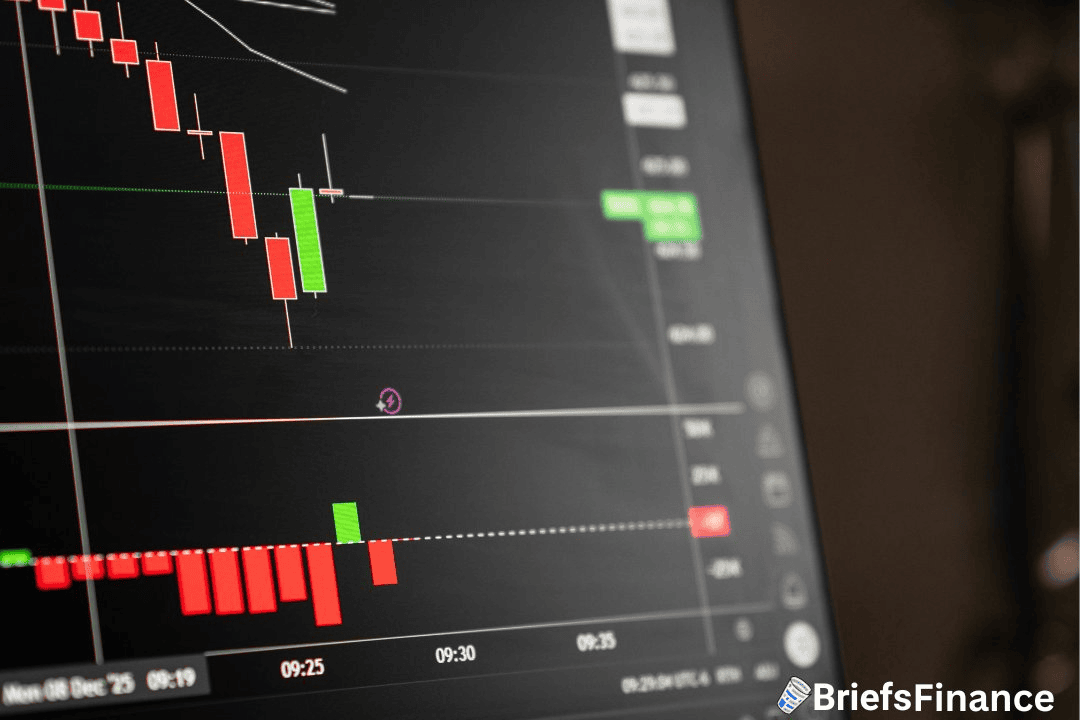
Trading means you're trying to buy and sell quickly for short-term profits. Hollywood has made it look exciting, but statistically, most traders lose money.
Wealth is built through investing - short-term gains are built through trading.
And what history has shown us, over and over, is that investors beat traders over the long run.
Bottom Line On How To Buy Stocks
Buying stocks looks complicated - but it’s really not.
Here's the quick recap to get you started:
- Set up your money - separate your spending, saving, and investing into three accounts.
- Open a brokerage account - pick one that's convenient and reputable.
- Decide what to buy - individual stocks or ETFs. For most beginners, ETFs are the smarter starting point.
- Place your order - search, click, buy. It takes seconds.
- Stay consistent - automate your investments, be patient, and think long-term.
You don't need a finance degree - and you definitely don’t have to be already wealthy to get started.
Just start with what you have, choose your path, and let the wealth building begin.
Before you go: Watch this free podcast with CEO Jaspreet Singh and Head of Investment research to learn how to spot market shifts and potential investment opportunities.