What Is a CD (Certificate of Deposit)?
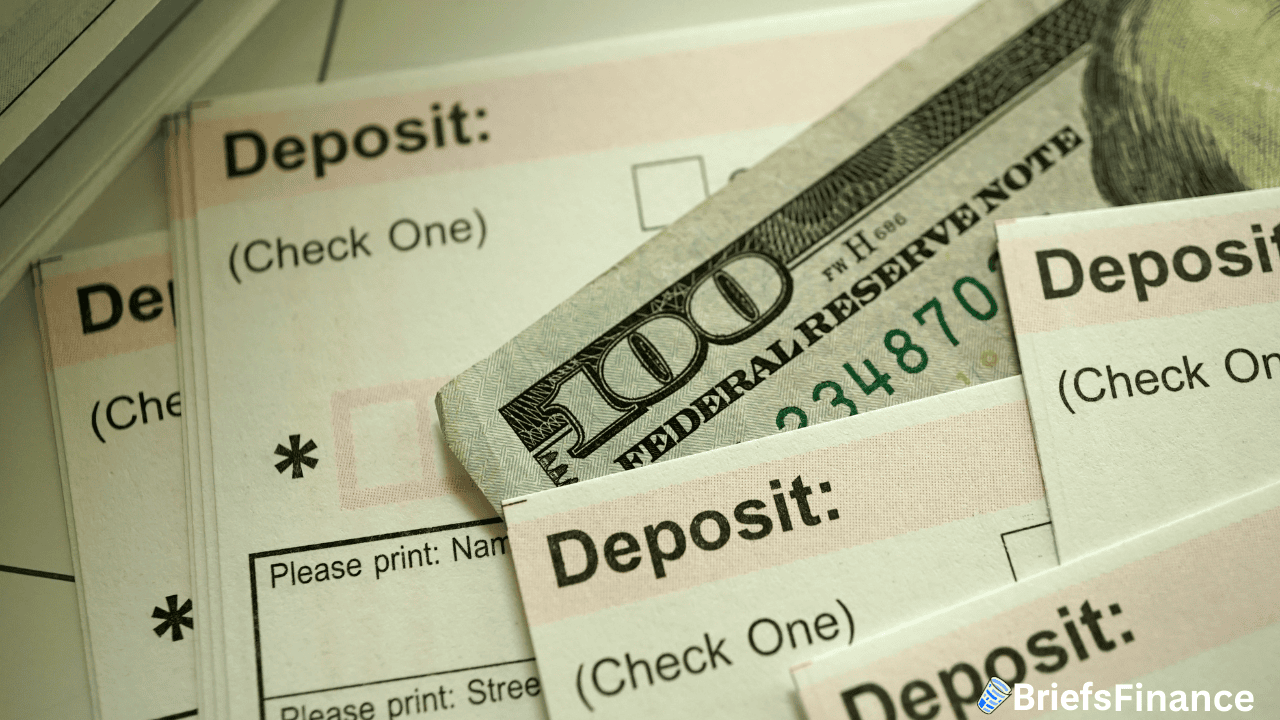
A certificate of deposit (CD) is a savings account, but with a twist.
You give a bank your money, they lock it up for a specific period (called the "term"), and they pay you a fixed interest rate in return.
Think of it like this: you're lending the bank your cash, and they're paying you to use it.
Here's how it works:
- You deposit money (usually $500 to $1,000 minimum).
- You choose a term (3 months to 5 years typically).
- The bank pays you a fixed interest rate.
- You can't touch the money until the term ends (without paying a penalty).
- When the CD "matures," you get your money back plus interest.
CDs are FDIC-insured up to $250,000, which means even if the bank goes under, your money is protected by the federal government.
But the question is - should you invest in them?
Let’s dive into CDs - how they compare to other investments, the drawbacks, costs, and more.
But first: CDs are just one type of potential opportunity for investors.
Our market analysts are researching new stocks every week that may outpace the S&P 500 in the long-term.
Want to find out which stocks we’re watching? Subscribe to Market Briefs Pro.
How CDs Work (The Basics)
With fixed income investments like CDs, you essentially become the lender.
You give someone your money - whether that's the government, a corporation, or a bank - and they agree to pay you back with interest.
The "fixed" part means you know upfront what you're going to get paid. There's a predictability here that you just don't get with stocks.
A bond or CD sitting in your account doesn't fluctuate in value much (or at all for CDs). You can check your account without anxiety.
The Pros of CDs
1. FDIC Insurance
Your money is insured up to $250,000 per depositor, per bank, by the Federal Deposit Insurance Corporation.
That means even if the bank goes bankrupt, you're getting your money back, as long as the CD is under $250k. This is different from corporate bonds, where if a company or country defaults, you might lose money.
Countries don’t default often, but it can happen.
2. Fixed Returns
When you open a CD, you know exactly what you're getting. There's no market volatility, no price fluctuations, no surprises.
If the CD says 4.5%, you're getting 4.5%. A CD advertised at 4.5% pays 4.5%. There's enormous psychological value in certainty.
3. No Market Risk
Unlike bonds, which can lose value if interest rates rise, a CD just sits there doing its thing. The value doesn't fluctuate day to day.
With FDIC-insured CDs, you're getting your principal back (assuming you hold to maturity or don't withdraw early). Your money is safe.
The Cons of CDs
Early Withdrawal Penalties
The tradeoff is liquidity. If you need your money before the CD matures, you'll typically pay a penalty - often several months' worth of interest.
CDs have penalties for early withdrawal. Your money isn't always easily accessible.
Interest Rate Risk
If interest rates go up, you're stuck with the fixed rate on your CD.
Inflation Risk
Just like bonds, your CD is fixed. So if inflation goes up beyond your CD's interest rate, you may lose purchasing power.
Lower Returns Than Stocks
Over long periods, stocks have historically returned 9-10% annually. Bonds and CDs return 3-6% typically. You're sacrificing growth potential for safety.
Money in bonds or CDs earning 4% could have been in stocks potentially earning 10%. You're choosing safety over maximum growth.
Are CDs a Good Investment Right Now?
The honest answer: it depends on what you're trying to accomplish.
CDs are good for:
- Preserving money you'll need soon - Saving for a house down payment in 12 months? A CD locks in your rate and keeps your cash safe.
- Beating savings account rates - CDs typically pay 0.5% to 1% more than regular savings accounts.
- Zero-risk tolerance - If market volatility makes you nervous, CDs eliminate the guessing game.
- Laddering strategy - Buying multiple CDs with different maturity dates gives you regular access to cash while earning higher rates.
CDs are usually not good for:
- Long-term wealth building - Historical CD rates (2% to 4% annually) barely keep up with inflation.
- Liquidity needs - If you might need the money early, you'll pay an early withdrawal penalty (often 3 to 6 months of interest).
- Beating the market - Stocks historically return 10% annually. CDs can't compete.
- Tax efficiency - CD interest is taxed as ordinary income, not capital gains.
How CD Rates Compare to Other Investments
Let's break down how $10,000 grows over 5 years in different investments:
| Investment Type | Average Annual Return | Value After 5 Years | Risk Level |
| CD (4% rate) | 4% | $12,167 | Very Low |
| High-Yield Savings | 3.5% | $11,877 | Very Low |
| S&P 500 Index Fund | 10% | $16,105 | Medium |
| Corporate Bonds | 5% | $12,763 | Low-Medium |
| Treasury Bonds | 4.5% | $12,462 | Very Low |
The data tells a clear story: CDs are safe, but they're not growth machines.
Getting Started with CDs
Thinking about adding CDs to your portfolio? Here's some potential ways to get started:
- Calculate your total investable assets (don't include emergency fund).
- Determine your current allocation (How much is already in stocks vs. fixed income?).
- Identify your time horizon (When do you need this money?).
- Check rates at multiple banks for CDs (use comparison tools online).
- Build a CD ladder, barbell, or mini-CD strategy - focus on one for now that meets your goals.
- Decide how much money you'll start with and which CDs you'll buy.
This is only an example, not advice - always consult a licensed financial advisor if you’re looking for personal financial advice.
The Bottom Line on CDs
Fixed income through CDs isn't about getting rich quickly. It's about building steady, reliable income, protecting what you have, and reducing stress.
Why? They provide stability when markets are chaotic, guarantee your interest rate, and protect your principal with FDIC insurance.
However, there are drawbacks - they typically don’t grow as quickly as stocks, they’re less liquid, and your money is locked for sometimes years, with withdrawal penalties.
The key is knowing when to use them.
CDs work best when interest rates are attractive, when you need short-term stability, or when you're closer to retirement and can't afford market volatility.
But if you’re younger and are seeking growth, CDs might not be for you, unless your goal is longer-term savings.
In the end, always consider your risk tolerance, goals, and investment horizon whenever you’re considering CDs or any other investment.
CDs can work for some people in certain situations - but they’re not for everyone, so understand the pros and cons before getting started.
Looking for other potential investment opportunities? We’re breaking down new stocks and ETFs every week in Market Briefs Pro.
Get the data and research you need to stay ahead of Wall Street - subscribe to Market Briefs Pro.