The stock market has been flashing red warning signs. Stocks crashed the day after the midterm elections, when Democrats took over Congress, and worries about inflation, oil prices and higher interest rates have not gone away.
Then the news of Jensen Huang leaving Nvidia caused the company to lose $1 trillion of market cap. Nvidia has been propping up the AI economy, and the AI economy has been supporting the entire U.S. economy.
The market has not collapsed. It keeps going higher, and Briefs Finance CEO Jaspreet Singh says most people get the reason completely wrong.
Figuring out what really moves stocks takes research. Jaspreet says AI tools can be like a Wall Street-level analyst at your fingertips, as long as you use them the right way.
He is hosting a free livestream on November 17 to show how he and his analysts use ChatGPT and Claude to research stocks.
A Stock's Price Comes Down to Supply and Demand
Most people wonder if a stock will go up and ask about its revenue, profits, expenses and CEO. Those are good questions, but the price of a stock depends on one thing: supply and demand.
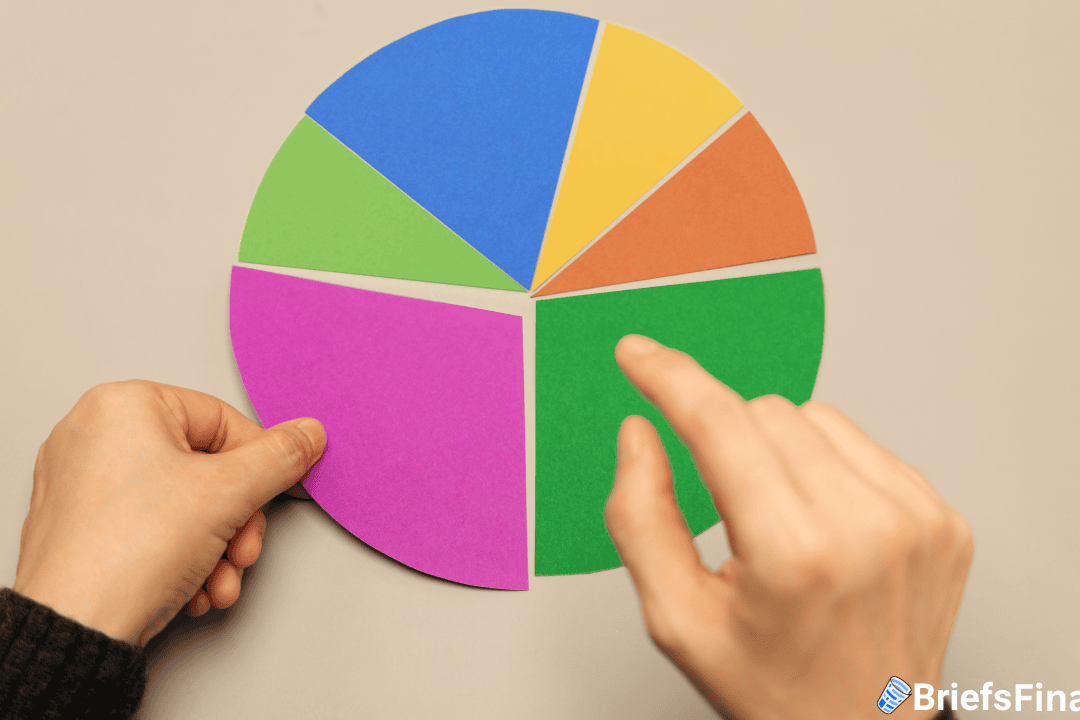
Jaspreet uses a marker to show it. Value the plastic and the ink, and the marker is worth $1.
If somebody else is willing to pay $15 for it, the marker is now worth $15. A marker, a house and a stock all work that way.
In the stock market those transactions happen every millisecond, so a price depends on how many buyers and sellers there are. To see where the market is headed, you have to look at who the buyers are and how they have changed over time.
Four Buyers Move the Stock Market, and Buying on Margin Is One of Them
Jaspreet looked at the stock market at its peak before four downturns: 1980, the 2000 dot-com bubble, the 2007 housing bust and 2021, the year before the 2022 crash. He compared each one with today, measuring four buyers against GDP, the size of the U.S. economy.
| 2000 | 2007 | 2021 | Today | |
|---|---|---|---|---|
| U.S. economy (GDP) | About $10.3 trillion | About $14.5 trillion | $23.7 trillion | Around $32 trillion |
| Corporate buybacks | Around 1.5% | 4.1% | 3.7% | 3.1% |
| 401(k) money | 1.7% | 1.9% | 2% | About 1.6% |
| ETFs | About 0.5% | 1% | 2% | 7% |
| Margin debt | 2.7% | 2.6% | 3.9% | Around 4.6% |
Buyer rows show money going into the stock market as a share of GDP.
Back in 1980, the economy was about $2.9 trillion, buybacks and 401(k) money were essentially zero and ETFs did not exist.
Stock Buybacks Are High, but Not a Record
A stock buyback is a company using its own money to buy back its own shares. The company becomes one more buyer of the stock, and that pushes the price up.
There is concern that buybacks can't be sustained because of how much debt companies are taking on to do them. Jaspreet's check against history says today's 3.1% is high, but way lower than the levels before the 2007 and 2022 crashes.
401(k) Money Has Slipped
The 401(k) was created in the late 1970s and reached 2% of GDP in 2021. It is lower today, and not because people stopped using it.
People just don't have as much money, partly because of inflation. More of them are taking hardship withdrawals or saying they can't invest because they need the money for rent.
ETF Money Has More Than Tripled
ETFs are funds that hold baskets of stocks, and they were not created until 1993. Money going into ETFs has more than tripled in five years, from 2% of GDP in 2021 to 7% today.
More people are dollar cost averaging, or buying on a set schedule, into funds instead of individual companies. Jaspreet calls that good on one hand and a source of new risks on the other.
Buying on Margin Is at a Record
Margin is when you use debt to buy stocks. Margin debt is now around 4.6% of GDP, a record in dollars and a record relative to the size of the economy.
In 2000, so many people were buying stocks with debt that it helped inflate the dot-com stock market bubble. Margin debt exploded again before the 2008 housing crash.
In 2021, the pandemic turned everybody into a trader with a Robinhood account, and margin debt hit 3.9%. When stocks started to fall in 2022, the margin calls came and helped push the market down.
How Buying on Margin Works, and What a Margin Call Does
Say you have $10,000 in cash and you believe a stock is going to the moon. Your broker lends you another $10,000 of margin debt, and now you can buy $20,000 of stock.
| Cash only | Buying on margin | |
|---|---|---|
| You put in | $10,000 | $10,000 cash plus $10,000 of debt |
| If the stock doubles | $20,000 | About $30,000 after repaying the loan, minus interest |
| If the stock falls 50% | $5,000 | $10,000 of stock and a $10,000 loan to repay |
When the stock doubles, the debt makes you almost $10,000 extra. That is the allure of margin.
When it falls by half, you are down on your own cash and starting to lose the broker's money. That is when a margin call happens: your broker forces you to sell so it can get its loan back, and you take the loss.
Forced selling does not stop with you. More sellers push prices down, lower prices set off more margin calls, and a downturn gets deeper.
Margin calls are what turned the 1929 downturn into a massive stock market crash during the Great Depression. The same thing happened in 2022, when people and institutions lost billions of dollars after brokers forced them to sell.
On the way up, nobody in the market cares whether the money is debt or cash. Record margin debt means more buyers while stocks rise and more forced sellers when they fall.
The Other Record Buyer Comes With Four Risks
For the first time in history, there is more money in passive funds than in active funds. A passive fund simply follows an index, a group of stocks like the S&P 500, and nobody actively manages it.
An active fund has a manager picking stocks and charges higher fees. People now prefer the low-fee funds, and Jaspreet says you can get very similar, sometimes even better, results from them.
He loves these funds and is invested in the S&P 500 himself. He also wants you to know four risks:
- You may be less diversified than you think. An S&P 500 fund does not spread your money equally across 500 companies. About a third goes into the top seven tech stocks, and that leaves you heavily exposed to AI and to whatever happens at the biggest company in the world.
- You may not know what you own. Would you invest in Pool Corporation, a company that builds pool supplies? If you own an S&P 500 fund, you already do, and companies now compete to get into these funds because a stock almost always jumps when it joins the S&P 500.
- Nobody checks the price. With automatic buying, you don't look at the valuation of the fund or the stocks inside it. That is the concern raised by the investor who got famous for predicting the 2008 housing bubble, who has been predicting an index fund bubble as well.
- People panic. Many investors buy funds they don't understand, then turn those ETF investments into trades when markets fall. Selling a fund means selling a big basket of stocks at once, so the selloffs get bigger.
Panic Selling Is the Risk, and Also the Opportunity
Jaspreet has an acronym for what comes next: POOP. Panic leads to Overselling, Overselling leads to Opportunity and Opportunity leads to Profit.
Downturns are a part of the economy, with 25 market crashes in the last 100 years. He quotes a very famous investor who said that if you aren't willing to watch your portfolio go down by 25%, you shouldn't be investing in stocks.
Investors who were buying when markets crashed got stocks at a discount:
| Downturn | Discount on stocks |
|---|---|
| 2022 crash | 20% |
| 2020 pandemic | 34% |
| 2008 housing crash | 50% |
| 2000 dot-com bust (Nasdaq) | 78% |
Buy at half off and you can buy twice as many investments. That takes preparation, so his rule is to use good times to put money aside for bad times.
Always Be Buying, and Leave Buying on Margin to the Pros
For broad market funds, Jaspreet follows what he calls ABB: Always Be Buying. You set up a system that buys the fund every week, every two weeks or every month.
The mistake people make is holding on at 10%, 15% or 18% down, then panicking and selling at 25% down. The only time you change the plan is to buy even more when markets fall.
He is clear that this is his personal belief and that he can't tell you what to do. He says ABB has been a winning strategy for people investing over decades in strong broad market funds.
With the cost of living higher, ABB alone might not be enough. He adds two ways to accelerate: POOP during downturns, and market shifts, which means investing where money is moving before the news and stock prices reflect it.
Market shifts are about doing your own research, with more risk for more potential return. Jaspreet uses AI tools for research, analysis and brainstorming ideas, and his free November 17 livestream shows how he and his analysts do it with ChatGPT and Claude.
On margin debt, he is blunt: it is "stupid for most people, even most professional investors." Unless you are a professional who has done this for many years and lived through multiple cycles, his advice is not to use it.
Margin debt can make you feel richer when markets are going up, but it can "amplify your stupidity" when they go down.