Free NewsletterPro Login

Warning: Undefined variable $stocks in /var/www/briefs.co/htdocs/wp-content/plugins/oxygen/component-framework/components/classes/code-block.class.php(133) : eval()'d code on line 448

Warning: foreach() argument must be of type array|object, null given in /var/www/briefs.co/htdocs/wp-content/plugins/oxygen/component-framework/components/classes/code-block.class.php(133) : eval()'d code on line 448

Warning: Undefined variable $funds in /var/www/briefs.co/htdocs/wp-content/plugins/oxygen/component-framework/components/classes/code-block.class.php(133) : eval()'d code on line 472

Warning: foreach() argument must be of type array|object, null given in /var/www/briefs.co/htdocs/wp-content/plugins/oxygen/component-framework/components/classes/code-block.class.php(133) : eval()'d code on line 472
/* the link was here */
×
Free investor livestream — Nov 17

How To Use ChatGPT & Claude To Research Stocks Like A Pro

01
The prompt we use to break down any stock
02
How to fact-check what AI tells you
03
How to compare two stocks in minutes
Home » Deep Briefs »  » Rare Earth Stocks: Why China's January 2027 Ban Could Be the Opportunity of the Decade

Rare Earth Stocks: Why China's January 2027 Ban Could Be the Opportunity of the Decade

Author: Nate Gregory
Published: Nov 14, 2026 
Disclosure: Briefs Finance is not a broker-dealer or investment adviser. All content is general information and for educational purposes only, not individualized advice or recommendations to buy or sell any security. Investing involves significant risk, including possible loss of principal, and past performance does not guarantee future results. You are solely responsible for your investment decisions and should consult a licensed financial, legal, or tax professional before acting on any information provided.
Summary:
  • China plans to block rare earth exports to the US on January 10, 2027, and the US produces effectively zero of the 17 metals that go into phones, cars, dishwashers, and missiles.
  • When China cut off Japan in 2010 and squeezed Germany from 2015, some rare earth prices jumped 18x and 15x, and one rare earth company went bankrupt while another soared.
  • Washington is already putting billions into MP Materials, Vulcan, and a stockpile called Project Vault, and Jaspreet Singh walks through how investors can get exposure to rare earth stocks and ETFs.

It's no secret that China wants to replace the United States as the world's superpower. Its next move is the most aggressive one yet against the US economy, and it's creating one of the best investment opportunities in a decade that most investors haven't noticed.

The old playbook was indirect. China has tried to get the world to stop trusting the dollar by strengthening its own currency, and it has raced to beat the US in artificial intelligence.

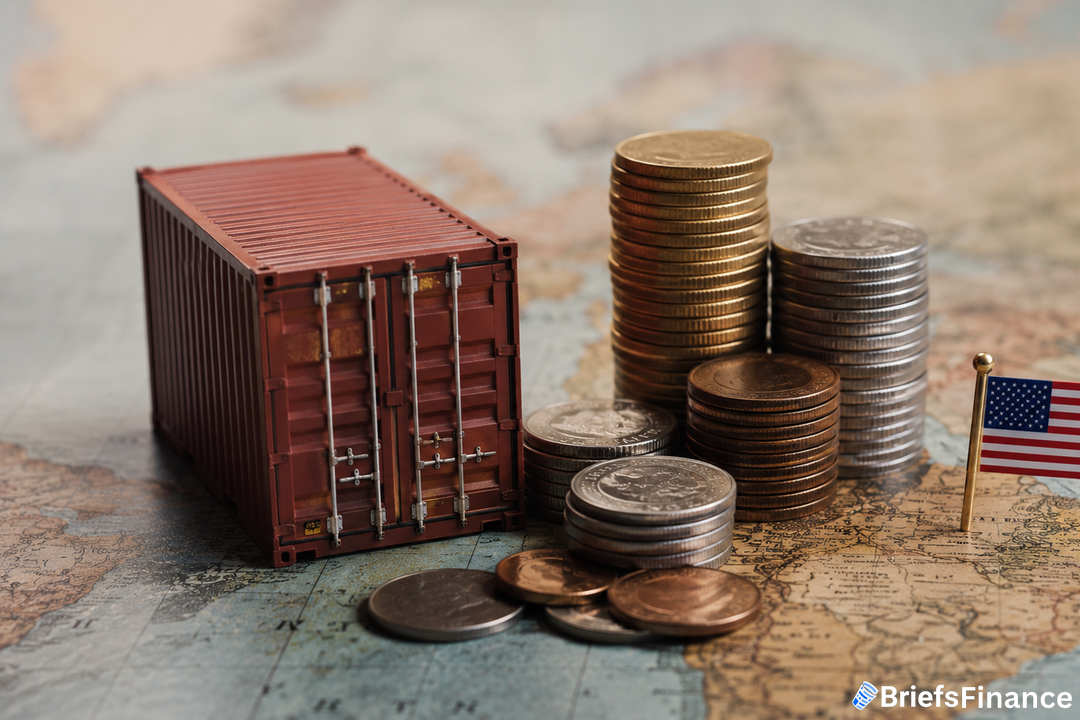
The new playbook hits from the inside. China is blocking the United States from getting rare earth metals, and the ban is expected to start on January 10, 2027.

For years America stopped producing these metals and started getting most of them from China. They go into iPhones, cars, and missiles, which means the US has been completely dependent on a rival for the ingredients of its economy.

The preview already happened. In May 2025, when China first restricted rare earths, Ford had to stop production of the Explorer because it couldn't get the materials.

The warning at the time was blunt: "We have had to shut down factories. It's hand to mouth right now."

Now the US needs another way to get rare earths, which means money is going to move. Briefs Finance CEO Jaspreet Singh's rule is to invest where the money is moving, not where it was, and Japan and Germany have already lived through this exact shift.

Jaspreet uses ChatGPT and Claude to research exactly this kind of shift, because the tools can help find opportunities and dig into them, as long as you know how to prompt them. He's showing how he and his analysts do it in a free livestream on November 17.

How America Went From 78% of Rare Earth Supply to Zero

Rare earth metals are a group of 17 metals used in pretty much every part of the economy, from phones to cars to dishwashers to missiles. They aren't actually rare in the ground.

They're hard to get out, and mining them creates a lot of climate waste. That's why the US essentially stopped producing them and leaned on China.

Year US share of world rare earth production
1974 About 78%
1990 About 43%
2000 About 2%
2002 0%

That zero is where the US sat until very recently.

The Negotiation That Pushed the Ban to January 2027

In 2025, President Trump put tariffs on countries around the world, including China, and they escalated until the US was tariffing China at 145% and China was tariffing the US at 125%.

Then China changed the game. Instead of raising tariffs again, it blocked rare earth exports to the US, and the effect on the economy was immediate because the US produces none of its own.

Those tariffs hurt the Chinese economy, so China is answering by hurting the US economy. The two sides started negotiating, and China agreed to give the US a year, until November 2026, to figure out rare earths.

It's now November 2026. The deadline moved to January 2027, and China says it will stop the exports.

Investors fall into two camps:

  • It happens. A ban hurts the US economy and forces it to build a brand new rare earth supply chain.
  • It never happens. China makes too much money from rare earths to cut off its biggest customer.

Jaspreet's view is that the argument misses the point, because China has blocked rare earths to other countries before, and President Trump wants the US to be rare earth independent regardless. So the US is shifting how it gets and processes these metals whether or not the ban holds.

Japan Rebuilt, Germany Paid Up: Two Playbooks for a Rare Earth Shutoff

History doesn't repeat, but it rhymes, and China has done this twice before with very different results.

Japan (2010) Germany and the EU (2015 to today)
What China did A complete halt on rare earth exports for about two months A licensing chokehold that made Chinese rare earths harder to access and more expensive
What happened to prices Certain rare earths rose 18x Certain rare earths rose 15x
Response Spent heavily on a new supply chain, cutting reliance on China from 90% to about 60% Accepted the licensing terms and paid China more

The US is already acting more like Japan than Germany.

Three Things That Happen If the Rare Earth Ban Lands

If China slows or blocks rare earths, three things happen, in this order:

  1. Factories shut down. The US is still reliant on Chinese rare earths, and without them it can't produce iPhones, dishwashers, cars, or missiles, just like Ford in May 2025.
  2. Prices rise. Less supply with the same demand pushes rare earth prices up, though they're a small part of a car or a phone and probably won't drive prices much on their own. The real risk is a production bottleneck, because fewer products means higher prices.
  3. The economy gets hurt. Businesses that can't produce can't sell.

Washington Is Already Buying Rare Earth Stocks

The US response is running on two tracks. Congress is passing laws to get more rare earths out of the ground at home, and billions of tax dollars are going into rebuilding the supply chain that died after 2002:

  • Roughly $400 million into MP Materials stock, a rare earth company.
  • $1.6 billion into a second rare earth company.
  • $670 million into Vulcan, another rare earth company.
  • A loan of up to $10 billion for Project Vault, a US stockpile of rare earth metals meant to backfill shortages so factories don't have to stop.

Molycorp vs. Lynas: Why Not Every Rare Earth Stock Wins

The lazy assumption is that a China ban lifts every rare earth stock. The last time China blocked rare earths, in 2010, some investors got rich and others lost everything.

Molycorp raised money on the headlines that China was blocking rare earths. When China ended the blockade, Molycorp couldn't keep up, declared bankruptcy, and the investors who bet on the headline lost all of it.

Lynas had a government partner guaranteeing demand for its rare earths. Even after the halt ended, the stock kept climbing, and investors who held it between 2009 and 2011 made money.

The difference wasn't the headline. It was the demand underneath it, and that's the kind of thing you have to research before you buy, because investing is risky and sometimes you'll be wrong.

AI won't make you right every time, but it can carry a lot of that research. Jaspreet is showing how he and his analysts use ChatGPT and Claude to dig into companies like these in his free livestream on November 17, prompts included.

How Investors Get Exposure to Rare Earth Stocks

Jaspreet isn't a financial advisor and can't tell anyone what to buy. What he can do is show how the economy is changing so investors can decide whether an adjustment fits their portfolio.

Individual stocks are one route, including the companies the US government is backing, like MP Materials, and companies like Lynas that are avoiding China. They also carry the most risk, since a company that goes bankrupt takes your money with it.

ETFs are the other route. An ETF is a basket of stocks, so one bankruptcy gets balanced by the winners, and one big winner gets balanced by the losers, which means less risk for less potential return.

Two examples that give exposure to rare earths:

  • VanEck's rare earth and strategic metals ETF, which invests in companies that produce, refine, and recycle rare earths.
  • Sprott's critical materials ETF, which spreads across rare earths plus uranium, copper, lithium, nickel, cobalt, and graphite.

Market Shifts Are the Riskiest of the Three Ways to Invest

Jaspreet runs three investing philosophies, and rare earths fall under the third:

  • Always be buying, or ABB. Buy broad market indexes like the S&P 500 every week, two weeks, or month, through crashes and booms, and ignore the noise.
  • POOP. Panic leads to overselling, which leads to opportunity, which leads to profit. There have been 25 market crashes in the last 100 years, and each was an opportunity for investors holding good assets, though nobody knows when the next one lands.
  • Market shifts. Invest where money is moving. It works in any stage of the economy, and it carries the most risk.

The risk here is real. President Trump's negotiation with China could flip tomorrow and send the US back to Chinese rare earths, some companies could go bankrupt, and a more Democratic Congress could change the rules.

What doesn't change is the dependence. The US needs these 17 metals, it makes none of them, and the government is already spending to fix that, which is where the money is moving.



Tag »

More Deep Briefs

Buy the Dip or Run? What the Market's Worst Day in Years Is Telling Investors

The AI Bubble Isn't Jamie Dimon's Biggest Worry. The Credit Crisis Behind It Is.

How to Budget Every Payday: 5 Moves So You Never Worry About Money

How to Invest in Stocks: 5 Things to Do Before You Invest Your First Dollar

Best ETFs to Buy? 5 Three-ETF Portfolio Examples and Risks

Best Investments of a Generation: 5 Market Shifts Backed by Your Tax Dollars

How to Get Ahead Financially: 10 Moves to Make While Everyone Else Falls Behind

National Debt at $40 Trillion: Why Inflation Is the Hidden Tax, and Who Profits From It

FOMC Meeting: Why the Fed Is Getting Nervous, and Why AI Stocks Feel It

Midterm Elections: Where the Money Could Move if Republicans or Democrats Win

Brazil Stock Market Crash: Why Lula's Win Matters to U.S. Investors

Credit Utilization: How Paying Down Cards Can Help Your Score

How to Calculate Your Net Worth, With a Worked Example

How to Get Out of Debt on a Low Income, Step by Step

How to Save Money on a Low Income, With a Budget Example

How to Budget With an Irregular Income, Even in Lean Months

How to Track Your Spending in 15 Minutes a Week

Should You Invest or Pay Off Debt? How to Decide

Pay Yourself First: What It Means and How to Automate It

What Is a Good Credit Score? Ranges and What Moves Yours

How to Lower Your Credit Card Interest Rate, With a Call Script

How Does Credit Card Interest Work? A Plain-English Guide

Credit Card Minimum Payment: What Happens If You Only Pay It

Should You Save or Pay Off Debt First? How to Decide

Debt Snowball vs Avalanche: Which Card to Pay First

What Is a Sinking Fund? How to Start One

Are We in a Recession? 5 Threats to the Economy and Where the Money Is Moving

How Boring Math Makes You Rich: The Briefs Money Spreadsheet, Explained

Common Investing Mistakes: Why a Stock Grade Is One Tool, Not the Whole Toolkit

How to Read a Company's Numbers Without a Finance Degree (Using Briefs Terminal)

What Type of Investor Am I? The Three Investor Archetypes, Explained

How to Build a Stock Watchlist That Isn't Just Stocks You Heard About

How to Choose an ETF That Matches Your Idea (Using the ETF Planning Tool)

Is This Stock a Good Buy? How to Use the Briefs Score to Tell If a Stock Fits the Way You Invest

How to Tell an Asset From a Liability: The One Question to Ask Before You Buy Anything

How to Build Your First $2,000 Emergency Fund and Wipe Out Every Debt Over 10%

How to Invest Through a Crash: 3 Rules From the Worst-Timed Investor Alive

Active vs. Passive Investing: How To Build A Million Dollar Portfolio Faster

Growth, Income, or Wealth Preservation: How To Build Wealth No Matter Which Way You Invest

What Is the Briefs Connector? A Simple Guide

Is a Recession Coming? What the Last Five Rate Hiking Cycles Say

Fed Interest Rates May Rise Again in 2026 - and the Newest Culprit Is AI

Housing Market 2026: Why Office Buildings Are Cracking Before Houses Do

Dividend Investing vs. Growth Investing: Why the Slower Portfolio Can End Up Bigger

Why Is Gold Going Down? A 5.2% Treasury Yield Just Took Its Job

The Strategic Bitcoin Reserve: Why the Government Wants Bitcoin to Explode

BRIEFS EXCLUSIVE: 43% Of Respondents Say Bills Outran Their Income Over Past Two Years

The Economy Is Booming. So Why Did Stocks and Bonds Fall Together?

The 2026 Economic Reset Is Starting: Are We in a Recession, or Is the Pain Still Ahead?

Are We in a Recession? Without AI, America Might Already Be in One - and Washington Knows It

Will Interest Rates Go Down in 2026? Where the Money Moves Either Way

How the Federal Reserve Makes Money - and Why It Just Posted Its Biggest Loss Ever

Kevin Warsh Just Defied Trump: What the Fed Rate Hike Means for Your Money

Why America Bailed Out the Yen: The Japan Carry Trade, the Dollar and Your Mortgage Rate

Treasury Yields Are Spiking Because Lenders Are Backing Away From U.S. Debt

Fiat Currency Runs on Trust, and the World Just Stopped Trusting the Dollar

When Will RAM Prices Go Down? Inside the Memory Shortage

How Is the Economy Doing? Washington Says It's Fixed, but the Numbers Don't Agree

US National Debt Hits $40 Trillion: Why the Economy Hasn't Collapsed Yet

Your 401k Is Fueling the AI Bubble

What Is Wealth Preservation? How To Protect Your Money From Anything

Why Is Everything So Expensive? Why Prices May Never Come Back Down

US Housing Market: Why Renting Can Cost Less Than Buying

An Interest Rate Hike in 2026? The Fed Just Broke Its Own Script

5 Passive Income Ideas That Pay You Whether You Work or Not

The Best Way to Invest 10k: Three Options To Transform 10K into 10 Million

The Tax Write Offs the Rich Are Using in 2026 While the IRS Shrinks

America Is Running Out of Debt Buyers. Treasury Bills Are the Government's Fix

How to Get the Most From Your Guideline 401k

Principal 401k: What to Know About Your Plan

What a Tariff Dividend Means for Your Money

No Tax on Overtime: How Overtime Pay Is Taxed

Reading the Silver Price Forecast for 2026

What to Do When Reddit Stocks Go Viral

Why Is Bitcoin Dropping? 4 Reasons Bitcoin Falls

The Fidelity 500 Index Fund, Made Simple for Beginners

USA Penny Stocks: Risks and Rewards Explained

Finding Cheap Stocks to Buy Now Without Getting Burned

Best Dividend Stocks: A Beginner's Playbook

Roth 401k, Explained for New Investors

How a Roth IRA Calculator Shows Your Future Wealth

Portfolio Diversification: Why Putting All Your Eggs in One Basket Destroys Wealth

Non Taxable Income: What It Is and Why It Matters

What Are Semiconductor Stocks? Chip Stocks Explained

How Stocks Work: A Simple Guide for Beginners

Stop Loss vs Stop Limit: What's the Difference?

Energy Stocks: A Simple Guide for Investors

What Is a Stop Loss Order? A Simple Guide

Best S&P 500 Index Fund: How to Choose One

What Are Penny Stocks? Risks and Rewards Explained

Best Stocks for Beginners With Little Money

Tech Stocks: A Simple Guide for New Investors

What Is a Joint Stock Company? A Simple Guide

Capital Gains Tax in California: A Simple Guide

Top Covered Call ETFs: How to Compare Them

What Are Stock Options? A Plain-English Guide

EBITDA Margin: What It Is and How to Calculate It

What Is Taxable Income? A Simple Guide for Investors

What Is a Covered Call? How the Strategy Works

What Is Gross Margin? A Simple Guide for Investors

1 2 3 4

Get Market Briefs delivered to your inbox every morning for free!

No fluff. No noise. No politics. Just finance news you can read in 5 minutes.
Join Free

Blogs

November 14, 2026
Nvidia News: Jensen Huang Is Out, and the "Bank" Behind American AI Just Lost Its Founder
  • Jensen Huang is out at Nvidia over affairs with multiple people, and the company he founded has been the bank of American AI, with about $30 billion into OpenAI and $10 billion into Anthropic.
  • A hotter-than-expected inflation report has Fed officials talking about a possible 0.5% hike in December, and gold, silver, and bitcoin fell on the news.
  • President Trump said the US may not need a deal with Iran, keeping oil prices and inflation risk high. Jaspreet Singh breaks down what it all means for AI stocks and your portfolio.
Read More
November 14, 2026
Record Highs, a 57-Year Low in Jobless Claims, and a Stock Market Bubble: Inside the Weirdest Market in History
  • Stocks are booming at the fastest pace in years, jobless claims just hit a 57-year low, and most investors still feel like nobody is hiring.

  • The Fed is protecting the dollar over the economy, oil swings on every Iran headline, and a few AI companies are carrying an S&P 500 where four of five stocks sit in a correction.

  • Jaspreet Singh explains why circular financing between Nvidia, OpenAI, Anthropic, and SpaceX rhymes with 2008's house of cards, and how his three investing pillars handle a stock market bubble.
Read More
November 14, 2026
Is a Recession Coming? The Fed Just Made a U-Turn It Has Only Made Twice in 60 Years
  • The Fed has raised rates, cut them, then raised them again only twice in the last 60 years, and both times the economy fell into a recession and stocks crashed.
  • The same stop-and-go cycle is playing out now, with one big difference: US debt is 125% of GDP today versus about 30% in 1980.
  • In the 1970s gold rose roughly 24x, real estate 157%, stocks lagged, and cash lost half its value. Jaspreet Singh lays out five assets to consider before the next flip.
Read More
November 14, 2026
The 2027 Tax Brackets Are Out: How Some Investors Can Earn $135,300 and Pay $0
  • The IRS 2027 tax plan keeps the same seven rates but widens every bracket and lifts the married-filing-jointly standard deduction to $33,200.
  • The 0% long-term capital gains bracket rises to $102,100, so a household living on $135,300 of investment income could owe $0 in federal income tax.
  • C corporations still pay 21%, small businesses keep the 20% QBI deduction, and the 401(k) limit climbs to $25,500 with an $8,500 catch-up for investors over 50.
Read More
November 14, 2026
Rare Earth Stocks: Why China's January 2027 Ban Could Be the Opportunity of the Decade
  • China plans to block rare earth exports to the US on January 10, 2027, and the US produces effectively zero of the 17 metals that go into phones, cars, dishwashers, and missiles.
  • When China cut off Japan in 2010 and squeezed Germany from 2015, some rare earth prices jumped 18x and 15x, and one rare earth company went bankrupt while another soared.
  • Washington is already putting billions into MP Materials, Vulcan, and a stockpile called Project Vault, and Jaspreet Singh walks through how investors can get exposure to rare earth stocks and ETFs.
Read More
November 14, 2026
Divided Government Just Changed Where the Money Moves: 5 Market Shifts After the Midterms
  • Democrats took control of Congress, setting up a divided government with a Republican White House, and the biggest spender in the economy is about to change where it spends.
  • The day after the election the market had one of its best days of 2026 while AI stocks, Tesla, and SpaceX fell and clean energy, healthcare, treasuries, gold, and silver rose.
  • Jaspreet Singh maps the five places money is already moving and the history that says stocks rose in the 12 months after each of the last 19 midterms.
Read More
November 14, 2026
Buy the Dip or Run? What the Market's Worst Day in Years Is Telling Investors
  • The stock market posted its worst day in years one day after its best day of 2026, splitting investors into a buy-the-dip camp and a this-time-is-different camp.
  • The Fed rescued markets in 2000, 2008, and 2020, but inflation is already a problem and the Fed has committed to protecting the dollar instead of the stock market.
  • Jaspreet Singh explains why nothing material changed in 48 hours and lays out a phased way to buy the dip without betting everything at once.
Read More
November 14, 2026
The AI Bubble Isn't Jamie Dimon's Biggest Worry. The Credit Crisis Behind It Is.
  • Jamie Dimon, CEO of America's biggest bank, told Bloomberg his real concern isn't the AI bubble but the borrowing behind it, because the market "will ask for more and more and more."
  • Credit spreads sit near 1.5%, a level last seen in February 2007 and January 2000, right before the last two bubbles burst.
  • Credit crises move in five stages, from boom to pullback, and Briefs Finance CEO Jaspreet Singh maps where 2026 sits and how investors can prepare.
Read More
November 3, 2026
How to Budget Every Payday: 5 Moves So You Never Worry About Money
  • A median earner could make about $4.7 million over a career, yet most retire with closer to $13,000 in the bank because of a keeping problem, not an income problem.
  • Audit your money, save $2,000, pay off credit card debt, then automate a 75/15/10 split across three bank accounts.
  • Earn more only after your system is in place, then protect what you build with an accountant, attorneys, the right insurance, and an estate plan.
Read More
November 3, 2026
How to Invest in Stocks: 5 Things to Do Before You Invest Your First Dollar
  • Paying off credit card debt at around 22% interest beats the stock market's roughly 10% average, and even Warren Buffett's 19%.
  • Save $2,000 in a separate emergency fund, learn to research with AI, and decide whether you're a growth, income, or wealth preservation investor.
  • Write down a plan for buying during market crashes, which have happened 25 times in the last 100 years.
Read More
1 2 3 … 32
Share via
Copy link