Most of the midterm election talk is about who wins. Investors can ask a more useful question: where does the money go next?
Our economy runs on spending. The biggest spender isn't you or any single company - it's the U.S. government, which spent around $7.5 trillion last year.
Each party wants that money flowing to different places. A Republican win could mean more money for defense or manufacturing, while a Democratic win could push more toward clean energy or healthcare.
This isn't a political take. It's a financial one, built to help you spot where opportunities could shift no matter how you vote.
Following the money takes research, and AI can feel like having a Wall Street analyst at your fingertips - but only if you use it the right way. Briefs Finance CEO Jaspreet Singh is hosting a free livestream on November 17 to show how he and his analysts use ChatGPT and Claude to research stocks and find investment opportunities.
The ETFs below are examples to start your research, not recommendations. Investing has risks, and you're never guaranteed to make money.
If Republicans Win the Midterm Elections
Jaspreet sees four places money could move if Republicans keep control of Congress.
Manufacturing Is Coming Home
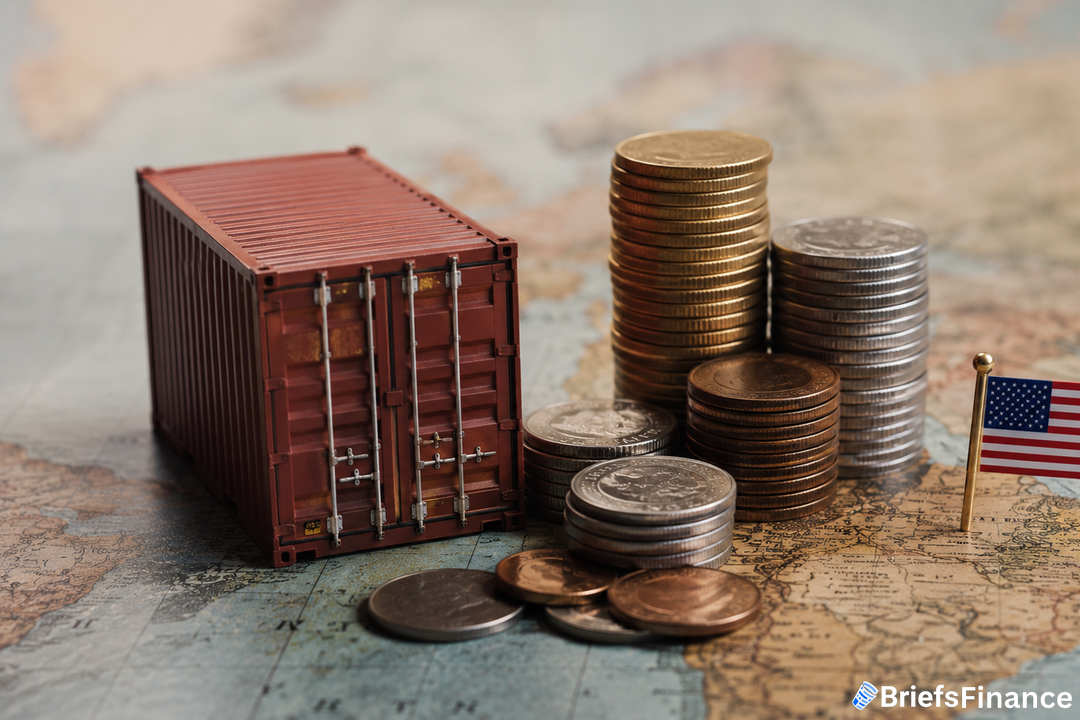
President Trump has made it clear he wants manufacturing jobs back in the U.S. He has pointed out that during World War II, the U.S. produced a ship a day, and that "today we're not really building ships."
He's talking about cargo ships. Today the U.S. builds about three a year, while China builds about 1,000.
Billions of dollars have already moved into U.S. manufacturing. A Republican Congress could make it easier to send more.
- MADE: An iShares ETF holding about 112 U.S. manufacturers, mostly capital goods - the machinery and equipment big factories rely on. It's the broadest manufacturing basket of the three.
- WELD: A U.S. manufacturing and reshoring ETF holding just 22 companies that make things in the U.S. Reshoring means bringing production back from overseas.
- A State Street industrial sector fund: Holds about 83 of the biggest U.S. industrial companies, including some of the country's largest manufacturers.
Energy Stocks Built on Natural Gas and Fuel
Republicans generally favor natural gas and fossil fuels. A Republican win is expected to bring more energy legislation and more money into those industries.
Democrats tend to be less enthusiastic. In 2024, when President Biden paused fossil fuels, 150 Republican members of Congress wrote him a letter calling the pause "economically and strategically dangerous and unnecessary."
- FCG: The First Trust Natural Gas ETF holds 41 companies focused mainly on natural gas.
- A State Street energy ETF: Holds 21 of the biggest U.S. energy companies, like Exxon, for broad exposure to the oil and gas industry.
- A Global X energy infrastructure ETF: Holds about 29 companies that own the pipelines carrying oil and gas. When more is pulled out of the ground, these companies move it.
Banks Could Get a Lighter Touch
Republicans generally prefer fewer regulations, which makes it easier for banks to lend money and issue credit. That can lift bank profits, though it can also create risks in the economy, as we've seen before.
Look at 2018, during Trump's first term. Regulators had been required to closely watch banks with $50 billion or more in assets, and Trump raised that line to $250 billion.
Banks under $250 billion were no longer watched as closely. That let them operate more freely, with fewer rules and controls.
- KBE: The State Street Banking ETF holds about 107 companies focused mainly on banking, making it a broad bank basket.
- KRE: The State Street Regional Banking ETF holds 167 regional banks, the smaller players.
- An Invesco bank ETF: Holds 26 of the largest U.S. banks, like Wells Fargo, JPMorgan, and Goldman Sachs.
Defense ETFs and a Record Budget
President Trump wants America to have the strongest military in the world. For 2027, he's set to put a record $1.5 trillion toward defense - tax dollars for tanks, missiles, and artillery.
Defense companies get that money from the government. A Republican Congress could make bigger defense budgets easier to pass for the rest of Trump's term.
Geopolitics adds to the demand. Rising tensions in the Middle East, talk of Greenland, Russia and Ukraine, and China could all increase the need for defense spending.
- ITA: An iShares ETF holding about 50 U.S. aerospace and defense companies. Big names like Lockheed Martin make up a huge chunk of the fund.
- XAR: Also holds 50 aerospace and defense companies, but weights them pretty equally instead of letting the giants dominate.
- SHLD: The Global X Defense Tech ETF holds 50 defense tech companies, for investors who want the tech side of defense rather than traditional contractors.
Jaspreet's view is that a good investment has to make three kinds of sense: financial, legal, and moral. Profiting from defense can feel wrong to some investors, and war is never good, so whether these fit your moral compass is your call.
| Republican win | Why money could move there | ETF examples |
|---|---|---|
| Manufacturing | Push to bring factories and jobs back | MADE, WELD, State Street industrials |
| Energy | Support for natural gas and fossil fuels | FCG, State Street energy, Global X infrastructure |
| Banks | Fewer regulations, easier lending | KBE, KRE, Invesco large banks |
| Defense | Record $1.5 trillion defense plan | ITA, XAR, SHLD |
Jaspreet's advice is to use AI to start your research, then dig in to validate what it finds. He'll show exactly how he finds investment opportunities and checks them at his free November 17 livestream, and investors who show up live get his team's top 10 AI prompts.
If Democrats Win the Midterm Elections
If Democrats win, money could flow in a different direction.
Healthcare ETFs and Hospitals
Democrats generally favor ideas like universal healthcare. If they win, they're likely to push for more tax dollars going directly into healthcare, and much of that money ends up at hospitals.
- IHF: The iShares U.S. Healthcare Providers ETF holds about 61 companies that deliver and pay for care, like insurance companies and healthcare providers.
- XHS: The State Street Health Care Services ETF also holds 61 companies but invests in them relatively evenly.
- A third healthcare fund: Also holds 61 of the biggest U.S. healthcare companies, but it's heavily weighted toward specific providers and insurers.
Weight-Loss Drugs Have Fans on Both Sides
Weight-loss drugs like GLP-1s took off under Democrats and kept their momentum under Republicans. Two years ago, three of every 100 American adults were on one, and today it's about 11 of every 100.
In 2024, President Biden talked about having Medicare and Medicaid cover these drugs. President Trump decided not to go that route and created a new plan to help people cover the cost instead.
A Democratic win could bring a bigger fight for funding to make these drugs easier to get.
- A Roundhill GLP-1 ETF: Invests specifically in the drug makers and companies providing weight-loss drugs.
- IHE: The iShares pharmaceuticals ETF holds 53 U.S. drug companies making a wide range of drugs, including weight-loss treatments.
- A VanEck pharmaceutical ETF: Focuses on just 25 of the biggest drug companies in the world, a narrower approach.
Clean Energy and Expiring Tax Credits
Everyone agrees energy costs are up. Republicans lean toward fossil fuels to fix it, while Democrats lean toward clean energy.
Big wind and solar tax credits exist today, but they're set to expire. Democrats could try to extend them and add more, while a Republican win could see them disappear.
President Biden made clean energy a priority, calling his climate bill "the biggest step forward on climate ever."
- ICLN: An iShares global clean energy ETF with 103 companies worldwide. About 35% are American, and others are based in places like China and Brazil.
- TAN: The Invesco Solar ETF holds 36 solar companies.
- QCLN: The First Trust Nasdaq Clean Edge Green Energy ETF holds companies tied to clean energy technologies like fuel cells.
Infrastructure and the Power Grid
Both parties like investing in infrastructure. Democrats have generally been more willing to spend big on it, even if that spending causes inflation.
President Biden put huge sums of tax dollars into infrastructure bills. Republicans didn't always like them, mainly over how to pay for them.
- PAVE: A Global X ETF holding 98 U.S. companies that build and supply infrastructure.
- GRID: Holds about 122 companies focused on building and upgrading the U.S. electrical grid, a key fix for the energy problem.
- An iShares infrastructure ETF: Holds 161 U.S. utilities, industrial, and materials companies, the widest basket of the three.
| Democratic win | Why money could move there | ETF examples |
|---|---|---|
| Healthcare | Push for more tax dollars into care | IHF, XHS, a third healthcare fund |
| Weight-loss drugs | Fight to expand access and funding | Roundhill GLP-1, IHE, VanEck pharma |
| Clean energy | Push to keep wind and solar tax credits | ICLN, TAN, QCLN |
| Infrastructure | Willingness to spend on rebuilding | PAVE, GRID, iShares infrastructure |
How to Use the Midterm Elections as an Investor
None of this tells you who will win. It shows how each result could redirect the biggest spender in the economy.
Any ETF here can fall, and these shifts can reverse with the next election. The goal is to think like an investor, research the opportunities that fit your goals, and put your money where it's moving, not where it was.