Europe Wants Its Own Secure Satellite Network
Europe has talked for years about building a satellite network it fully controls, so governments, defense agencies, and emergency crews do not have to rely on outside companies when sensitive communications are on the line. On Friday, August 7, 2026, the project took a big step forward.
Hispasat, the satellite arm of Indra Sistemas SA, got the lead contractor job on a piece of work worth more than €1.6 billion ($1.8 billion). The project is part of IRIS², the European Union's plan for its own secure communications constellation.
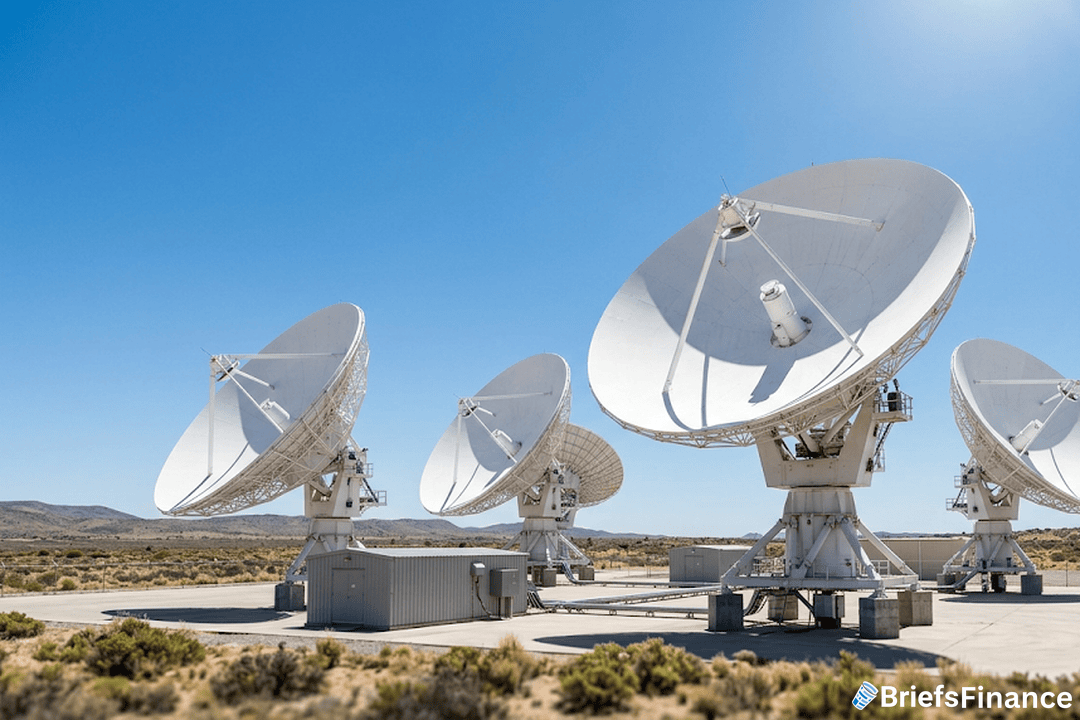
Hispasat is part of Indra Space, and it will manage the antennas, control systems, and links to ground networks. In plain terms, it is building the on-ramps to the constellation.
Most of the money from the contract lands in the next few years, and service is set to begin in 2030. A company spokesman declined to say how long the contract runs.
A €15.6 Billion Program Behind One Contract
This deal does not exist in isolation. It sits inside a European Union program worth more than €15.6 billion, built to serve governments, defense operations, and emergency services.
Hispasat is not running IRIS² on its own. It works with SES SA and Eutelsat SA in a consortium alongside the European Commission and the European Space Agency.
The network is built for those groups.
Get the free Always Be Buying eBook and learn the simple system for building wealth on any income
That fits what Hispasat already does. Hispasat's current business centers on a modest set of orbital platforms parked in geostationary orbits, each hovering over a set location, providing video, internet, and telephone services for broadcasters, telecommunications firms, and public-sector clients throughout Europe and Latin America.
Those customers use it for TV channels, internet links, and phone traffic. It is a small but dependable slice of the region's communications backbone.
The new project reaches beyond that familiar setup. Hispasat says it may invest up to €600 million to buy capacity on non-geostationary satellites, which move across the sky and can cover regions where the older fleet is less useful.
Think of it as renting extra reach instead of building new hardware.
That would be a next step beyond the stationary satellites it runs today.
What This Means for Your Portfolio
The deal supports a goal Indra has already set. Its space business, which includes Hispasat, is aiming for €1 billion in yearly revenue by 2030.
Investors responded on Friday. The move was positive but measured, with Indra's stock gaining 1.2% to €62.12 in Madrid trading, hitting that price at 1:11 p.m.
Shares are up about 28% this year, which means investors were already paying attention to Indra. Friday's move suggests the contract was good news, but not a shock.
Government contracts take time to pay out.
That makes this a long-term story rather than a quick win. The money arrives in stages, turning a big headline number into a slower, steadier pile of work that a company can plan around.
Satellite networks are the quiet plumbing of modern life. Most people only think about them when something goes wrong, but emergency services, defense agencies, and everyday tools all depend on them.
Companies that win contracts like this one tend to stay busy for years. It is the kind of business that does not make headlines often, but it shows up in earnings for a long time.
For your money, the pattern matters here. Europe is spending billions to keep sensitive communications in its own hands, and that spending has a long runway.
Download the free Always Be Buying eBook and start putting your money to work today