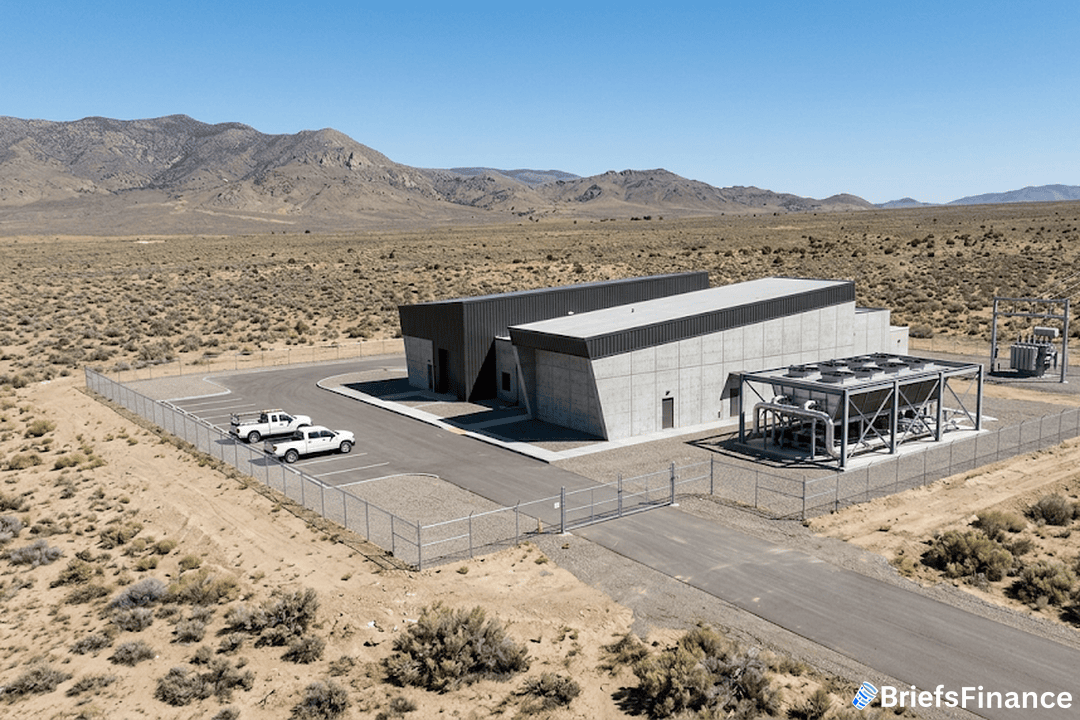
A Small Reactor Just Passed a Big Test
On Thursday, August 6, 2026, the U.S. Energy Department said Oklo's compact reactor reached criticality. The milestone happened at Oklo's Groves Isotope Test Reactor in Texas.
Criticality is a fancy way of saying the reactor has reached the point where it can keep a nuclear chain reaction going on its own. It's the moment a reactor starts doing what it was built to do.
Once the reaction is self-sustaining, the reactor starts producing heat continuously. In a working plant, that heat eventually turns water into steam and spins a turbine to make electricity.
But this reactor isn't making electricity yet. It isn't plugged into the power grid, and no one is putting its energy to work.
Oklo is the fifth company to reach this point under an Energy Department pilot program for advanced nuclear. The four before it were Aalo Atomics, Deployable Energy, Antares Nuclear Inc., and Valar Atomics Inc.
The pilot exists to prove the technology before companies try to sell it at scale. That is why the fifth successful criticality matters.
Washington Wants Nuclear to Play Big
The White House is pushing nuclear power from both ends. It wants more traditional large reactors, and it wants smaller units like Oklo's to have a real shot too.
Get the free Always Be Buying eBook and learn the simple system for building wealth on any income
These demonstrations build a record for advanced nuclear designs. Oklo and the four companies before it all reached criticality under the same pilot, and that repetition is part of why the administration sees small reactors as a realistic complement to larger conventional plants.
Trump sees nuclear as a key electricity source for data centers and economic growth. An executive order he signed last year calls for 10 large conventional reactors to be under construction by 2030 and for U.S. nuclear capacity to quadruple to 400 gigawatts.
The successes logged by Oklo and the companies before it suggest that the Trump administration's deregulation push is making advanced nuclear concepts look achievable. Proving the technology can work is the first step to making those targets feel real.
The Road From Test Site to Grid
None of this means small reactors are ready for everyday life. No unit of this kind is in commercial service in the U.S., which means no company is actually selling power from one yet.
That is the real test. A reactor can hit criticality in a test facility and still never make it onto the grid as a business.
The catch: criticality proves a reaction can happen. It doesn't prove the reactor can make it from a test site to the power grid, and the field still has plenty of obstacles left.
But the milestone isn't a one-off.
What It Means for Your Money
Investors gave the news a modest thumbs-up. Oklo's stock gained 4.3% to $44.86 in New York trading before the market open.
The stock move tells you how much weight investors put on this single step. It's a real step, but the market isn't pricing in a revolution yet.
The bottom line: This is one company's stock move, but the story is bigger than Oklo. The government is treating nuclear as a serious answer to rising electricity demand, and every milestone pulls that future a little closer.
For your portfolio, the question isn't whether a single test reactor in Texas is ready today. It's which parts of the nuclear story are becoming real enough to matter tomorrow.
Download the free Always Be Buying eBook and start putting your money to work today