What's Being Announced
The U.S. is about to make foreign polysilicon a lot more expensive to import.
President Donald Trump is preparing tariffs of at least 15% plus price minimums on raw polysilicon and on solar products made from it, such as wafers, photovoltaic cells and modules. The action could come as early as Thursday, though people with knowledge of the plans said the order was still being finalized on Wednesday and details could change.
A White House representative said the administration is assessing U.S. production capacity in sectors important to economic and national security but would not preview Trump's decision. The idea is to boost U.S. production of polysilicon, the refined form of silicon that goes into both computer chips and solar panels.
That fits Trump's broader tariff playbook: use import taxes to push manufacturing back onto American soil and cut reliance on China, which dominates solar supply chains.
Why Polysilicon Matters
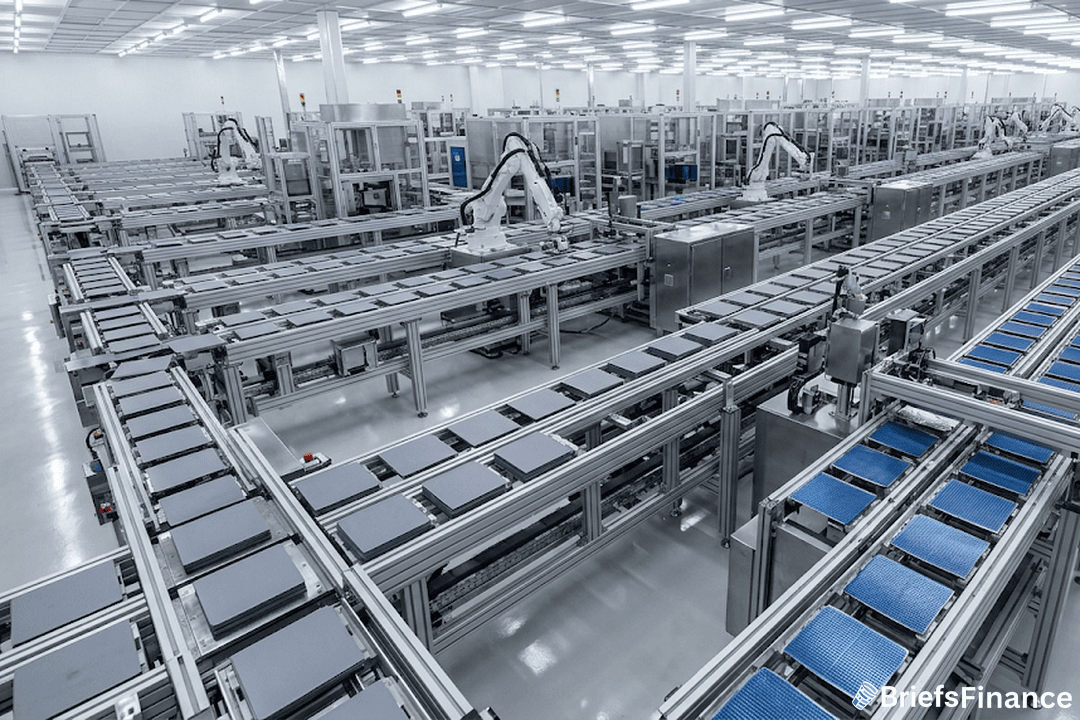
Polysilicon in its most refined form is a key input for chips in mobile phones, medical devices, precision-guided munitions and aircraft flight controls. The coarser solar-grade version is the base material for most panels on the market.
The U.S. invented the first photovoltaic cell decades ago. But China now leads the world in producing panels and the materials that go into them, and earlier American efforts to build a domestic supply chain have not gained traction.
Get the free Always Be Buying eBook and learn the simple system for building wealth on any income
Tariff supporters say keeping domestic solar-grade capacity weak would also hurt electronics-grade output, since both come from the same material.
The Commerce Department opened the investigation behind the new push a year ago, citing Section 232 of the Trade Expansion Act, which allows the president to restrict imports for national security reasons. The investigation is due to wrap up by August 5, 2026.
Critics Doubt the Tariffs Will Work
Not everyone thinks tariffs will fix the problem. The Consumer Technology Association, a trade group, told the Commerce Department that import duties would be nearly impossible to enforce once polysilicon is mixed into complex products.
"Once polysilicon is processed into wafers, fabricated into semiconductors, and embedded into devices, its original source becomes impossible to detect," the group said in a filing last year. It urged non-tariff options instead, such as supply deals with other nations and a domestic strategic stockpile.
U.S. polysilicon producers argue the opposite: that domestic solar-grade production is unprofitable at current prices and that tariffs are needed to offset Chinese overcapacity and below-cost pricing. They also asked for incentives to buy U.S.-made material and to keep Chinese polysilicon out of essential infrastructure and military gear.
The plan includes a temporary compensation program to protect U.S. manufacturers that depend on imported polysilicon, with relief tied to their capital spending in the country. Officials used the same approach before for pharmaceutical tariffs.
What It Means for Your Money
Trump has criticized solar power, and his administration has moved to slow solar projects. Still, the tariffs could give a lift to the few domestic producers, including Hemlock Semiconductor, part of Corning Inc., and Wacker Chemie AG, which run facilities in Michigan and Tennessee.
For everyone else, the calculation is simpler. Congress last year killed tax credits that rewarded developers for using mostly U.S.-made panels, and the Supreme Court recently struck down Trump's earlier tariff system, which is why he is rebuilding it.
The result is another round of a trade fight that has run for more than a decade without breaking China's hold on the market. The real question for investors is whether this attempt sticks.
The tariffs are the latest attempt to change that.
The bottom line: if the tariffs raise panel prices, solar developers and consumers could feel it. If domestic production finally becomes profitable, the handful of U.S. producers could be the winners.
Either way, cheap Chinese polysilicon could get harder to come by.
Download the free Always Be Buying eBook and start putting your money to work today