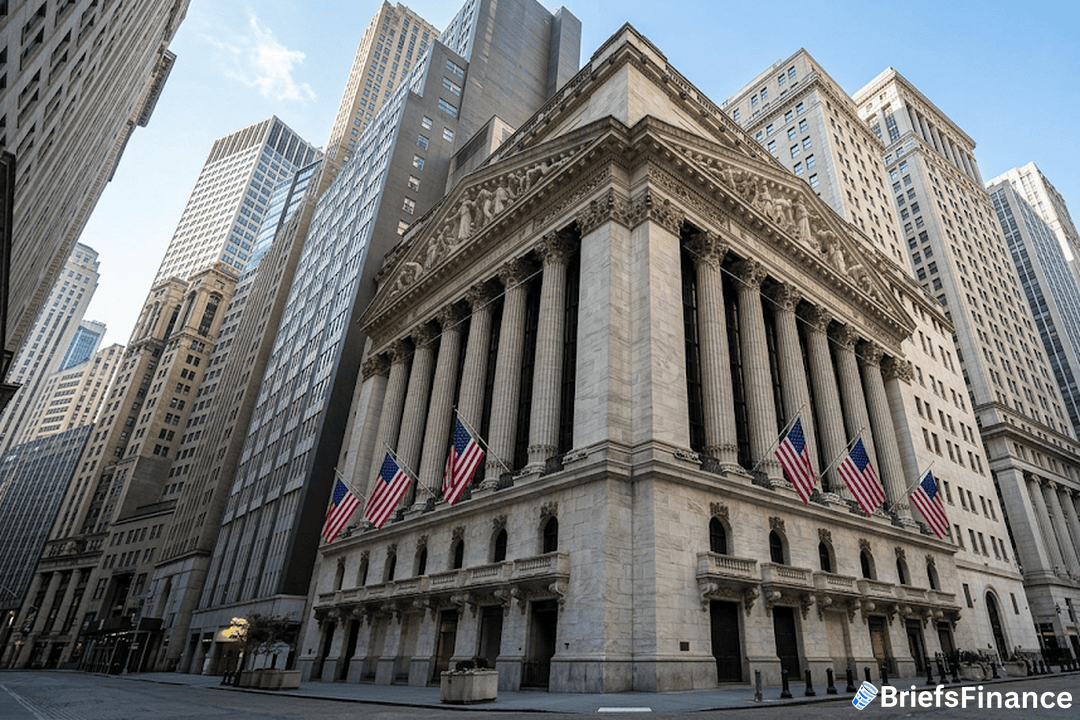
Stocks Rally as Oil Falls
Monday was the first trading day of August, and it was the kind of day investors want to see. Oil prices slid and stocks climbed after President Trump said he had halted military action against Iran and that diplomatic talks would resume.
On 2026-08-03, the Dow Jones Industrial Average closed at a record high. It added 693.38 points, or 1.32%, to finish at 53,178.41.
That works out to a gain of nearly 700 points in one session. The S&P 500 also had a strong day, closing at 7,600.50, up 1.48%, near its own record.
The buying was broad, with major U.S. indexes all moving higher. The rally picked up speed as oil prices slid.
Why Oil Prices Dropped
The attack was called off, and the oil market moved the other way. The global crude benchmark, Brent, closed about 5% lower at $83.75 a barrel.
U.S. oil dropped 5% to $80 a barrel. Brent is the international marker, while U.S. oil is the domestic one, and both fell together.
A 5% drop in oil in one session is a big move. It is also the kind of change that can show up at the gas pump over time.
Get the market news that matters in a five-minute read with Market Briefs, our free daily newsletter
Oil is a major input for the wider economy, from gasoline to shipping. Energy costs matter for airlines, trucking companies, and manufacturers.
Crude prices are sensitive to Middle East politics because the region is a big supplier. When the threat of an attack fades, oil often moves lower.
Entering Monday, two worries had been hanging over the market: the recent jump in Treasury yields after the Federal Reserve meeting, and the Middle East tension that had helped keep crude elevated. President Trump's announcement eased both of those fears. Oil prices fell, Treasury yields ticked lower, and investors moved back into the shares that had been hit hardest in recent weeks.
Tech Leads the Rally
Tech led the rally. The Nasdaq 100 closed at 28,776.80, up 1.78%, at 4:00 PM ET, after rising more than 2% earlier in the day.
The Nasdaq 100 is a temperature check on tech. A jump like that tells you investors were willing to buy back into stocks they had been avoiding.
Monday brought buyers back into the hardest-hit groups, especially the giant cloud computing companies known as hyperscalers and the chipmakers that make memory chips.
The recovery spread across well-known names. Microsoft and SanDisk each rose +5%, Alphabet and Amazon each gained +4%, and Nvidia added +2%.
Bonds joined in the relief. The yield on the benchmark 10-year Treasury note dropped 5 basis points to 4.68%.
A basis point is one-hundredth of a percentage point, so the move was small. Still, it eased some pressure after a sharp increase in yields following last week's Federal Reserve meeting.
Yields work like a thermostat for borrowing costs across the economy. When yields fall, mortgages and business loans get a little cheaper.
What It Means for Your Money
For most people, the connection between a record Dow and everyday money runs through bonds and oil. Cheaper crude often shows up at the pump over time, and the move in Treasury yields influences what it costs to borrow.
For stock investors, Monday is a reminder that moods change. Tech stocks had been beat up for weeks, and a single day brought buyers back in a big way.
For anyone with money in a retirement account, a record high on the Dow means that part of the market has never been worth more. No single session tells you where prices go next.
The question for your portfolio is not what happens tomorrow. It is whether the bigger trends in oil, interest rates, and company profits keep moving in your favor.
Join Market Briefs, our free daily newsletter, for a quick daily rundown of the markets